Anthropic slashes OpenClaw access from Claude subscriptions, forcing extra fees
Anthropic cuts Claude subscription access to OpenClaw, forcing developers to pay extra for integration. This hits workflows already built around the bundled service.

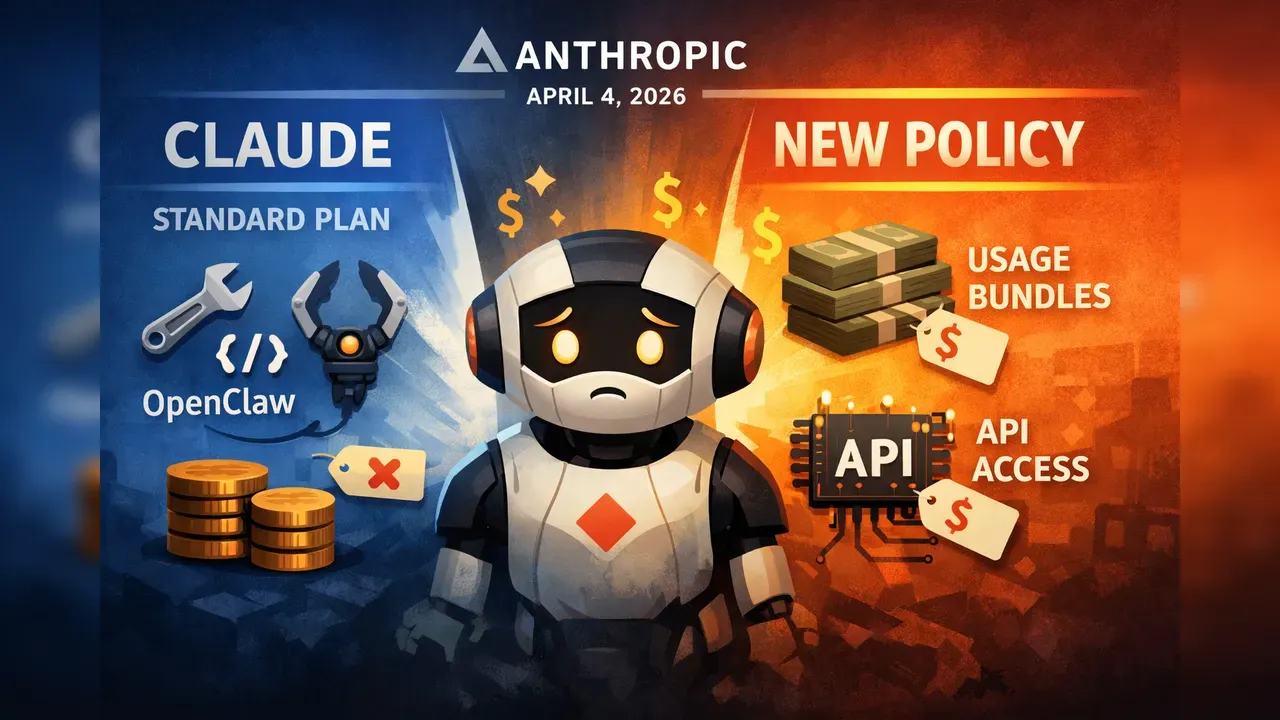
Starting at noon Pacific on April 4, subscribers can no longer use their Claude subscription limits for third-party tools including OpenClaw. Users wanting to continue using OpenClaw must now purchase separate usage-based billing instead of having it covered under their regular Claude plan. The move cites "unsustainable compute costs" as the reason. This hits developers who built workflows around Claude + OpenClaw integration right in the subscription model they already paid for.
The timing catches many developers off guard, with some reporting emails arriving minutes before the policy took effect. Anthropic claims third-party tools were straining their compute resources, but the change coincides with increasing competition in the AI coding assistant space. Developers who rely on OpenClaw for productivity enhancements suddenly face unexpected additional costs for workflows they've already established.
This shift represents a significant change to the value proposition that attracted many users to Claude in the first place. The bundling of third-party tools with the core AI assistant was a key differentiator in a crowded market. Now users must choose between paying extra for integrations they've grown dependent on or scaling back their development workflows to fit within Claude's native capabilities alone.
The impact extends beyond individual developers to entire development teams and companies that standardized on Claude + OpenClaw workflows. Businesses face either unexpected budget increases or forced migration to alternative tools that may not offer the same level of integration or productivity gains. This change could accelerate the adoption of alternative AI coding assistants that maintain more open integration policies.
From a business perspective, this move reflects the classic "build the moat, then charge to cross it" pattern common in developer tools ecosystems. Anthropic built OpenClaw as a harness for Claude, creating an ecosystem that made Claude more valuable to developers. Now they're unbundling that ecosystem to manage costs, potentially undermining the very network effect that made Claude attractive in the first place.
Technically, the change affects how Claude interacts with external tools and services. OpenClaw has been a popular middleware layer that extends Claude's capabilities significantly. Developers who invested time in optimizing their prompts and workflows specifically for Claude + OpenClaw combinations now face the prospect of either paying more or reworking their entire approach to stay within budget constraints.
The real question now is whether this monetization approach will push users toward alternative AI coding assistants that don't penalize third-party integrations, or if Claude's technical superiority will justify the extra friction. Either way, the bundling/unbundling cycle continues, and developers must adapt their expectations accordingly.