Claude Code Crash Course: Memory, Structure, and Reach

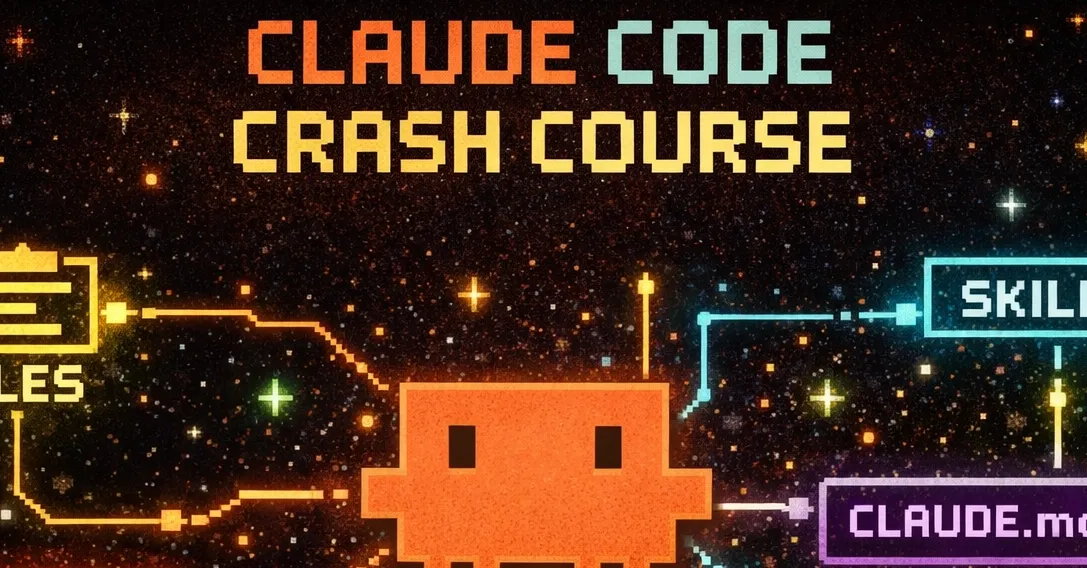
Most Claude Code tutorials explain individual features. This crash course from colocodes on DEV Community does something more useful: it provides a mental model for how all the pieces fit together. The framing — Claude Code as a small operating system for AI-assisted development — makes the layered architecture suddenly legible. CLAUDE.md and rules shape persistent behavior; skills package reusable playbooks; hooks enforce deterministic automatic actions; subagents isolate parallel work in separate contexts; MCP servers connect Claude to external tools and data.
The article's most practical contribution is its diagnosis of the most common onboarding failure: treating CLAUDE.md as a dumping ground. Architecture notes, preferences, reminders, and conventions accumulate until the file is unreadable and Claude silently ignores large portions of it. Anthropic's own recommendation is under 200 lines per file — anything larger should route into .claude/rules/ with scoped filenames so instructions load only when relevant. The piece also covers Plan Mode (Shift+Tab to enter research-only before any code is written), the meaningful difference between skills (markdown playbooks) and hooks (code that fires deterministically on save, test run, or commit), and when a longer single-context session is better than spawning subagents.
Published just hours ago, this is the freshest Claude Code orientation piece covering the full 2026 feature set — including the current .claude/rules/ scoping approach that most existing tutorials predate.