Dataland Shows Creative AI Needs Infrastructure, Not Just Prompts

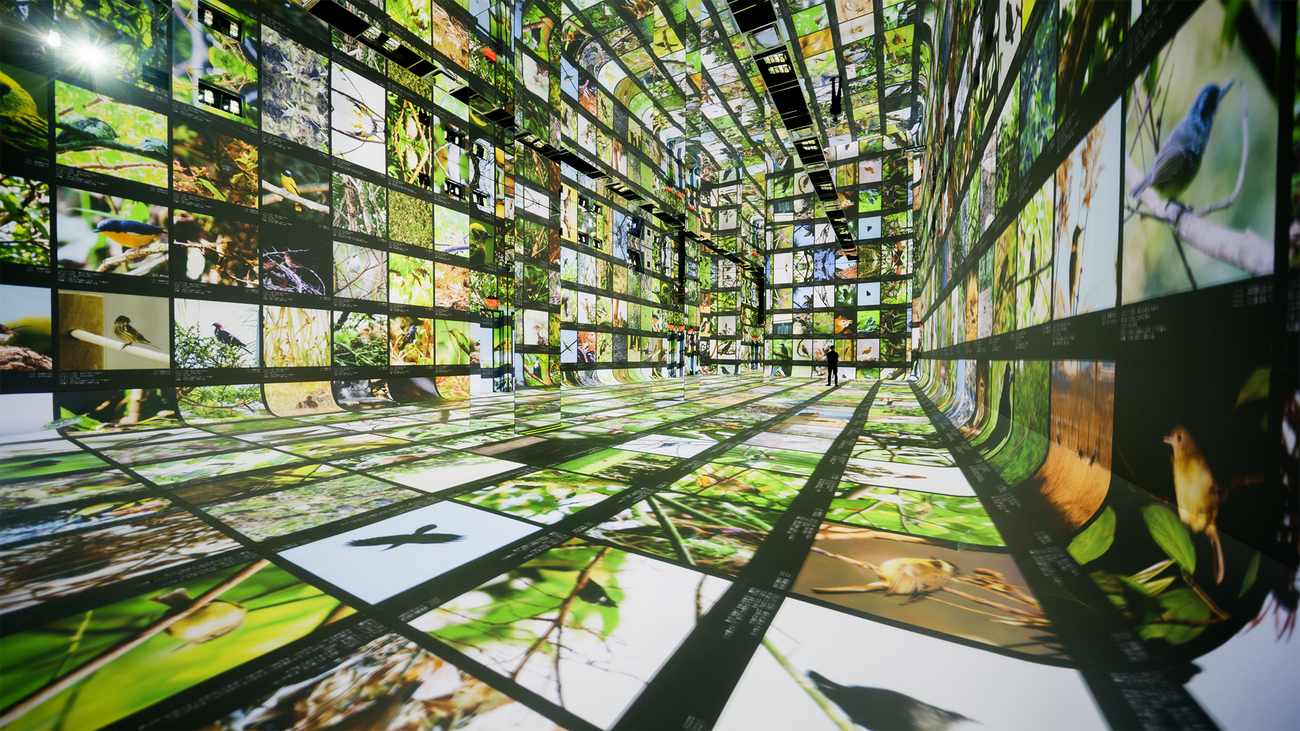
The least interesting way to describe Dataland is “an AI art museum.” That phrase makes the whole thing sound like a room full of prompt-generated screens and venture-backed mood lighting. The more useful read is that Google Cloud and Refik Anadol Studio are turning generative AI into venue infrastructure: a physical system that has to sense, render, coordinate, and recover in real time while actual humans walk through it.
Google says Dataland opens to the public on June 20 in The Grand LA, a Frank Gehry-designed development in Los Angeles. The museum is a 25,000-square-foot “omni-sensory ecosystem,” with Google serving as a technology and creative collaborator. Its inaugural exhibition, “Machine Dreams: Rainforest,” is powered by Refik Anadol Studio’s Large Nature Model and uses Google Cloud to transform environmental data into what Google calls 1.2 billion pixels of “hyper-generative reality.”
There is obvious marketing in that sentence. There is also a real engineering story. Google names Compute Engine, the Gemini Enterprise Agent Platform, generative adversarial networks, diffusion models, and Gemini as part of the stack coordinating the galleries. The installation also processes data to create generative soundscapes, sense emotions in real time, algorithmically augment scents, and respond dynamically to people inside the space. This is not a model returning an image. It is a model-mediated environment.
Creative AI grows up when the output has to keep running
Most creative-AI discourse is still trapped in prompt-box thinking. Type a sentence, get an image. Type a sentence, get a song. Type a sentence, get something that looks impressive until you need version control, latency budgets, rights metadata, collaboration, export formats, or predictable behavior under load.
Dataland forces a different conversation because the output is not a file. It is a venue. A museum-scale generative installation has uptime expectations. It needs synchronized displays, reliable rendering, content orchestration, sensor integration, observability, and fallback behavior. If the system degrades, visitors do not see a failed API response; they see the room stop being the room they paid to enter.
That changes the product requirements. Latency becomes part of the art. Monitoring becomes part of the medium. The gallery team needs operational visibility, not just a beautiful model demo. The builder version of “data becomes pigment” is less romantic: someone has to keep the pigment server from paging the wrong person during opening weekend.
This is where Google Cloud’s role is more than logo placement. Creative AI at physical scale needs the same things every production system needs: compute, storage, orchestration, access control, deployment discipline, cost management, and incident response. Google says Dataland runs on efficient cloud infrastructure powered by 87% carbon-free renewable compute. That claim deserves scrutiny, as all sustainability claims attached to compute-heavy AI should. But at least it puts energy and infrastructure in the frame, where they belong.
The strongest pattern is composition, not one giant model
The most transferable idea in Dataland is not “use Gemini to make art.” It is that the experience appears to be composed from multiple systems with different jobs. The Large Nature Model provides a domain-specific representation of natural-world data. GANs and diffusion models contribute generative visual behavior. Gemini appears in the broader orchestration and interaction layer. Sensors and procedural systems translate visitor presence into sound, scent, and visual response.
That architecture is the right direction for serious creative tools. One model should not be asked to do everything. Use deterministic systems where responsiveness and control matter. Use generative systems where variation, language, and transformation matter. Use domain data where the experience needs a point of view rather than generic model mush. Then put a real runtime around it.
The lesson transfers well beyond art museums. Retail environments, live events, education, scientific visualization, architectural simulation, theme parks, digital twins, and medical training all have versions of this problem. They need AI that is embedded in space, constrained by reality, and legible to operators. Prompt-to-output is a feature. AI-mediated environments are a platform.
For practitioners, that means the engineering checklist looks more like distributed systems than design tooling. What is the source of truth for the environmental dataset? How are generated states cached, replayed, or audited? What happens when a sensor misreads a crowd? Can the system degrade gracefully? Can a curator override it? Are visitors informed when emotion sensing is active, and what exactly is being inferred or retained?
The museum also inherits AI art’s hardest questions
Dataland’s ambition does not exempt it from the criticism that follows AI art. It intensifies it. Once AI becomes the operating environment for a cultural venue, questions about dataset provenance, consent, rights, model bias, energy use, and artist control are no longer side notes. They are part of the work.
Google’s post gestures in some useful directions. Refik Anadol’s collaboration with Google goes back to the first Artists and Machine Intelligence cohort in 2016, followed by projects involving the LA Philharmonic archive, Google Quantum AI data visualization, “MRI of the Earth,” and a “Machine Dreams: Biophilia” installation at Google’s Mountain View campus. The Dataland AI Artist Residency will give four artists six-month support, $25,000 grants, mentorship from Refik Anadol Studio, and access to Google Cloud tools and machine learning models.
That is good. It is not a solved ecosystem. Four grants are a pilot, not a new economics for artists. Access to cloud tools is useful, but access is not the same as control. The uncomfortable question is whether artists can meaningfully shape the models, datasets, and runtime constraints — or whether they are being invited to decorate a platform whose terms are already set.
There is also the matter of emotion sensing. Google says the gallery can “sense emotions in real time” and respond dynamically. That may produce a more responsive experience, but it is exactly the sort of capability that should trigger product-review discipline. What signals are captured? Are they stored? Are they associated with visitors? Can people opt out? Is “emotion” actually being inferred, or is the system mapping coarse behavioral signals into aesthetic states? The responsible version explains the machinery without breaking the magic.
The generous read is that Dataland shows creative AI becoming more embodied, more infrastructural, and more ambitious than prompt slop. The skeptical read is that it could become spectacle with a data-center budget. Both can be true. The difference will be in the operating details: transparency, artist agency, dataset discipline, energy accounting, and whether the work rewards attention after the first visual hit.
For builders, Dataland is worth watching because it treats AI as something that inhabits a system, not something that merely emits an asset. That is where the field is going. The future of creative AI will not be won by the prettiest single output. It will be won by teams that can make generative systems reliable, responsive, controllable, and humane in the environments where people actually use them.
Sources: Google, Dataland Large Nature Model, Google Cloud Refik Anadol Studio case study.