DeepMind’s Pelé Reconstruction Is a Consent Test for Generative Memory

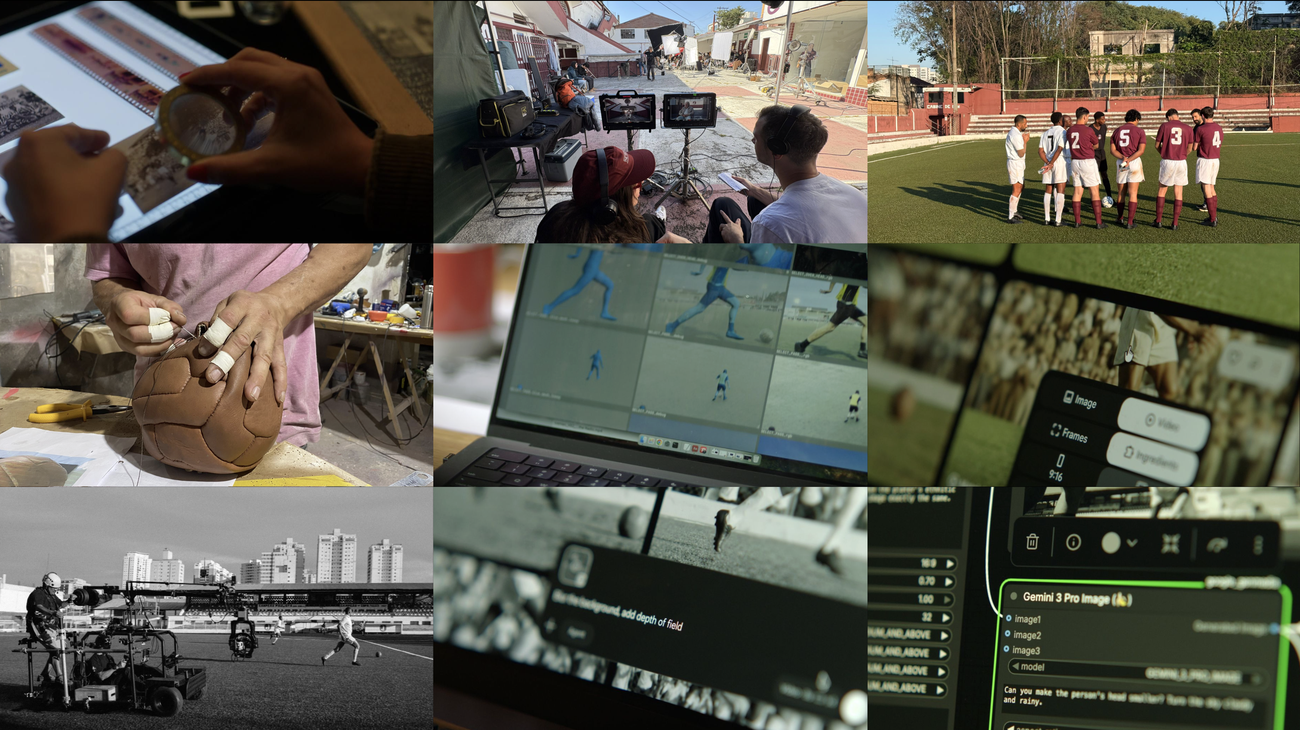
The safest way to read Google DeepMind’s Pelé reconstruction is not as a sports clip. It is a governance test with a football attached. Google took a legendary moment that was never filmed — Pelé’s August 2, 1959 “Gol da Rua Javari,” remembered for three consecutive sombreros without the ball touching the ground — and used generative video to turn cultural memory into moving imagery.
That is exactly the kind of use case where generative AI can be genuinely valuable and genuinely dangerous. Valuable because there is no original footage to restore. Dangerous because once a plausible video exists, the synthetic artifact can harden into “what happened” in public memory, even if the underlying evidence is testimony, expert interpretation, production reference, and model inference stitched together with care.
A better demo because it starts with constraints
Google says the project was created with historians, sports journalists, football legends, Pelé’s family, and Pelé Brand, the official managers of the Pelé estate. It was shown at Cannes Lions, is framed as education and cultural preservation, and is headed to the Pelé Museum this year. DeepMind teams used frontier models including Gemini Omni and Veo 3, and the production filmed reference material on the original pitch with authentic uniforms and a vintage ball.
Those details matter more than the model names. The responsible version of this workflow is not “prompt a famous dead athlete into existence.” It is a bounded reconstruction: consent from the estate, subject-matter experts, historical fragments, physical references, location context, and a distribution setting where the artifact can be presented with explanation rather than dropped into the feed as fake archival footage.
In that sense, Google appears to have avoided the most obvious failure mode. The project is not being sold as recovered film. It is a reconstruction of a moment known through memory and testimony. That distinction should be visible every time the video is shown, because the difference between restoration and reconstruction is not academic. Restoration starts from an original artifact. Reconstruction starts from evidence and interpretation. Generative video blurs that boundary unless the product deliberately keeps it sharp.
The missing feature is provenance users can actually inspect
The problem is that Google’s public post is thin on the mechanics that matter. It does not disclose prompts, model settings, editing workflow, the provenance or watermarking treatment, how conflicting accounts were resolved, which frames are based on physical reference footage, or how much of the final motion is inferred. That may be normal for a short corporate blog post, but it is exactly the gap practitioners should notice.
If generative AI is going to reconstruct historical events, the workflow needs a provenance contract. What sources were used? Which parts are documented, which are inferred, and which are artistic interpretation? Who approved the result? What uncertainty remains? Is the output visibly labeled? Does metadata survive clipping and reposting? Can a museum visitor, journalist, teacher, or fan inspect the chain of evidence instead of simply trusting that DeepMind did the homework?
This is not only a museum problem. The same pattern is coming for education products, sports archives, documentaries, journalism, legal reenactments, family-history apps, political media, and brand storytelling. “We can generate the missing scene” is a powerful product pitch. It is also a shortcut to laundering uncertainty into footage unless the interface preserves the difference between evidence and imagination.
Builders should treat this like a versioned reconstruction pipeline, not a magic video box. Sources go in. Assumptions are documented. Alternative accounts are preserved. Generated outputs are labeled. Human approvals are recorded. The final artifact exports provenance alongside the pixels. If that sounds bureaucratic, good. Historical memory deserves more bureaucracy than a share button.
Creative AI is moving from generation to toolchain
The Pelé project also lands in a larger Google context. A day earlier, Google DeepMind announced a research partnership and investment in A24, framed around filmmakers shaping future AI workflows rather than receiving tools after the fact. Google’s Flow product pitch points in the same direction: Gemini Omni for multimodal video creation and editing, Veo for high-quality video generation, Nano Banana for image generation and editing, and an agent-like creative workspace that helps plan, create, and refine projects.
That is the strategic move: not just generating clips, but owning the creative toolchain around them. Storyboards, references, edits, custom tools, agentic planning, video resizing, overlays, upscaling, and iterative refinement are where professionals will actually decide whether the technology is useful. The raw model matters, but the workflow decides whether artists feel assisted, replaced, boxed in, or quietly harvested for training data.
The Pelé reconstruction is one of the stronger examples Google could show because it is not trying to replace an existing clip or impersonate a living performer for a cheap ad gag. There was no filmed record. The subject has a legitimate cultural archive. The estate was involved. The venue is a museum. The goal is framed as preservation. If generative video cannot be defended under those constraints, it is hard to imagine many defensible cases at all.
But the inverse is also true: if the industry copies only the emotional formula — beloved figure, lost moment, AI video, instant nostalgia — and drops the consent and context, it will earn the backlash. The governance is not a nice wrapper around the demo. It is the thing that makes the demo acceptable.
Consent is necessary, not sufficient
Estate approval matters, but it does not solve everything. Pelé is not only a brand asset; he is a public figure embedded in Brazilian history, football culture, and global memory. A reconstruction can honor that memory, but it can also narrow it. When a synthetic video becomes the most accessible version of a story, it may displace oral histories, ambiguity, and disagreement. The more beautiful the output, the more persuasive it becomes.
That is the uncomfortable product lesson. Generative media systems do not merely create content; they create defaults for memory. A museum visitor who sees a polished DeepMind reconstruction may come away feeling they have seen the goal, not an interpretation of the goal. That is why labeling cannot be a tiny disclosure at the bottom of a page. It has to be part of the viewing experience.
For engineers and product teams, the action item is simple: design consent, provenance, and uncertainty before generation. Do not bolt them on after the asset exists. If your product touches real people — dead or alive — define approval rights, evidence boundaries, audit logs, labeling, metadata, and takedown paths before the first render. If your workflow cannot explain what is known versus generated, it is not a preservation tool. It is a confidence machine.
Google’s Pelé project looks like one of the more responsible versions of generative reconstruction because it begins with family approval, expert input, physical references, and a cultural institution. That deserves credit. But it also exposes the standard every future product in this category should meet: consent is the floor, provenance is the product, and uncertainty should survive the final cut.
The take: generative video is most defensible when it reconstructs with constraints and shows its work. It is most dangerous when it turns memory into footage and asks viewers not to notice the seam.
Sources: Google Keyword, Google DeepMind and A24 partnership, Google Flow