Free Coding Models Are Buying Distribution—and OpenRouter’s Top 20 Shows It

A free model just pushed Anthropic’s premium flagship out of OpenRouter’s top 20. That sounds like a quality upset. It is not. It is something more immediately useful to engineering leaders: evidence that price and distribution can move developer workloads faster than benchmark wins, brand reputation, or procurement committees.
Poolside’s Laguna S 2.1 entered the weekly chart at number 20 after processing 1.14 trillion tokens. Claude Opus 5, previously in that slot, dropped out. Near the top, DeepSeek V4 Flash 0731 moved into third place with 11.7 trillion tokens, edging Z.ai’s GLM 5.3 Flash by only 0.1 trillion. DeepSeek now has four variants in the top 20, totaling 23.63 trillion weekly tokens.
Those numbers are not a verdict on which model writes the best code. OpenRouter ranks prompt and completion tokens routed through its API over a trailing seven-day window; it does not rank unique users, successful requests, revenue, retention, or independently verified task completion. Private requests are excluded, and free and paid variants are counted separately. The chart is best read as a map of experimentation on one gateway—not global market share and certainly not an engineering recommendation.
Agent workloads turn free access into trillions of tokens
Laguna’s arrival matters because coding agents are unusually efficient machines for consuming tokens. A single run may ingest repository context, generate a plan, call tools, preserve command output, retry a failed patch, inspect tests, and then explain the result. Multiply that loop across evaluations and unattended jobs and a model can accumulate enormous token volume without attracting an equally enormous number of users.
That dynamic gives free endpoints a structural advantage on a token leaderboard. Teams can point batch evaluations, speculative agents, and low-priority automation at a zero-price model with little budget friction. A verbose model can also outrank a concise one while completing fewer tasks, and tokenizer differences make nominal token totals less comparable than they look. Laguna reaching number 20 therefore says developers are willing to test it at scale. It does not say they are keeping its patches.
The same caution applies to DeepSeek. V4 Flash 0731’s 11.7 trillion tokens are only barely ahead of GLM 5.3 Flash’s 11.6 trillion, so the number-three swap is statistical drama without much practical distance. More interesting is V4.1 Flash holding sixth place with 6.22 trillion tokens only days after its September 10 release. DeepSeek reports scores of 90.9 on GPQA Diamond, 90.6 on Terminal-Bench 2.1, 74.2 on DeepSWE v1.1, and 88.1 on CyberGym. Those vendor-reported results explain why agent builders rushed to test the model, but they still need independent reproduction.
There is another confounder hiding in the routing layer. DeepSeek says the deepseek-flash alias now points to V4.1, while some older V4 Flash names temporarily route to it. That means version-level traffic can describe labels and billing routes as much as distinct model binaries. Anyone treating each row as a clean cohort is doing analytics on the menu, not necessarily on what came out of the kitchen.
“Eight billion active parameters” is not an infrastructure plan
Laguna S 2.1 is a 118-billion-parameter mixture-of-experts model that activates roughly eight billion parameters per token. The active count sounds approachable, but the full weights and expert-routing machinery still have to live somewhere. Poolside estimates about 236GB for BF16 weights and publishes a 1,048,576-token context window, 48 layers, 256 routed experts, and one shared expert. Quantized FP8, NVFP4, INT4, and GGUF releases reduce the hardware burden, but quantization can change output quality, latency, and tool-calling reliability.
Poolside’s published coding results are credible enough to justify a test: 70.2% on Terminal-Bench 2.1, 78.5% on SWE-bench Multilingual, 59.4% on the public SWE-Bench Pro dataset, 40.4% on DeepSWE, and 49.7% on Toolathlon Verified. The model card also distinguishes first-party and third-party scores and dates its comparison table, which is better benchmark hygiene than the context-free victory grids that usually accompany model launches.
Still, open weights are not the same thing as cheap operations. The community discussion around DeepSeek V4.1 Flash makes that gap obvious: builders are enthusiastic about its scores, while simultaneously estimating a roughly 510GB artifact for its reported 552B backbone plus 196B Engram parameters and debating whether dual-128GB machines can run a useful quantization. Expert selection, offloading, and disk streaming may make a demo possible. Sustained concurrency with predictable tail latency is a different test.
Laguna’s OpenMDW-1.1 license is described by Poolside as allowing commercial and non-commercial modification. That is promising, not a substitute for legal review. Teams still need to inspect the license and acceptable-use terms, decide where prompts and generated code may travel, and document which hosted provider is actually serving requests. “Open-weight” describes access to artifacts; it does not answer data-governance, indemnity, or operational questions.
Build a third leaderboard inside your own engineering team
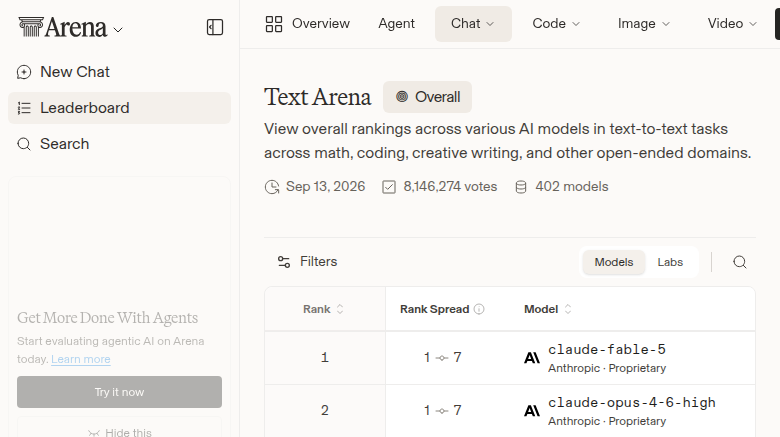
Arena’s text leaderboard showed no top-20 movement in the latest capture. Its preference-based approach and OpenRouter’s usage chart answer different questions: which outputs people prefer, and which models receive traffic. Production teams need a third scoreboard built from their own failure modes.
Start with 50 to 200 representative tasks drawn from real work. For coding agents, include small bug fixes, multi-file changes, repository navigation, test repair, and tasks that require recovery after a failed command. Score patch correctness and test-pass rate, but also record tool-schema fidelity, unnecessary file changes, human review time, latency at realistic concurrency, and total generated tokens. The meaningful cost is not the advertised price per million tokens; it is the cost of a correct, accepted result after retries.
Run the same harness against Laguna S 2.1, DeepSeek V4.1 Flash, the model currently in production, and at least one strong premium baseline. Pin model identifiers where possible, archive prompts and outputs, and note routing aliases so the underlying model cannot silently change mid-evaluation. Repeat the run after provider updates. If the free endpoint wins, test rate limits, uptime, data retention, and what happens when promotional pricing ends before moving consequential workloads.
For self-hosting, benchmark the quantization and serving stack you will actually operate—Poolside provides paths for vLLM, SGLang, TensorRT-LLM, llama.cpp, and Ollama. Measure throughput under expected concurrency rather than reporting a single-stream tokens-per-second peak. Keep the model’s recommended interleaved reasoning in message history, then test whether longer histories improve recovery or merely inflate cost and latency.
The broader market is splitting into quality, distribution, and operational scoreboards. Arena captures preference. OpenRouter captures routed attention. Internal evaluations capture whether software gets shipped safely and economically. Free coding models are proving they can buy enough experimentation to displace a premium name from a public chart. The teams that benefit will be the ones that treat that chart as a candidate-discovery feed—not as permission to outsource judgment.
Sources: OpenRouter LLM Rankings, Poolside Laguna S 2.1 model card, DeepSeek API changelog, Arena AI leaderboard, LocalLLaMA release discussion