Gemini Takes the Wheel: Google's AI Is Now Native in Millions of Vehicles, No Dealership Required

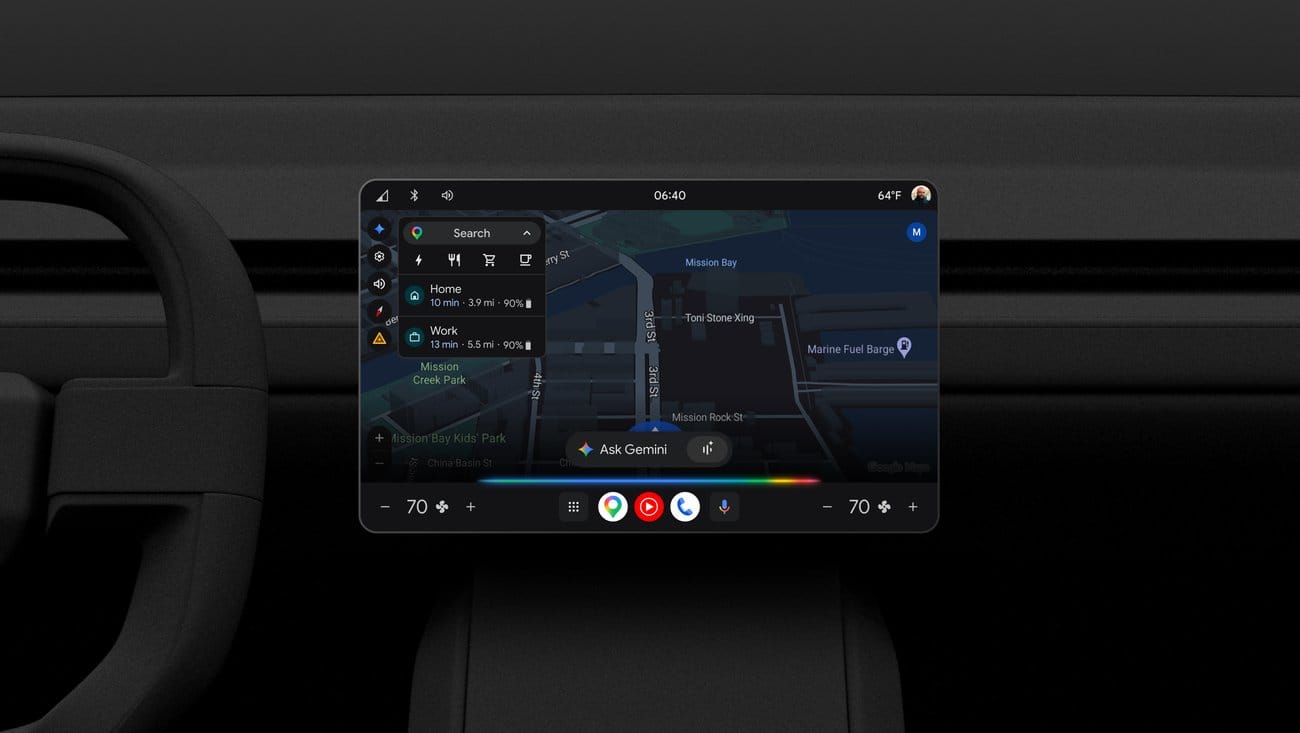
Google confirmed this week that Gemini is replacing Google Assistant as the default voice assistant in cars running Android Automotive OS — and GM is pushing the upgrade to approximately four million model-year 2022+ vehicles across Cadillac, Chevrolet, Buick, and GMC brands via over-the-air update. No dealership visit required. No new hardware. Just a software push, and suddenly your car's voice assistant can handle follow-up questions, pull answers from the owner's manual, check EV battery state on arrival, and have a free-flowing hands-free conversation about whatever you want.
The feature list is the expected evolution of in-vehicle voice assistants. What makes this interesting is the distribution architecture.
OTA + Native OS + Multi-OEM: The Deployment That Matters
Google is running Gemini natively in the vehicle's operating system across multiple manufacturers, delivering it via software update, and not requiring consumers to buy new hardware or visit a service center. That is a different category of AI deployment than anything Google has shipped before in the consumer space. Previous voice assistant rollouts in vehicles were either phone-mirrored solutions (Assistant running on your phone, proxied through the car's head unit) or OEM-specific custom integrations that required significant per-manufacturer engineering work. This is neither.
The distinction between native and phone-mirrored is the technically important one, and it goes well beyond latency considerations. When Gemini runs on Android Automotive OS, it has access to the vehicle's own systems — the infotainment stack, the owner's manual database, EV-specific telemetry, climate controls — via the CAN bus integration that the OEM exposes to Google's stack. When Gemini runs via Android Auto (the phone-mirroring companion app), it sees what the phone sees: media controls, navigation requests, voice commands that the head unit proxies to the phone. The surfaces are different. The capabilities are different.
The owner's manual Q&A feature is the clearest example of why this matters. Gemini is not using general knowledge to answer "How do I program my trunk so it doesn't open all the way?" It is querying vehicle-specific documentation that only exists because the OEM provided it to Google's stack. That is retrieval-augmented generation applied to a vertical domain — the same architectural pattern that enterprise RAG builders are implementing when they connect a language model to a company's internal knowledge base. The difference is that Google is shipping it at consumer scale, pre-integrated with the vehicle, without requiring the end user to do any of the RAG plumbing themselves.
The Latency Problem Nobody Is Talking About Honestly
The r/AndroidAuto threads from the past year are worth reading before drawing conclusions about hands-free quality. Multiple users reported response times described as "a whole minute just to make a call" and "five minutes on a question." Those are not anecdotes about a bad feature — they are data about a broken UX contract. Voice interaction inside a car has to be near-instant or drivers fall back to physical controls. That is not a prediction about how the new system will behave. It is a documented history of how the current system has failed in practice.
The question is whether Gemini on Android Automotive actually improves that situation, or whether it inherits the same cloud inference latency problem that plagued Assistant. Google's opportunity here is using native OS integration to reduce round-trips — the car is running the model locally or with direct vehicle data access rather than proxying everything through a phone and a remote server. The structural risk is that a cloud-hosted model answering questions about a specific vehicle introduces more latency than it removes by being more capable. Whether Google's implementation actually delivers on the low-latency promise is the test that matters, and it's one that won't be settled by press releases.
What the Distribution Pattern Tells Builders
Look at where Gemini has landed in the past twelve months: Chrome, Google TV, the Gemini app, Android Automotive, the Pixel line. The pattern is not "launch a new standalone AI product." The pattern is "embed model capabilities into existing high-engagement surfaces where the user context already lives." Chrome already has your tabs, your research, your forms. Google TV already has your family photos and your living room. The car already has your commute, your route, your owner's manual. Gemini keeps arriving inside things people already use rather than asking them to open a new app and form a new habit.
For developers building consumer-facing AI products, that pattern should inform distribution strategy. The winning move in this generation of AI deployment is not building a better chatbot. It's embedding model capabilities into existing workflows where the context already exists. That is a fundamentally different product philosophy than "ship an AI app and convince users to open it."
The longer play is also worth noting. Google is building a fleet of AI surfaces — each one contextualized by the data already present in that surface — and connecting them through Workspace, Drive, and personal intelligence layers that allow context to travel between them. The car is not an isolated deployment. It is one node in a graph of AI-native surfaces that Google is constructing across every major digital context in a user's life. Whether that graph becomes a genuine ecosystem advantage or just another set of features users ignore remains to be seen. But the architecture is deliberate, and it is further along than most people are treating it.
Sources: Google Blog, TechCrunch, The Verge