Gemini’s New Photo-Aware Image Generation Turns Google Photos Into a Context Moat

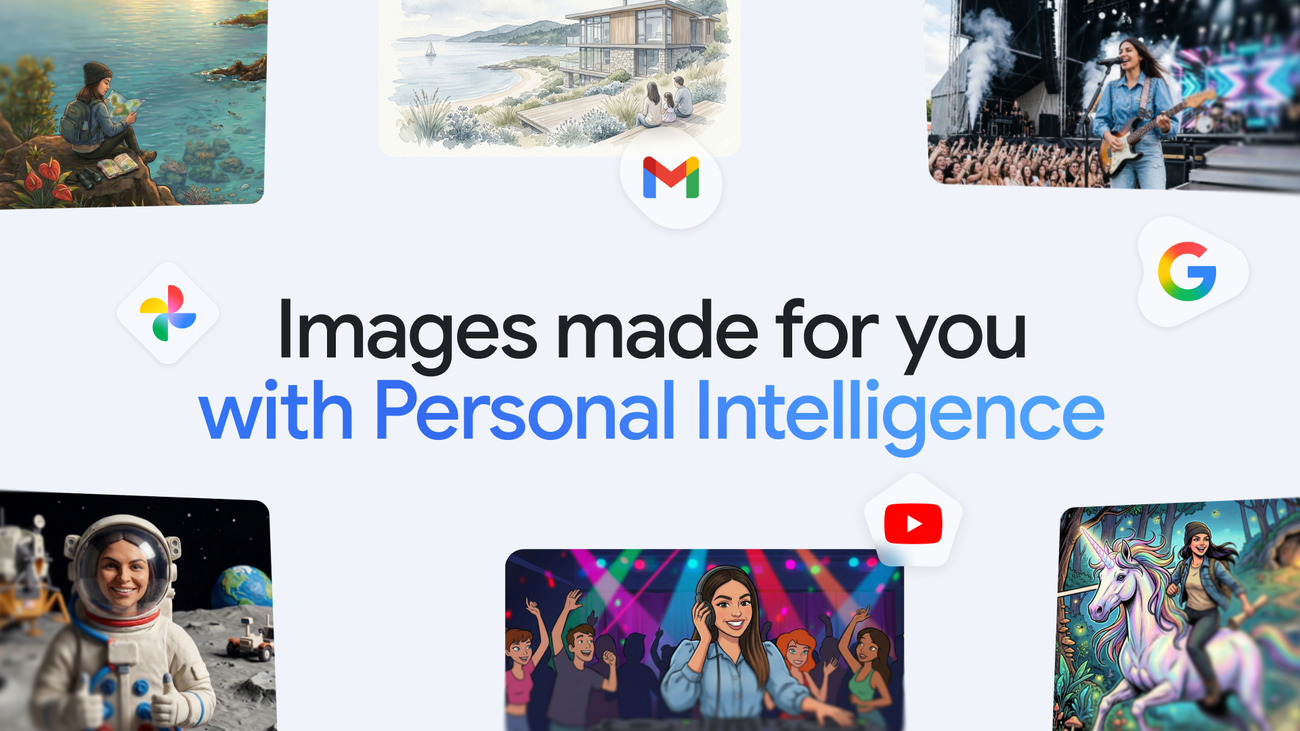
Google’s latest Gemini image feature is being pitched as a friendlier way to make personalized pictures. That description is technically true and strategically incomplete. The bigger story is that Google is trying to turn one of the most annoying parts of generative AI, namely explaining yourself to a machine over and over, into an ecosystem advantage.
Prompt engineering has always been a tax on users. The industry dressed that tax up as a creative skill, but most people do not actually want to become part-time instruction designers just to generate a decent birthday invite, mock up a room, or turn a family joke into a shareable image. Google’s new rollout, which combines Personal Intelligence, Nano Banana 2, and an optionally connected Google Photos library, is an attempt to make that tax disappear by using context Google already has. The feature is rolling out over the next few days to eligible Google AI Plus, Pro, and Ultra subscribers in the U.S., with Google saying it plans to bring it to Gemini in Chrome desktops and more users later.
On the surface, the user experience is easy to understand. Instead of manually uploading a reference image and writing a biography-length prompt, you can ask Gemini to “design my dream house” or “create a picture of my desert island essentials,” and the system fills in some of the blanks using connected apps and stored preferences. If Google Photos is connected, Gemini can also use labeled people and pets from the user’s library so prompts like “create a claymation image of me and my family enjoying our favorite activity” do not require the usual scavenger hunt through camera roll folders. Google also says the Gemini app does not directly train on a user’s private Google Photos library, even though it may use limited prompt and response data to improve the product over time.
That “does not directly train” line matters, because it hints at the tension underneath the whole launch. Google wants the feature to feel magical without feeling creepy. That is a hard line to walk. A model that knows too little feels dumb. A model that seems to know too much feels invasive. The company clearly understands this, which is why the rollout includes a Sources button that shows which image was auto-selected as a reference. That transparency control is not a nice-to-have. It is the trust layer.
There are at least three strategic things happening here.
First, Google is moving the battleground away from raw model comparison and toward context richness. That is a smart play. Model quality still matters, but model quality is getting commoditized faster than the marketing decks admit. If two image systems are both competent, the winner increasingly becomes the one that already understands the user’s taste, history, and relationships with the least friction. Google has an enormous installed base of consumer context across Photos, Gmail, Search, YouTube, Chrome, and Android. This update is a reminder that Google’s AI moat may not be one spectacular model release. It may be the quiet ability to bind its models to the rest of a user’s digital life faster than rivals can.
Second, this is retrieval-augmented generation for consumers, dressed in much friendlier clothes. Engineers usually talk about RAG in enterprise settings, where a model pulls in manuals, tickets, design docs, or code. What Google is doing here is a consumer version of the same pattern. The retrieval layer is not your corporate knowledge base. It is your identity graph, your preferences, and your photo history. That changes the product design problem. The challenge is no longer just getting the model to generate a pretty image. The challenge is deciding how much implicit context to inject, when to show the user what happened, and how to let them correct the system without turning the flow back into manual work.
Third, this is a bundling story. A very Google bundling story. The feature gets better if you have already given Google more of your life to work with. That is not scandalous, but it is strategically important. We are watching the next phase of consumer AI shift from “which chatbot is smartest” to “which product bundle removes the most work.” If your photos, browser, documents, and preferences all feed one assistant, the comparison set changes. Competing products are no longer just competing against a model. They are competing against the accumulated convenience of an ecosystem.
That should make builders pay attention, because the lesson travels well beyond image generation. If you are building AI tools, the old assumption was that better prompting education would solve usability. It will not. Users do not want prompting literacy nearly as much as they want systems that infer just enough context to be useful, then expose enough control to stay trustworthy. In practical terms, that means product teams should spend less time romanticizing prompt craftsmanship and more time designing context architecture. What data is available with permission? What signals are high-confidence enough to use automatically? What can the user inspect, override, or revoke? Those questions are closer to the actual product than the model benchmark table.
There is also a cautionary note here for privacy and governance teams. Personalization features tend to look harmless in demos and get complicated in edge cases. Family photos are emotionally loaded data. Misidentifying a person, selecting the wrong image as a reference, or inferring a relationship incorrectly is not the same kind of failure as generating an odd background color. It feels personal because it is personal. That means evaluation standards for these systems should include not just output quality but identity accuracy, consent clarity, and source explainability. A delightful consumer feature can become a support nightmare very quickly if the product team treats personal context as just another input modality.
The most interesting part of this rollout is that it quietly reframes prompt engineering as a transitional interface. For the last few years, the industry acted like the right way to use AI was to become unusually good at talking to it. There is some truth in that for power users, but it is a terrible default design for mainstream software. Good products do not make users re-describe themselves from scratch each session. They remember, with permission, and they make that memory legible. That is what Google is trying to do here.
Will it work? Probably in uneven ways at first. Features like this tend to be genuinely useful when the context retrieval is right and mildly alarming when it is wrong. But the direction is correct. The companies that win consumer AI will not just generate better outputs. They will reduce the amount of self-explanation required to get those outputs in the first place.
Prompt engineering was always a UI workaround. Google seems to know it, and this launch is one of the clearest signs yet.
Sources: Google Blog, Gemini Personal Intelligence, Google Gemini Help, Google Gemini Sources Help