GitHub Wants Agent Choice To Look More Like CI Configuration Than Model Hype

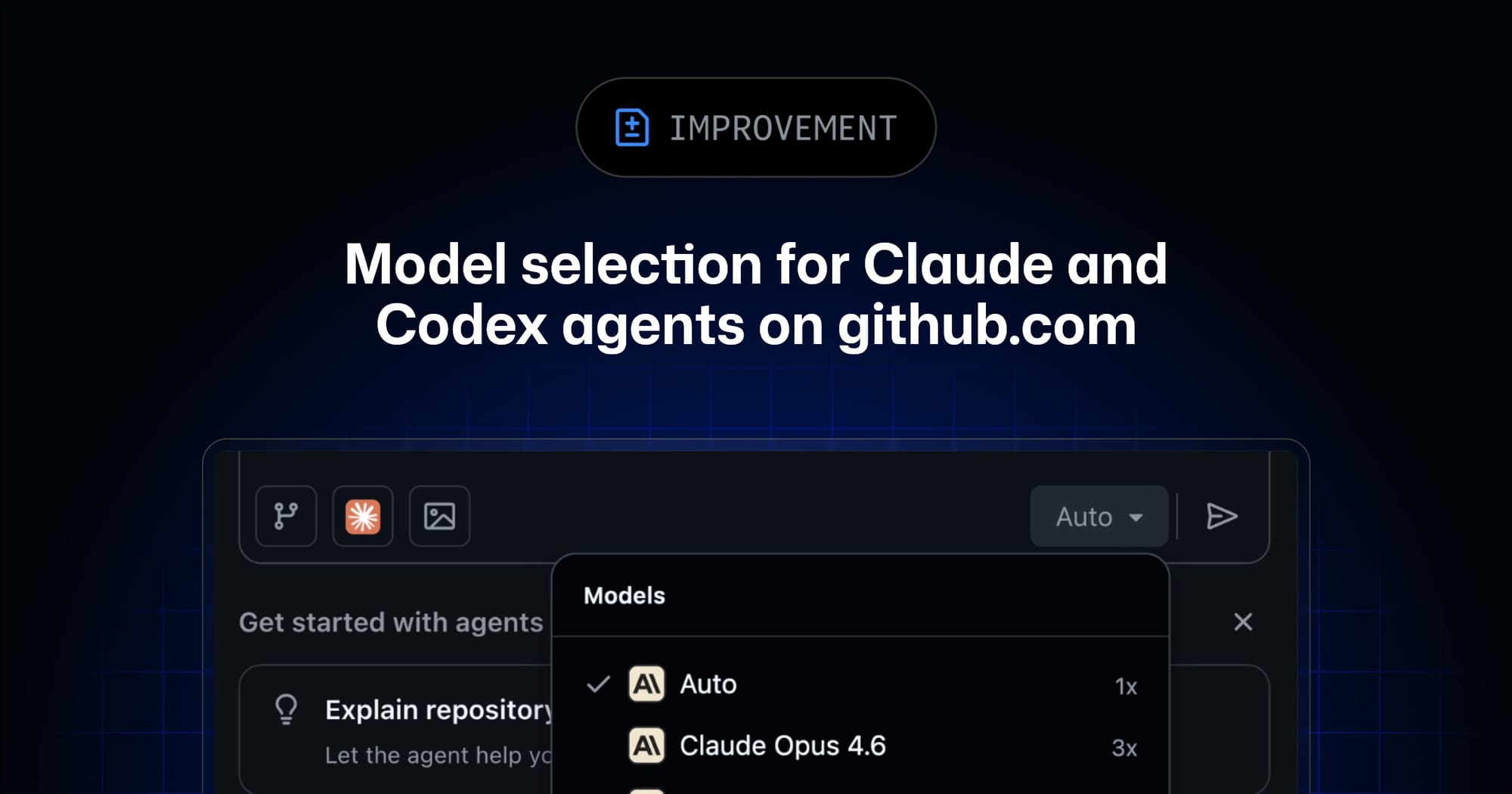
GitHub keeps making the same argument in product form: the future of AI coding is not a single magic model, it is a workflow with knobs. The company’s new model-selection support for Claude and Codex agents on github.com matters because it turns model choice into ordinary developer configuration instead of brand theater. That sounds small. It is not. When a platform lets teams swap models the way they swap runners, permissions, or CI settings, the center of gravity moves away from the model vendor and toward the orchestration layer.
The changelog entry is short, but the implications are wide. GitHub now lets users choose among Claude Sonnet 4.6, Claude Opus 4.6, Claude Sonnet 4.5, and Claude Opus 4.5 when using the Claude coding agent. For Codex, users can pick GPT-5.2-Codex, GPT-5.3-Codex, or GPT-5.4. GitHub’s broader Copilot docs also expose an Auto option for model selection, which is the clearest sign yet that the company wants developers to think less about vendor loyalty and more about workload fit. That is a healthier framing for the market, and a more dangerous one for the model labs.
The most important detail is not the dropdown itself. It is where the dropdown lives. Third-party agents already run inside the surfaces GitHub controls: the Agents tab, issues, pull requests, GitHub Mobile, and Visual Studio Code. Business and Enterprise users still need policy enablement and repo-level cloud-agent enablement, but once those gates are open, GitHub is increasingly the place where tasks are assigned, executed, reviewed, and measured. If GitHub owns the queue, the branch, the review UI, and the usage telemetry, then model selection becomes a parameter inside GitHub’s operating environment, not the defining product in its own right.
That is strategically elegant. OpenAI wants Codex to feel like a full coding operating environment. Anthropic wants Managed Agents to become the runtime layer for long-horizon work. GitHub’s answer is simpler and more grounded: let the labs compete upstream while GitHub owns the place where developers already work. If that strategy lands, the enduring product is not Claude or Codex in isolation. It is GitHub as the control plane that routes between them.
The premium-request meter is the real subtext
GitHub is not exposing model choice as a purely aesthetic feature. The company’s documentation is explicit that AI model selection affects premium request usage, and the April 14 changelog notes that each third-party coding-agent session consumes one Copilot premium request while also burning GitHub Actions minutes. That means routing decisions have budget consequences. Teams are no longer just asking which model is smartest. They are asking which model is smart enough for this job, at this latency, for this price, inside this governance surface.
This is what category maturity looks like. Early in an AI tooling cycle, vendors sell aspiration. Everything is a benchmark screenshot, a launch video, or a heroic anecdote about a model fixing an impossible bug. Later, the questions get less cinematic and more useful. Which model is fast enough for merge-conflict cleanup? Which one is worth spending on for a large architectural refactor? Which one should be the default for repo spelunking, and which one should only be available for harder multi-file reasoning? GitHub just made those questions operational.
That matters because the model landscape is now broad enough that one-size-fits-all selection is lazy. Claude Opus 4.6, Claude Sonnet 4.6, GPT-5.3-Codex, and GPT-5.4 are not interchangeable products wearing different badges. They have different strengths, latencies, and cost profiles. GitHub’s own model-comparison docs increasingly frame model choice around task type, not vendor halo. That is exactly right. A heavyweight reasoning model may be the correct answer for a nasty debugging pass, but it is overkill for routine branch maintenance or a narrow repo edit. Once the orchestration layer makes that distinction easy, teams stop paying frontier-model tax on work that did not need it.
GitHub is quietly flattening vendor differentiation
There is also a subtler competitive move here. By putting Claude and Codex agents behind similar product surfaces, GitHub is standardizing expectations around how coding agents should behave. Kick off a task. Pick a model. Let it run asynchronously. Review the result in a familiar PR and policy flow. That flattens a lot of the messier product differentiation the vendors would prefer to emphasize. It tells customers, in effect, that the orchestration experience can stay stable even if the underlying model vendor changes.
If you are OpenAI or Anthropic, that is both good and bad news. Good, because GitHub is distributing access to your models inside the most important developer workflow surface on the internet. Bad, because it reduces your ability to make the UI itself your moat. The more GitHub normalizes model routing as infrastructure, the more model vendors risk becoming interchangeable compute providers unless they can show materially better output, economics, or trust characteristics.
For engineers and platform teams, that is useful leverage. It means you can evaluate models in the same workflow where you already manage pull requests and policy. But it also introduces new complexity. A menu of model choices becomes a source of confusion if nobody owns defaults. Most teams do not need everyone experimenting with seven variants and then expense-reporting the result in vibes. They need a routing policy. Use a cheaper coding specialist for routine edits. Use a stronger reasoning model for ambiguous, repo-wide tasks. Keep Auto available when the platform’s selection logic is good enough, but audit the outcomes rather than assuming automation absolves judgment.
There is a governance story hiding here too. GitHub’s ability to expose third-party agents only when enterprise policy and repo settings allow it is not glamorous, but it is the kind of plumbing that makes adoption real. Coding agents are no longer a toy a single developer sneaks into a side terminal. They are becoming centrally governed infrastructure with toggles, request budgets, and workflow hooks. That is not the end of experimentation. It is the start of adulthood.
The bigger market lesson is that “best model” is becoming the wrong question. The better question is: what is the cleanest system for matching the right model to the right task without making developers hate the workflow or finance hate the bill? GitHub’s model selection update is a step toward that future. It treats agent choice like CI configuration, not fan identity. That is a more boring story than a model launch, and a more important one.
My bet is that this is how the coding-agent market settles. The labs keep shipping faster, better models. The platforms wrap those models in policy, measurement, review, and task routing. Over time, the winning user experience is not “I am loyal to Vendor X.” It is “the system picked the right amount of intelligence for the job, and I barely had to think about it.” GitHub is trying to make that normal. That is a very platform-shaped ambition.
Sources: GitHub Changelog, GitHub Docs: About third-party agents, GitHub Docs: AI model comparison, GitHub Docs: About Copilot auto model selection