GitHub’s Latest Copilot Pitch Is a Quiet Endorsement of Vibe-Coding With Guardrails, Not Raw Autonomy

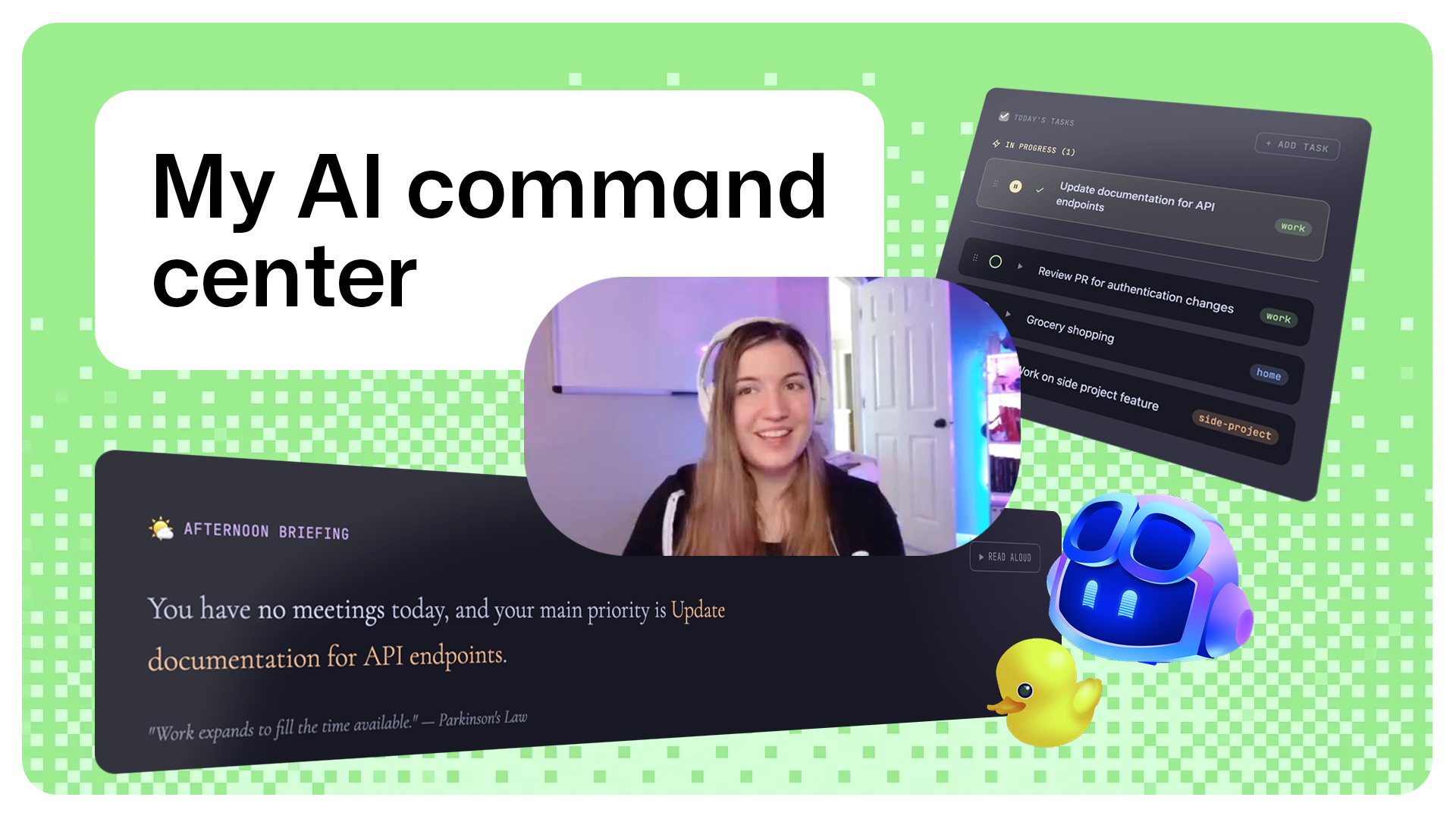
GitHub’s latest Copilot pitch is nominally about a personal dashboard. The real story is that GitHub just published one of the better accidental manifestos for how “vibe coding” becomes useful without becoming unserious.
The post centers on Brittany Ellich, a GitHub staff engineer who built a personal organization command center to pull tasks, meetings, and a morning briefing into one interface. On the surface, it is just another “developer built a thing quickly with AI” case study. Those are usually marketing calories. This one is more interesting because it exposes the workflow split that sensible teams are converging on: AI for planning assistance and scoped implementation, humans for specification, cleanup, simplification, and judgment. That is not raw autonomy. It is delegation with guardrails.
Ellich says v1 went from idea to working tool in a single day while she was still doing her regular job. More important than the speed claim is how she describes getting there. She starts with a plan-then-implement flow, has Copilot interview her until the requirements are clear, uses agent mode in VS Code for synchronous work, and keeps Copilot Cloud Agent busy on well-scoped asynchronous tasks like bug fixes or tech debt. That is a much healthier pattern than the fantasy version of vibe coding, where the human emits one vague prompt and pretends the resulting repo is a product.
The artifact also helps because GitHub published the repo instead of only the anecdote. command-center-lite is not some abstract demo. It is an Electron, React, TypeScript, and Vite desktop app with Tailwind styling, SQLite for local storage, Work IQ integration for Microsoft 365 calendar data, and optional ElevenLabs text-to-speech. That stack tells you two useful things at once. First, yes, AI now makes it easier to stitch together a cross-platform desktop app from commodity pieces. Second, no, the boring integration burden did not disappear. You still need Node 18+, GitHub Copilot CLI for Work IQ setup, Microsoft 365 access, tenant consent in some cases, and ordinary repo cleanup work after the machine has enthusiastically overbuilt everything.
That last part is the line worth underlining. Ellich says agents seem to like adding code but are much less enthusiastic about removing code. That is the most honest sentence in the whole story, and probably the most valuable. The AI-coding market still spends too much time pretending generation is the hard part. It is not. The hard part is restraint. The hard part is ending up with something maintainable after the model has taken every invitation to be helpful as permission to be expansive. Senior engineers know this instinctively, which is why the best AI workflows today look less like “replace the engineer” and more like “speed up the intern, keep the staff engineer.”
GitHub’s own product framing reinforces that point. Copilot CLI, Copilot Cloud Agent, VS Code agent mode, repo-level artifacts, and MCP-based integrations all show up here as pieces of one workflow shell. That is strategically important. The company is no longer selling autocomplete plus chat. It is selling a development environment where some work happens locally under close supervision, some work gets delegated asynchronously, and the handoff points stay inside familiar developer surfaces. This is exactly how platform vendors win categories after the benchmark wars get boring.
There is also a quiet endorsement of MCP in the story, though not the naïve version. The command center uses Microsoft Work IQ to pull in Microsoft 365 data, and the setup requirements are not trivial. Work IQ is in public preview, requires Node-based tooling, and can require administrator consent to access tenant data. That is useful reality. It shows where agentic workflows get genuinely powerful, namely when they connect to live business systems, and where they also become operationally annoying. The next phase of agentic coding is not just “better models.” It is “better connector hygiene, better permissions, and better defaults around what the agent can reach.”
The broader cultural point is that vibe coding is maturing into two branches. One branch is slop acceleration: thin prototypes, too much generated code, weak review, good luck in production. The other branch is what this post quietly advocates: compress the implementation loop, keep the human in charge of framing and cleanup, and use agents where the task is clear enough that delegation actually saves time. Only one of those branches compounds. The other just creates a future debugging budget.
For practitioners, the lesson is not “everyone should build an Electron dashboard.” It is more general. If you want AI coding to work in a team setting, define the seams. Decide which work is synchronous and oversight-heavy. Decide which work can safely go to a cloud agent in the background. Force the planning step before implementation. Expect post-generation simplification. Treat connectors and plugins like production dependencies, because they are. And be honest that deletion, refactoring, and architectural coherence still belong mostly to humans.
This also sharpens the competitive picture. Anthropic is making a play for the runtime. OpenAI is making a play for the model substrate and cost surface. GitHub is making a play for workflow gravity. A case study like this is not just content marketing. It is product positioning by example. GitHub wants developers to see agentic coding as something that lives naturally inside repos, pull requests, CLI sessions, background tasks, and enterprise connectors, not as a separate magic toy you visit for demos and abandon for real work.
That is why the post matters more than its tone suggests. It normalizes a grown-up version of vibe coding: fast, practical, slightly messy, still very human. The romantic framing around fully autonomous software creation was always going to hit a wall, because software does not fail at the moment of generation. It fails later, when nobody remembers why the system looks the way it does and the cleanup never happened. GitHub’s best current argument for Copilot is not that it can replace that judgment. It is that it can shorten the distance between idea and a reviewable first version without pretending review is optional.
My take: this is the right pitch. Vibe coding gets useful the moment it stops trying to cosplay as engineering without engineers. The winning workflows will be the ones that make delegation cheap, cleanup expected, and human judgment impossible to accidentally turn off.
Sources: GitHub Blog, command-center-lite repo, Microsoft Work IQ repo