Google Cloud Next 2026: The Real AI Race Is Happening Below the Model Layer, in the Control Plane

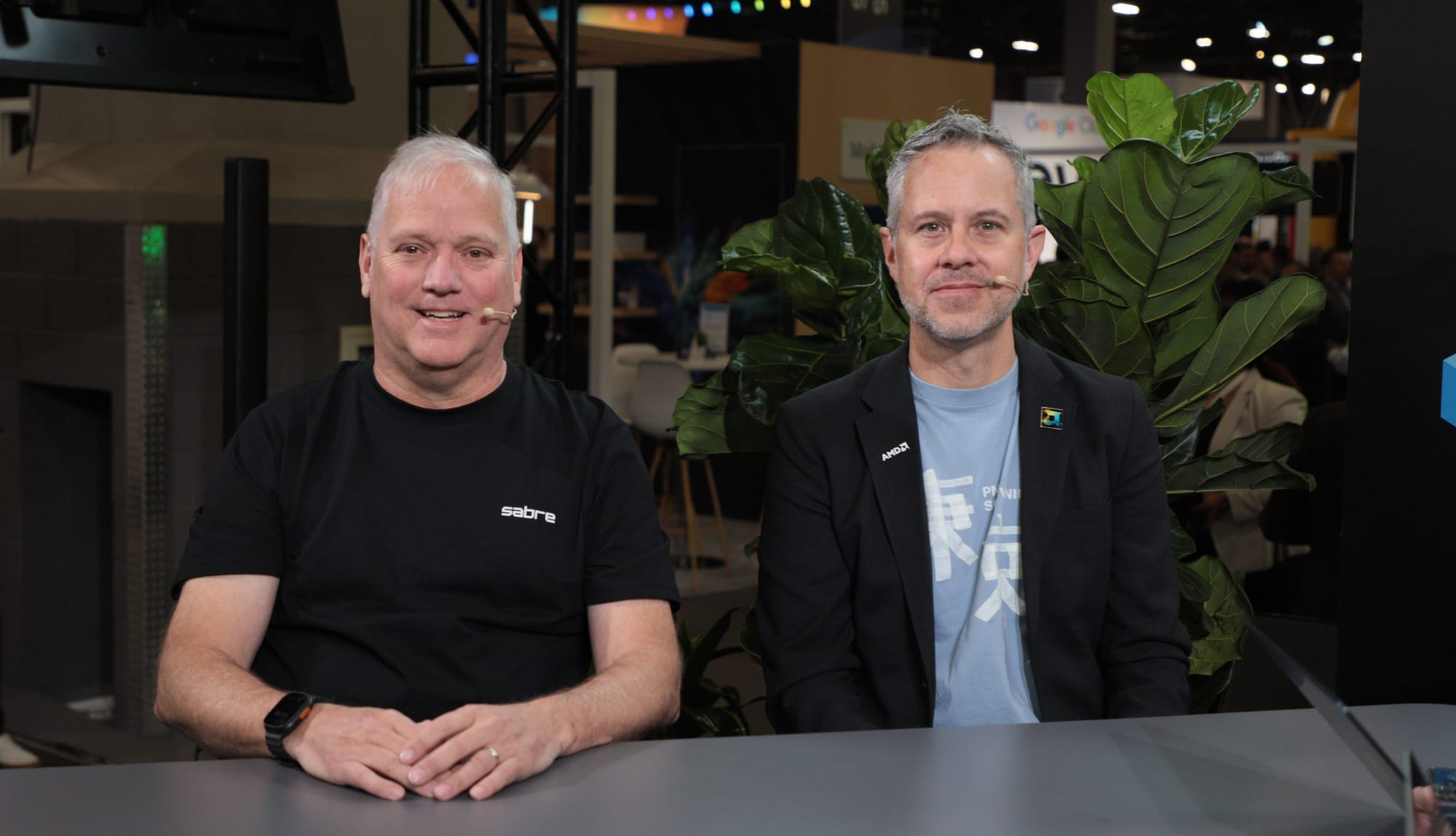
There is a useful game to play at every major cloud conference: find the sentence that reveals what the vendor actually believes about the market, as opposed to what their press release says. At Google Cloud Next 2026, the sentence belongs to Sailesh Krishnamurthy, VP of database engineering at Google Cloud, in a SiliconANGLE interview: "The models are amazing. The models surprise us every day. They can do a lot of work, but they don't have all the context. The context is in the data."
That is a surprisingly candid thing for a Google Cloud executive to say at a conference organized around Gemini. It is also the most accurate sentence spoken all week.
The broader narrative from the analyst coverage is that the real AI battleground is not the model layer but the control plane — the horizontal infrastructure that connects models to enterprise data, orchestrates agentic workflows across systems, and acts as what one analyst called "the operating system for the agentic enterprise." This framing is not new. The agent infrastructure conversation has been building for months. What Next 2026 added was the confirmation that all three hyperscalers are now explicitly competing on this terrain, with Kubernetes positioned as the substrate and the partner ecosystem as the distribution mechanism.
The Kubernetes framing is the most architecturally interesting part of the coverage. Drew Bradstock of Google Kubernetes described Kubernetes as "the operating system for AI — from training to inference to reinforcement learning" and added something significant: Google is finding itself "on the gun ... to adapt Kubernetes quite quickly, even faster than the open-source community can keep up." That is an unusual admission from a company that depends heavily on open-source goodwill. It is also a direct acknowledgment that the pace of agent-specific infrastructure requirements is outrunning the planning cycles of the OSS community, which creates real implications for teams trying to decide when to chase agent-optimized Kubernetes features versus staying on stable version tracks.
The data-context argument is the other idea worth taking seriously. Krishnamurthy's framing — models are impressive but context-starved, and the context lives in data systems that were not designed for this access pattern — maps directly to what practitioners building agent systems have been saying for a year. The practical implication is straightforward: teams investing in agent orchestration without investing in the retrieval and context pipeline underneath are building on sand. The models will get better. The data problem does not resolve by itself.
The most concrete new commitment in the coverage is Google's $750 million partner ecosystem investment targeting 120,000 members, with explicit positioning around partner agents talking to partner agents across onboarding, training, and content integration. That vision — standardized A2A communication between agents from different vendors inside enterprise environments — is plausible in structure and dependent on exactly the kind of protocol standardization work that is still in flight across the industry. Whether Google's money accelerates that timeline or just decorates it is the open question.
The Covered California case study is the most credibly specific proof point in the coverage: 24,000 hours of annual savings in service center operations, document verification dropped from 72 hours to seconds. Those are real numbers from a real deployment. They are also the most tractable kind of agent use case — document processing, form extraction, deterministic retrieval — not a proxy for the complex multi-agent coordination problems that most enterprise workflows actually involve.
The AMD and Sabre story is infrastructure economics more than AI architecture. Sabre migrated 50,000 virtual CPUs to AMD-based Google Cloud instances with no code changes and reinvested the savings into agentic AI development. Fine as evidence of cloud pricing pressure, less useful as evidence of agent infrastructure maturity.
What is worth taking away from Next 2026 is not the specific product announcements — those are transitory — but the structural signal about where the money is moving. The hyperscalers have concluded that the model layer is becoming commoditized faster than the infrastructure layer beneath it, and they are positioning accordingly. For practitioners, the implication is that understanding agent orchestration, data context pipelines, hybrid deployment models, and the operational realities of running agents in enterprise environments is the durable skill set, not prompt engineering or model selection. The models will keep improving. The infrastructure questions are the ones that take years to answer correctly.
Sources: SiliconANGLE