Google Home Speaker Is Gemini’s Smart-Home Retry, Not Just a Nest Refresh

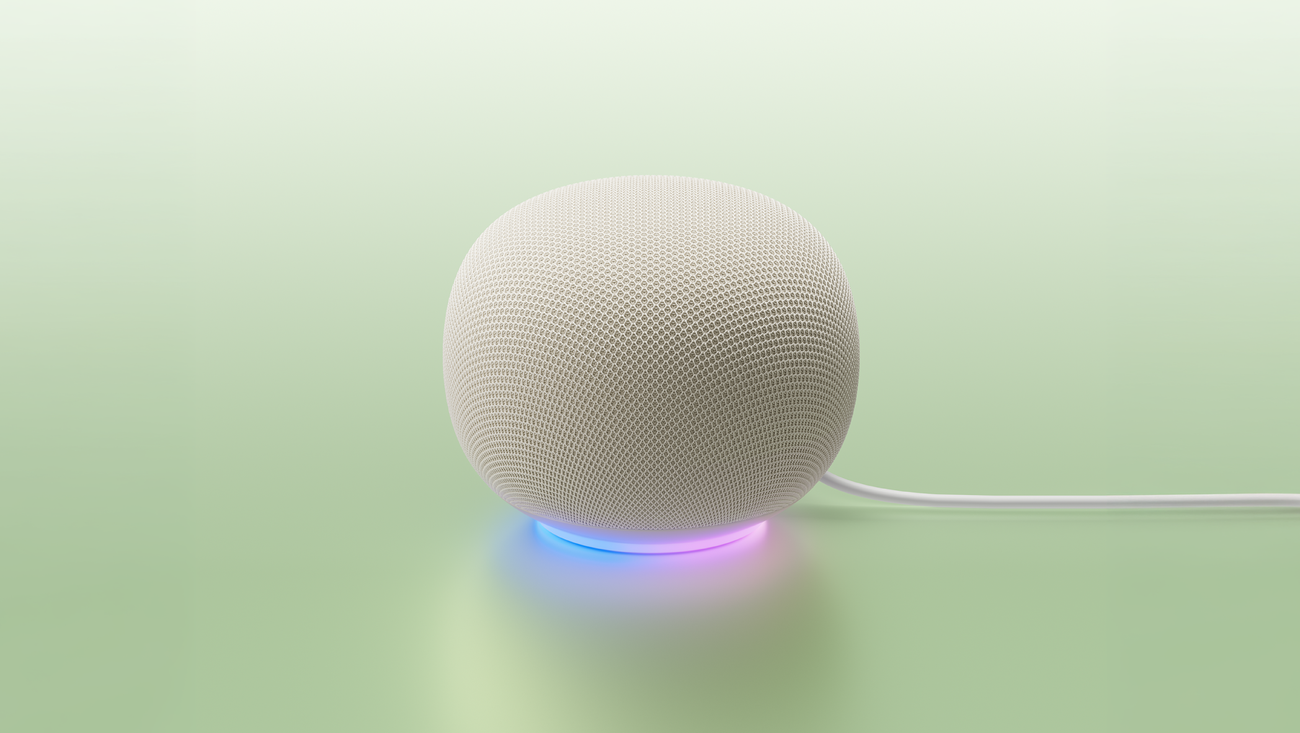
The new Google Home Speaker is a $99.99 smart speaker, which sounds like the least surprising product sentence in consumer tech. The interesting part is that Google is finally trying to fix the thing that made smart speakers stall: they were sold as assistants but behaved like command-line interfaces with worse autocomplete.
Google opened preorders on June 17 for the first audio device built specifically for Gemini for Home. It ships June 25, comes in Hazel, Porcelain, and US-only Jade and Berry, uses a custom 3D-knit textile, and has the expected physical microphone mute switch. Fine. The hardware is not the story. The story is whether Gemini can turn the smart speaker back into a useful interface instead of a kitchen timer that occasionally misunderstands the lamp.
Google’s pitch is natural, multi-step voice control. Instead of memorizing brittle phrases, users can say things like “Turn off all the lights except for my bedside lamp,” “Dim the kitchen lights, play some relaxing music and set a timer for 20 minutes,” or “Turn off the coffee maker…I meant turn it on.” The speaker ships with 10 new natural-sounding voices, short-term conversational context, and Continued Conversation in all supported languages so follow-ups do not require repeating “Ok Google.”
The old assistant grammar was the product bug
Smart speakers never became general home computers because users learned the boundaries too quickly. They worked for timers, weather, music, and a few lighting routines. Anything more complex felt like negotiating with a tiny IVR system. If you used the wrong device name, spoke in the wrong order, or changed your mind mid-sentence, the magic disappeared.
Gemini for Home is Google’s attempt to replace that command grammar with intent handling. The examples are not benchmark-hard, but they are product-hard. “All lights except my bedside lamp” requires set logic over a household graph. “Dim the kitchen lights, play music and set a timer” requires action sequencing across device types. Mid-sentence correction requires the assistant to update state before it executes. This is the boring edge of agentic AI, which is exactly why it matters.
Builders should pay attention because this is where agents become real. Not when they write a flashy plan in a chat window. When they safely map fuzzy human language to bounded actions in a messy environment full of aliases, flaky devices, shared users, and consequences the user can immediately notice. A wrong benchmark answer is forgettable. Turning off the wrong lights at midnight is a household support ticket.
The speaker also pairs with Google TV Streamer, with up to two speakers supporting spatial surround sound. That is a sensible ecosystem move, but the more important platform move is Google Home Premium. The subscription unlocks Gemini Live, camera history search, and Home Briefs. Users can ask whether the back gate is open, whether a pet got on the couch, or what happened around the house while they were away.
A helpful home is also a queryable home
That premium layer is where the privacy stakes get real. A microphone in the room was already sensitive. A voice interface to camera history, familiar faces, pets, and household activity summaries is a different class of product. The useful version helps a family understand what happened while they were gone. The creepy version makes domestic life feel searchable by default.
Google includes the physical mute switch and the light-ring underglow that indicates when the speaker is listening, thinking, or responding. Those are necessary affordances, not decorative trust theater. But the hard questions live above the hardware: who can query camera history, how are permissions scoped across household members, what does the assistant refuse to summarize, how long is history retained, and how clearly does the product explain what requires a premium plan?
The subscription boundary also deserves scrutiny. Basic natural-language control is part of the device; richer reasoning over home history is tied to Google Home Premium. That may be economically rational because video search and summaries cost compute and carry more compliance risk. It also means the “real assistant” experience could be split across tiers. If Google is not careful, users will again learn invisible boundaries — not because the command grammar failed, but because the business model did.
For product teams, the lesson is to design the permission model before the demo. Home agents need device graphs, user roles, audit trails, revocation, fallbacks, and confirmations for high-impact actions. The assistant should know the difference between “play music,” “unlock the door,” “show camera history,” and “change security settings.” Treating every household action as the same kind of tool call is how useful AI becomes a liability.
There is also a distribution lesson. Google is not launching Gemini for Home as an abstract chatbot and hoping users find use cases. It is embedding it in a device category where voice already made sense but the software was too rigid. That is the right pattern for consumer AI: fix a known workflow at the point of use, then expand. The worst AI products ask users to move their lives into a chatbot. The better ones make an existing object less dumb.
Will this redeem the smart speaker category? Maybe. The category has accumulated a lot of user skepticism, much of it earned. But if Gemini can reliably handle multi-step home control, corrections, follow-up context, and household-specific ambiguity, the $99 cylinder becomes more than a refresh. It becomes Google’s test bed for consumer agents with real-world side effects.
The bar is not whether the speaker can sound natural in a launch video. The bar is whether it can survive a normal Tuesday: two people talking over each other, three lights with similar names, a kid interrupting the command, a camera event that needs context, and a user who expects the house to do the obvious thing. If Gemini can handle that, the smart home finally gets an assistant worthy of the noun. If not, at least the timer will sound better in 360 degrees.
Sources: Google Blog, Google Store, Google’s 2025 Nest/Gemini home preview