Google Is Building an AI Workforce Narrative Fast, Before the Politics of Job Change Catch Up

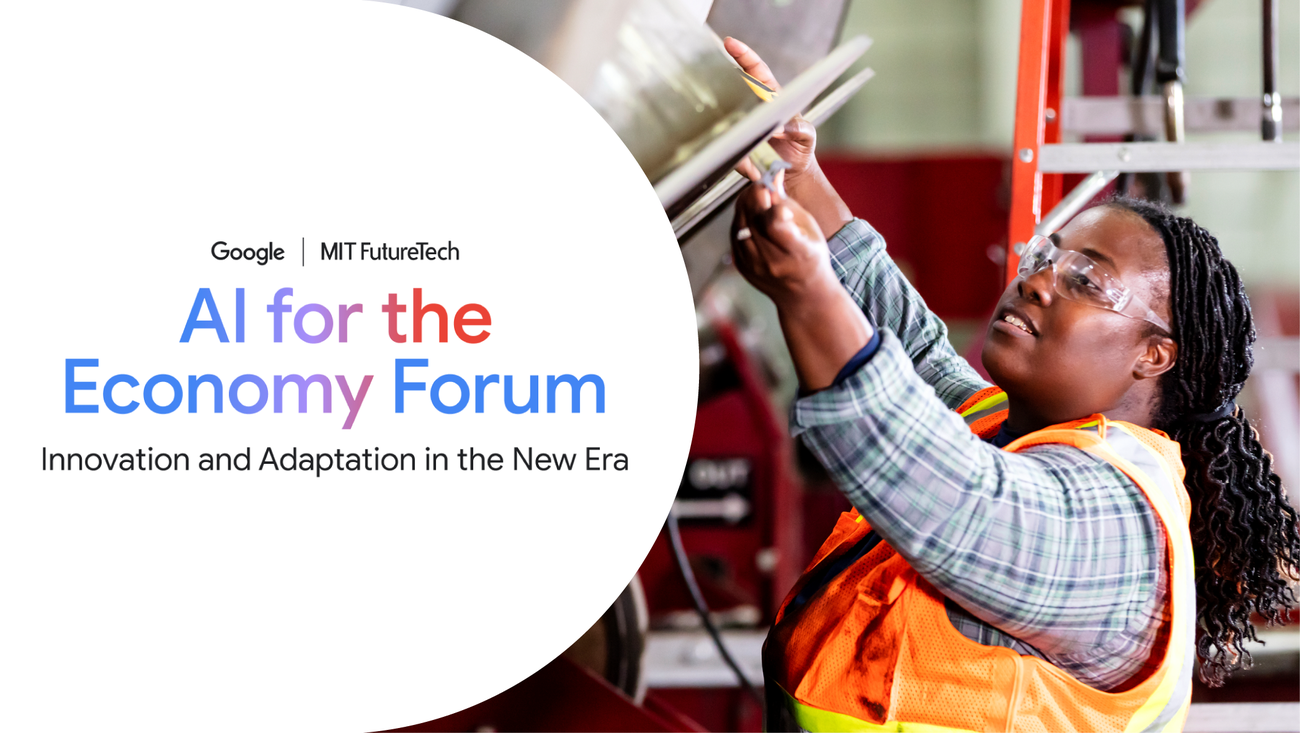
Google is moving quickly to define the politics of AI before the politics define Google. That is the real read on the company’s new AI for the Economy Forum, co-hosted with MIT FutureTech. On the surface, this is a familiar mix of research partnerships, workforce training, scholar programs, and policy language about shared prosperity. Underneath, it is something more strategic: an attempt to frame the coming labor-market argument around transition management instead of disruption blame.
The timing is not subtle. AI adoption has moved past the stage where vendors can talk only about model capability and productivity deltas. The harder questions are now everywhere. Which jobs change first. Who gets trained. What happens to junior workers whose “learning by doing” tasks are suddenly automated away. How much decision-making can be offloaded before skills atrophy. And which companies get to write the social contract around those changes.
Google’s answer, at least in this announcement, is that the transition is shapeable if companies, governments, researchers, and workers coordinate well enough. To support that story, Google points to a few numbers and mechanisms. The company says it has trained 100 million people globally in digital skills, including more than 13 million in the United States. It highlights its AI Professional Certificate and a $120 million Global AI Opportunity Fund. It also bundles several Google.org-backed programs into one narrative, including AI training for rural healthcare workers, apprenticeship work with Jobs for the Future, and manufacturing training that Google says will reach 40,000 current and future workers.
That stack is not random. Google is assembling an argument that it is not merely selling AI into the economy, but also helping society absorb it. That is partly reputational self-defense, obviously. But it is also market-making. AI adoption accelerates when the surrounding story feels manageable. Training programs, research cohorts, and advisory councils are a way to lower the political temperature around deployment.
The best part of Google’s package is not Google’s language
The strongest external signal in this bundle is MIT’s Humans in the Loop work, which draws on more than twenty companies across healthcare, retail, finance, insurance, real estate, and manufacturing. Its conclusions are more sober than most AI marketing. The paper argues that better deployments tend to minimize drudgery, promote learning, preserve teamwork, pay attention to interface design, respect domain expertise, and maintain accountability. That is a much more useful framework than the usual debate between “AI replaces everyone” and “AI is just another tool.”
Engineers should linger on those points, because they point to the next competitive layer in AI products. Model quality still matters, of course. But increasingly the differentiator is whether the workflow built around the model makes workers sharper or merely faster. If users start mentally offloading judgment to the system, a product can look productive in the short term while quietly degrading expertise over time. If teams stop consulting one another because the chatbot is “good enough,” collaboration may fall even as output volume rises. If an interface makes it hard to inspect why the model suggested something, the human in the loop becomes a human checkbox.
This is where Google’s forum matters. Not because a DC event changes the labor market, but because even the large model vendors are now admitting that adoption design is the harder problem. The next moat may not come from squeezing out another benchmark win. It may come from building interfaces, review loops, training paths, and governance models that help organizations integrate AI without hollowing out the people using it.
The labor question is becoming a product question
That shift has practical implications for builders. If you are working on copilots, internal assistants, agent workflows, or enterprise AI tools, you should stop treating workforce effects as someone else’s policy concern. They are product concerns now. Does your tool explain enough for a junior employee to learn from it. Does it encourage verification. Does it preserve the social parts of work that still matter, like escalation paths and peer review. Does it support supervisors without letting them become passive approvers of machine output.
Those are not ethics add-ons. They determine whether the system creates durable leverage or a messy dependency. A lot of teams still talk as if adoption friction comes from user skepticism that will vanish once the model gets smarter. That is incomplete. Friction also comes from workers correctly sensing that a poorly designed AI workflow can make their jobs more brittle, less teachable, and harder to trust. The MIT framing is useful because it treats those concerns as design constraints rather than emotional resistance.
Google’s own framing is neat, maybe too neat. Training 100 million people in digital skills is impressive, but it does not automatically solve the distribution of gains and losses from AI adoption. Certificates do not guarantee stronger labor markets. Research programs do not remove the incentive for companies to chase headcount efficiency. And “partnership” language can become a way to avoid naming who bears the cost when roles are redesigned badly.
Still, there is a real signal here. Google is betting that the conversation is moving from “can AI do the work” to “how should institutions redesign work around AI.” That is the right bet. It is also an implicit admission that the industry’s first wave of automation rhetoric was too shallow. The serious questions now are operational and organizational: what should be automated, what should remain human, what people need to learn to supervise systems well, and how to keep productivity gains from turning into capability decay.
If you build AI products, there is a straightforward action item. Design for learning, auditability, and accountable review before you design for maximum task compression. The fastest interface is not always the best one. Sometimes the better product is the one that leaves the user more capable after repeated use. That may feel slower in a demo. It will look smarter a year later.
Google wants credit for helping society navigate the AI transition. Fine. The more useful takeaway is that the company is signaling where the next real work is. Less chest-thumping about raw intelligence, more attention to the messy systems around it. In other words, the AI economy is no longer just about models. It is about what kind of workers and workflows those models produce.
Sources: Google Blog, MIT FutureTech / MIT Work of the Future, Google Public Policy, Google AI & Economy Research Program