Google’s Flow Sessions Post Quietly Reveals the Next Battle in AI Video: Workflow, Not Wow Factor

Most generative video products still behave like slot machines with better branding. You pull a lever, get a clip, shrug at the visual drift, and start over. Google’s latest post about its Flow Sessions artist program matters because it hints at a different ambition. Flow is being positioned less as a text-to-video novelty engine and more as a creative operating environment, which is where this market actually gets durable.
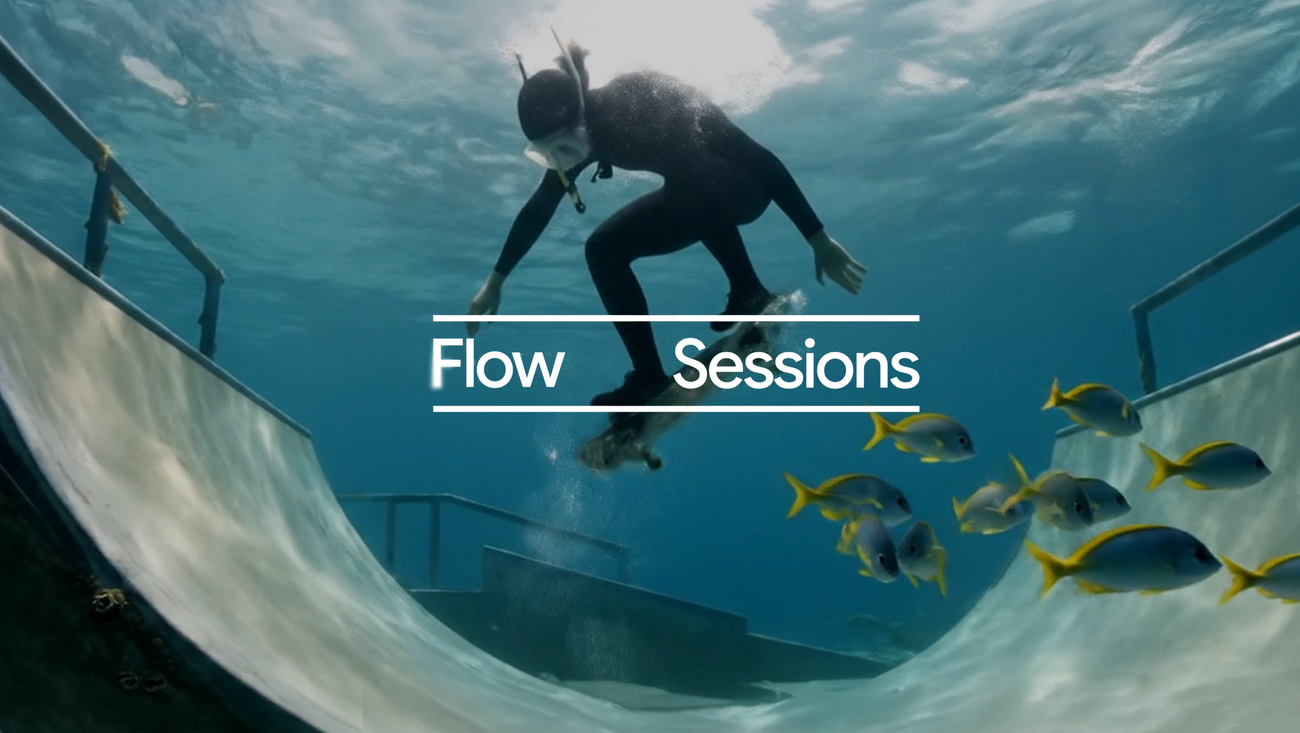
The official post is framed as a set of lessons from artists in the third Flow Sessions cohort, a six-week Google Labs program built around Flow. On the surface, it is soft marketing: a few creator anecdotes, a little inspiration, a prompt to try the product. But the details are more revealing than the tone. Google says this latest class was the first to intentionally recruit creatives beyond traditional filmmaking, including people from journalism, advertising, and fashion. That matters because it shifts the product story from “AI can help directors make clips” to “AI video tooling may become general creative infrastructure for any team that works with moving images, branded aesthetics, and iterative visual storytelling.”
The examples Google chose were not accidental. Artist Julie Wieland used Flow as what she called an “endless playground,” then paired it with AI Studio to build a custom app that lowered frame rate for a stop-motion feel. That is a very different workflow from typing a prompt and accepting the first good-looking result. It suggests Flow’s value starts to rise when creators treat it as one component in a stack, not the whole stack. Calvin Herbst used archival 16mm childhood footage and a separate style-transfer workflow to build a film around the memory of his dog. Stephane Benini reportedly used Flow’s sheer output volume and Veo’s visual drift as storytelling devices rather than defects. Fashion designer Charline Prat and the studio COMBO built reference libraries so fantasy textures, characters, and worlds would stay visually coherent across scenes.
That last detail, the reference-library work, is the real tell. Consistency is where most AI video demos go to die. A single impressive clip is easy marketing. A sequence that preserves character identity, material texture, camera logic, and aesthetic intent across multiple shots is much harder, and much closer to what agencies, brands, and filmmakers actually need. If Google is leaning into collections, ingredient-based generation, object insertion and removal, extension workflows, and reusable references, it is because the product category is maturing away from raw generation and toward asset management, controlled iteration, and production continuity.
Google’s own Flow site reinforces that read. The company describes Flow as an “AI creative studio” for videos, images, and stories, not merely a video generator. The feature list is notably workflow-heavy: ingredients to video, frames to video, object insertion and removal, video extension, camera-angle control, and collections. This is product language from the Adobe school of thought, not from the “watch this model cook” school. Even the pricing model points the same way. Free users get 100 upfront credits and 50 daily credits. Google AI Pro subscribers get 1,000 monthly credits, and Google AI Ultra subscribers get 25,000, with top-up credits available. That is a software consumption model for ongoing work, not just a one-week viral toy.
There is a second signal hiding here too: Google is building around creators who do not fit neatly into a single professional label. Journalism, fashion, advertising, and filmmaking all showed up in this cohort. That matters because the practical buyers for generative video are unlikely to be only “AI filmmakers.” They are going to be brand studios, social teams, research groups, documentary producers, ecommerce teams, and internal marketing departments that need motion assets faster than traditional pipelines allow. In other words, the real market may be creative ops, not cinema. Flow looks increasingly designed for that reality.
For practitioners, the useful question is not whether the artists in a Google-run program produced good work. Of course they did. They had time, support, and incentive to explore the product seriously. The more useful question is what their workflows reveal about where the tooling is going. Three things stand out.
First, generation is becoming subordinate to direction. The creators Google highlights are not celebrating the model for being magical. They are using it to explore, refine, remix, and constrain. That is what mature creative software looks like. The same shift happened in image generation. Once the novelty wore off, the real demand moved toward editing, reference control, compositing, and preservation of intent. Video is now following the same path.
Second, AI-native media workflows are becoming more modular. Julie Wieland reaches for AI Studio to create a frame-rate app. Herbst uses separate archival and style-transfer techniques. Prat and COMBO build reference libraries outside a single prompt box mentality. This is a strong sign that the winning tools will be the ones that play well with adjacent systems, not the ones that pretend one giant interface can replace every other part of the process. Engineers building creative tooling should pay attention here. Extensibility beats monolith rhetoric.
Third, the market is learning to reinterpret so-called model flaws as aesthetic affordances, but only when creators remain in control. Veo’s drift can be expressive if the filmmaker is steering it intentionally. It becomes useless when drift destroys continuity by accident. That distinction sounds obvious, but it is product-defining. A lot of AI tools still confuse randomness with creativity. Serious users do not want chaos. They want bounded surprise. The companies that understand that will keep the professionals when the tourists leave.
There is also a broader Google story here. Over the last week, the company has pushed hard on AI as an operating stack, not a collection of isolated models. You can see that in agent infrastructure on the cloud side, and you can see it here in creative tooling. Flow, AI Studio, Veo, subscription credits, reference assets, and editing primitives are starting to look like pieces of a unified creative platform. That does not mean Google has solved the hardest product problems. Far from it. Consistency, latency, usability, and output rights still matter a lot more than launch posts usually admit. But it does mean Google is aiming one layer higher than the usual text-to-video demo race.
If you run a creative or product team, the actionable takeaway is fairly straightforward. Stop evaluating video AI only on first-output wow factor. Test it on continuity across scenes, editability after generation, reference retention, asset reuse, and the amount of human taste it preserves rather than overwrites. If you are a builder, design for long-lived projects, not single prompts. Think libraries, references, revision trails, and interoperability. The next wave of value in generative media will come from reducing brittleness, not from generating slightly prettier surprise clips.
My take is simple: Google’s artist-program post says the quiet part out loud. The generative video market is leaving the demo era. The real competition now is over who can build the least fragile creative operating system around the models. If Flow keeps moving in that direction, Google has a more defensible story than “here is another video model.” If it does not, it will just be a nicer slot machine.
Sources: Google Blog, Google Labs, Flow, Google One Help