GPT-5.4 Looks Like the Point Where Vision Pipelines Get to Delete a Lot of Defensive Code

Most model upgrades add capabilities. The interesting ones delete code.
That is the real takeaway from Microsoft’s new benchmark on GPT-5.4’s ability to return pixel-level coordinates from engineering drawings. On the surface, this is a niche vision post about bounding boxes in electrical single-line diagrams. In practice, it is a useful signal about where multimodal pipelines may be crossing from “keep bolting on guardrails” into “you can finally simplify the system.” For people building document automation, industrial extraction, or any workflow that depends on a model pointing to the right place instead of merely sounding confident, that distinction matters more than one more glossy claim about state-of-the-art performance.
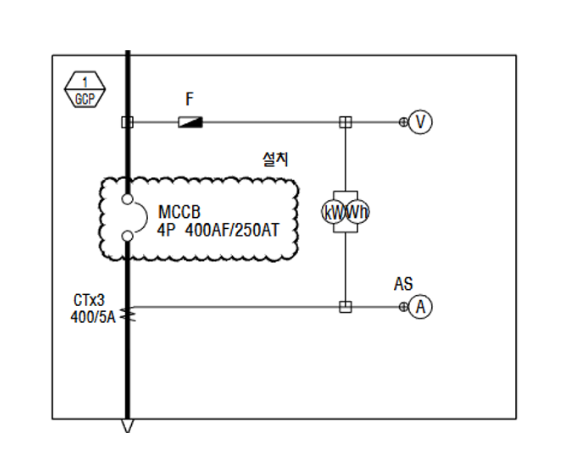
Microsoft’s test setup was narrow but concrete. The team used a fixed CAD-style image sized 847 by 783 pixels, with a known ground-truth bounding box at [135, 165, 687, 619], and scored output using intersection over union, or IoU, where 1.0 means perfect overlap. Every test was run five times. That detail matters because the headline is not just that GPT-5.4 scored high. It is that it scored high consistently, which is the difference between a benchmark curiosity and something you can put in a production pipeline without surrounding it with apology code.
The numbers are stark. On sparse single-shot bounding-box prompts, GPT-5.2 landed roughly in the 0.76 to 0.88 IoU range, while GPT-5.4 hit 0.99 and above in comparable cases. Test 2 variance tells the same story more brutally: GPT-5.2 showed a standard deviation of plus or minus 0.084, while GPT-5.4 stayed around plus or minus 0.003. That means the older model was not just weaker. It was unstable. The same prompt could give you a usable box, a mediocre box, or a box far enough off that some downstream step would need to catch it. GPT-5.4, by contrast, looks boring. Boring is what you want.
Microsoft also surfaced something practitioners will recognize immediately from real systems work: earlier reliability often had to be purchased with scaffolding. With GPT-5.2, richer prompts helped. Adding image dimensions was a free gain. Grid overlays pushed one benchmark from 0.765 to 0.910, a meaningful jump. Higher reasoning settings added about 0.076 IoU on sparse prompts. Iterative self-correction loops improved one directional-feedback test from 0.926 to 0.969 over five rounds. All of that is clever engineering, but it is still compensating engineering. It exists because the model is not yet trustworthy enough on its own.
The best feature may be all the defensive plumbing you get to remove
This is where the benchmark stops being a Microsoft blog curiosity and becomes a useful architecture note. If GPT-5.4 can reach 0.99-plus on first attempt, and do it with low variance, a lot of older pipeline design starts to look like historical baggage. Majority voting across calls, overlay rendering for validation, extra prompt scaffolding, retry budgets with higher reasoning turned on, and custom correction loops may no longer be the smart default. They may just be leftover cost centers from the GPT-5.2 era.
That matters because defensive pipeline code is rarely free. It adds latency. It adds tokens. It creates more failure modes. It raises the cost of debugging because every bad answer is now mixed up with orchestration complexity. Teams often treat that complexity as proof they are being rigorous, but sometimes it is just evidence they built around a weak model and forgot to revisit the architecture once the model improved.
Microsoft’s adjacent BOM extraction writeup makes this point even clearer. In that companion post, the team describes a five-stage pipeline for electrical drawings that combines Azure Document Intelligence with GPT-5.4. The blunt admission is refreshing: naive full-page extraction “fails catastrophically.” The practical fix was to decompose the problem, let Document Intelligence do the cheaper deterministic work, tile the page into 2000-pixel overlapping slices, cross-check names against OCR output, and reserve GPT calls for the ambiguous parts. That is not AI magic. That is systems engineering. And what the coordinate benchmark suggests is that one chunk of this machinery, the repeated spatial babysitting, may now be smaller than it used to be.
Delete code selectively, not romantically
There is a trap here, and Microsoft’s own data hints at it. This was still a controlled benchmark on a clean CAD-style image with a known target. Real documents are uglier. They have skewed scans, overlapping annotations, weird legends, low-resolution screenshots dropped into PDFs, and human-created inconsistencies that no benchmark author would choose on purpose. A model that nails a clean electrical panel box may still wobble on a medical form somebody faxed in 2017 and then rescanned twice.
So the right response is not blind faith. It is re-benchmarking against your own worst examples. If you run a vision-heavy workflow on Azure OpenAI today, this post should trigger an audit. Which parts of the pipeline exist to solve true business complexity, and which parts exist mostly to patch over GPT-5.2’s spatial weakness? Keep the former. Challenge the latter. A lot of teams could probably remove at least one layer of retry logic or visual prompting, cut latency, and lower cost without losing reliability. But the word there is could, not should, until they test it on production-shaped data.
There is also a pricing and operations angle that deserves more attention. In multimodal systems, cost discipline is often framed as model selection, but orchestration overhead matters too. A single reliable call is cheaper than three calls plus a validator plus a correction loop. Better spatial grounding does not just improve quality. It changes the unit economics of the whole workflow. That is especially relevant on Azure, where teams increasingly mix Foundry-hosted model calls with surrounding platform services and every extra step compounds latency and billable work.
The broader industry lesson is simple. We spend too much time asking whether a new model is smarter and not enough time asking whether it lets us build a simpler system. The latter question is usually the one that determines whether something ships. Production systems do not fail because a blog post benchmark looked bad. They fail because the architecture becomes too expensive, too slow, too brittle, or too hard to understand. If GPT-5.4 reduces the amount of compensating machinery needed for spatial tasks, that is a more important improvement than a marginal benchmark win on paper.
My read is that this is the point where vision teams should stop assuming their current guardrails are sacred. Some are still doing real work. Some are now cargo cult. The only way to tell is to rerun the nasty cases, not just the happy-path samples, and see which pieces of the old stack are still earning rent.
And that is why this post is more interesting than it looks. It is nominally about coordinates. It is actually about maturity. When a model upgrade lets you delete defensive code instead of inventing more of it, that is when a capability starts to feel production-grade.
Sources: Microsoft Azure AI Foundry Blog, Microsoft Azure AI Foundry Blog (BOM extraction pipeline), Microsoft Learn, Azure Document Intelligence documentation