Microsoft Put Grok 4.3 Behind Azure's Enterprise Guardrails

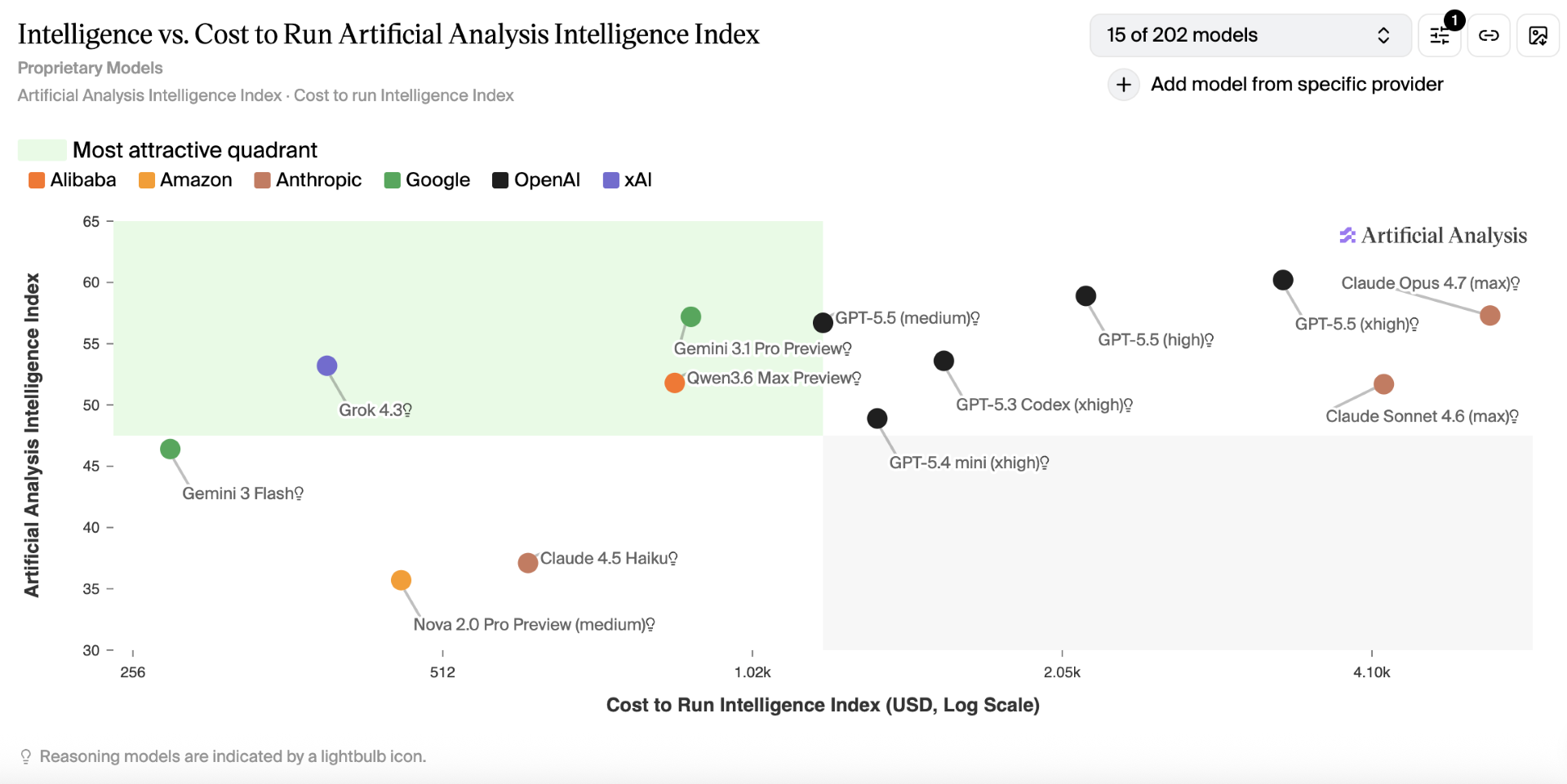
Microsoft adding Grok 4.3 to Foundry looks, at first glance, like the usual model-catalog checkbox: another frontier model, another deployment option, another pricing table for procurement to squint at. That is the boring read. The useful read is that Microsoft just put xAI’s most important developer model inside an enterprise containment vessel — billing, content safety, model cards, guardrails, evaluations, monitoring, and all the paperwork that makes a model usable in a company that has lawyers.
That matters because Grok is not arriving as a neutral commodity model. Microsoft’s own Foundry catalog says its evaluations found Grok 4.3 “less aligned than other models evaluated and offered through Azure Direct,” with higher harmful-content risk and lower safety and jailbreak benchmark scores. You do not publish that sentence unless the eval results made you. For builders, this is the whole story: Grok may be useful, cheap, long-context, and agentic, but it is not a model you should route into production just because it appeared in a familiar Azure dropdown.
The model-card caveat is the product
Microsoft’s announcement says Grok 4.3 is now available in Microsoft Foundry as a Public Preview deployment. The model is priced at $1.25 per million input tokens, $2.50 per million output tokens, and $0.20 per million cached tokens under Global Standard deployment — the same basic price shape xAI has been pushing directly for Grok 4.3. Microsoft positions it for agentic workflows: tool calling, instruction following, support agents, web development, legal reasoning, finance agents, and multimodal analysis.
The sales pitch is expected. The deployment details are more interesting. Microsoft says Azure AI Content Safety is enabled by default. It points customers to model cards, configurable guardrails, jailbreak detection, content filtering, pre-deployment evaluations and red teaming, post-deployment monitoring, and governance controls. The Foundry catalog also says Grok 4.3 uses a system-applied safety prompt that customers cannot disable, and warns that Azure AI Content Safety may not cover every harm category.
That is a refreshingly honest model-card posture. It says: yes, you can deploy this model through Azure; no, that does not mean the risk has been outsourced to Microsoft. The guardrails are scaffolding, not absolution.
This is how enterprise AI should increasingly work. A model catalog should not be a glossy menu of benchmark claims. It should be closer to a dependency manifest: capabilities, pricing, context limits, hosting path, safety behavior, evaluation caveats, monitoring hooks, and operational constraints. Microsoft’s Grok listing gives teams more of that than a direct “here is the endpoint, good luck” integration would. The uncomfortable part is that the listing also tells you why the wrapper exists.
Same model name, different deployment reality
The context-window numbers alone justify treating Foundry-hosted Grok as its own SKU. Microsoft’s blog says Grok 4.3 on Foundry supports up to a 200,000-token context window. The Foundry catalog lists 256,000 tokens. xAI’s own documentation lists 1 million tokens for direct Grok 4.3 API access. Those numbers can all be true if Azure is exposing a constrained deployment profile, but production code does not care about plausible explanations. It cares whether a request fails, truncates, slows down, changes output quality, or breaks an eval.
If you are evaluating Grok 4.3 for large-document workflows, codebase analysis, legal review, RAG over dense internal corpora, or agent traces that sprawl across tool calls, do not benchmark the xAI direct API and assume the Azure version behaves identically. Test the Foundry deployment you plan to run. Measure effective context, latency, output stability, tool behavior, refusal rates, policy interventions, and cost under your own traffic shape.
This sounds obvious, but model portability is becoming a trap precisely because vendors reuse model names across different hosting environments. “Grok 4.3” can mean direct xAI access with one context envelope, Azure-hosted access with another, and an enterprise safety prompt that cannot be removed. The model weights may be the headline; the deployment path is the product you actually buy.
The same goes for reasoning controls. xAI’s docs say Grok 4.3 supports reasoning_effort values of none, low, medium, and high, defaulting to low. The docs also note that presencePenalty, frequencyPenalty, and stop are invalid with reasoning models. That is exactly the kind of provider-specific behavior that breaks generic LLM adapters when a model moves from experiment to production dependency. A Foundry deployment may hide some rough edges, but serious teams still need a capability matrix by model, endpoint, hosting provider, and parameter set.
Grok gets the boring wrapper it needed
For xAI, the Microsoft distribution path is strategically useful. Grok has had a credibility problem in enterprise settings. Its consumer personality, X-native distribution, and safety headlines make it feel less boring than procurement departments usually prefer. Microsoft makes Grok boring in the best possible way: unified billing, Azure governance, support expectations, deployment controls, and model-card disclosures that security teams can review without opening a new vendor process from scratch.
That wrapper could matter more than another benchmark win. Enterprise adoption is rarely blocked by “can the model answer a clever prompt?” It is blocked by auditability, data handling, usage controls, budget predictability, incident response, and whether the security team has a place to attach policy. Foundry gives Grok a path through that machinery.
It also puts xAI into a more competitive procurement lane. Teams already testing OpenAI, Anthropic, Gemini, Mistral, and Meta-family models through Azure can now add Grok to the same evaluation harness. That lowers switching friction and makes Grok easier to compare on real workloads: support-agent accuracy, coding assistance, retrieval behavior, tool-call reliability, refusal behavior, latency, and cost. For developers, this is better than arguing about screenshots from X.
The catch is that Grok’s distinctive capabilities may not survive unchanged inside the enterprise wrapper. Microsoft’s announcement mentions native capabilities such as web search, X search, Python code execution, file search/RAG, and Excel, PDF, and PowerPoint generation. Those are attractive surfaces for agentic workflows. They are also exactly the surfaces that need the most policy scrutiny. Search, code execution, file access, and document generation are not “model features” in the abstract; they are tool permissions. Once an LLM can act, the trust boundary moves from output moderation to runtime authority.
Teams should evaluate Grok in Foundry the way they would evaluate a new internal service with production privileges. Define allowed tools. Log tool calls. Run prompt-injection tests. Check jailbreak behavior against your own policy, not just Microsoft’s defaults. Build regression suites for high-risk tasks. Track model and deployment version changes. And for any workflow touching finance, legal, healthcare, customer support, or internal data, require human review until the evals prove the system deserves more autonomy.
The good news is that Foundry gives teams a better place to do that work. The bad news is that the work still belongs to the team shipping the product.
Microsoft did not just add Grok to a catalog. It published a deployment contract with a warning label. That is progress. The industry needs fewer model launches that pretend safety is a vibe and more model cards that say the awkward thing plainly. Grok 4.3 may be a strong option for cost-sensitive agentic workloads, especially for teams already living in Azure. But the model card is telling you how to deploy it: with evals, guardrails, monitoring, and a healthy suspicion of anything that looks safe only because it has a cloud logo next to it.
Sources: Microsoft Tech Community, Microsoft Foundry model catalog, xAI model docs, xAI reasoning docs