Microsoft’s Water Numbers Show the Hidden Constraint Behind Azure AI Scale

Microsoft’s latest water-stewardship post is easy to misfile as sustainability communications. Do not. It is an Azure AI infrastructure story with fewer model names and more physics.
The numbers are the hook: Microsoft says average datacenter water use effectiveness improved by nearly 90% since early datacenter generations, falling from 2.3 liters per kilowatt-hour to 0.27 L/kWh in 2025. It says owned-fleet water-use intensity is down 25% toward a 40% reduction target by 2030. It also says FY25 was the first year it replenished more water globally than it withdrew across global operations.
Those are not product-release metrics. They are supply-chain metrics for the AI software everyone is building on top of Azure OpenAI, Microsoft Foundry, GitHub Copilot, and Microsoft 365 Copilot. Every agent loop eventually lands somewhere with power, cooling, chips, pumps, permits, and neighbors.
The API has plumbing
Developers experience Azure AI capacity as an abstraction: model available, quota denied, latency good, region unsupported, price too high, retry later. Microsoft’s water post is a reminder that the abstraction is backed by a very physical machine. When a workflow turns one user request into planning, retrieval, tool calls, code edits, evals, retries, summaries, and audit logging, the consequence is not only a bigger token bill. It is more datacenter demand.
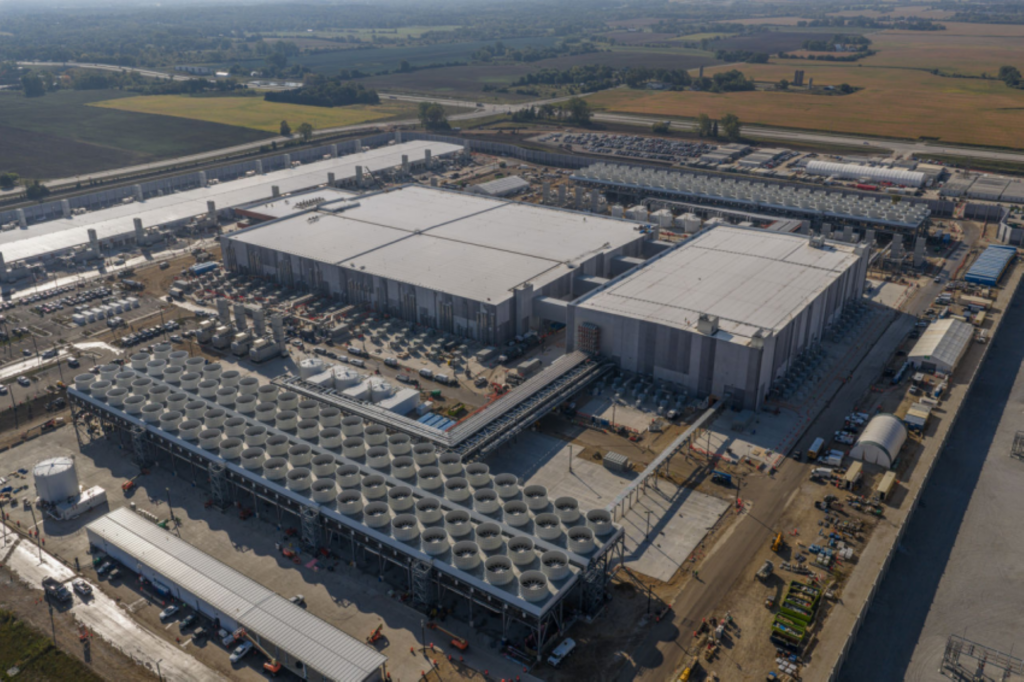
That is why water use effectiveness matters. WUE measures liters of water used per kilowatt-hour of IT energy. Moving from 2.3 L/kWh to 0.27 L/kWh is a serious efficiency improvement if the methodology remains consistent and disclosed. Microsoft attributes the change to two decades of design evolution: direct-air cooling with evaporative assist, alternative water sources, closed-loop systems, liquid cooling, and more precise facility architecture. The company says about 90% of its 2025 owned datacenter fleet operates using highly efficient low- to zero-water cooling systems.
The direct-air detail is useful. Microsoft says evaporative assist uses water only when outside temperatures exceed 85°F, or 29.4°C, and can use up to 90% less water than traditional water-based cooling. It also cites alternative water sourcing: 74% recycled, reused, or non-potable water in Quincy, Washington; 99% in Singapore; and 79% in San Antonio, Texas. These are the unglamorous engineering choices that decide whether AI growth becomes a regional infrastructure fight or a manageable expansion.
The obvious caveat: intensity can fall while total footprint rises. AI demand is growing fast enough that better liters-per-kilowatt-hour does not automatically mean lower absolute pressure everywhere. Efficiency is necessary. It is not absolution. This is the distinction engineers understand in other systems: a service can get more efficient per request and still melt the database if request volume grows 100x.
AI hardware changed the cooling problem
The technical cooling layer is becoming more specialized because AI hardware is not just another batch of commodity servers. Microsoft’s related zonal-cooling architecture post says modern GPUs and AI accelerators make air cooling impractical above 1 kW per accelerator, while liquid-cooled GPU racks can use coolant supply temperatures as high as 45°C without sacrificing peak performance. Microsoft says next-generation AI datacenters going live in 2028 and beyond will use facility-level zonal cooling and are expected to reduce power usage effectiveness by up to 10%.
That should matter to software teams more than it appears. If your product roadmap assumes frontier-model availability will keep expanding, you are implicitly betting on these hardware, cooling, and facility transitions working at hyperscale. The model endpoint is the visible artifact. Behind it is a rapid redesign of the datacenter around dense accelerator racks and heat profiles that older cloud infrastructure was not built to handle.
The June 22 Pecos announcement gives this story scale. Microsoft announced a roughly 2GW datacenter campus in Texas with dedicated onsite energy supply, closed-loop cooling, and more than 6,000 peak construction jobs expected. Two days later, it published the water-intensity update. That sequence is not accidental. Microsoft is trying to tell customers and communities that AI capacity is expanding and that the cooling/water layer is being engineered rather than waved away.
Whether that lands depends on disclosure. “Water positive” is a useful goal, but it depends on accounting boundaries, replenishment methodology, timing, and local watershed relevance. Replenishing more water globally than withdrawing globally does not guarantee every datacenter region avoids local strain. Microsoft seems aware of this, pointing to more than $500 million invested since 2020 in more than 75 water and wastewater infrastructure projects, including more than $25 million near Leesburg, Virginia, so local ratepayers do not carry the cost of serving its facilities. Good. The test is whether site-level data and methodology stay visible when growth gets politically uncomfortable.
Agent architecture should respect the physical layer
The practitioner takeaway is not “feel bad for using AI.” That is useless. The takeaway is to design as if inference has a supply chain, because it does.
Use smaller models when they work. Route tasks by complexity instead of always reaching for the largest frontier model. Cache summaries, retrieval results, embeddings, and stable intermediate outputs. Batch background jobs. Put hard ceilings on agent loops. Measure cost and latency per successful outcome, not just per prompt. Prefer deterministic tools for deterministic work: Graph calls, SQL queries, static analysis, search indexes, rules engines, compilers, and tests. If a workflow can be solved with a boring tool, do not invoke a model because the dashboard looks more modern with chat bubbles.
This is not only sustainability hygiene. It is operational hygiene. Wasteful agent systems are expensive, slower, harder to debug, and more likely to hit quota or region constraints. If Microsoft’s water and cooling work succeeds, Azure AI capacity gets more resilient. If demand outruns capacity anyway, the disciplined teams will be the ones with fallback models, region plans, budget controls, and efficient call graphs. The sloppy teams will discover infrastructure reality through throttling and invoices.
For Azure AI and Foundry customers, add physical-layer assumptions to design review. Where do critical workloads run? What happens if a model is unavailable in the preferred region? Can a smaller model handle the common path? Do agents have loop limits? Is token and tool-call usage measured per business outcome? Are eval jobs batched or sprayed? These are now architecture questions, not sustainability footnotes.
Microsoft wants the headline to be that AI growth and water stewardship can advance together. Maybe. The more useful engineering read is simpler: the cloud was never weightless, and agent workloads make the weight harder to ignore. Good AI architecture should spend tokens, watts, and water like somebody is going to ask where they went.
Sources: Microsoft, Microsoft Pecos datacenter announcement, Microsoft Azure Architecture Blog, Microsoft sustainability