Musk Just Got Caught in the Most Damaging Cross-Examination of the AI Decade

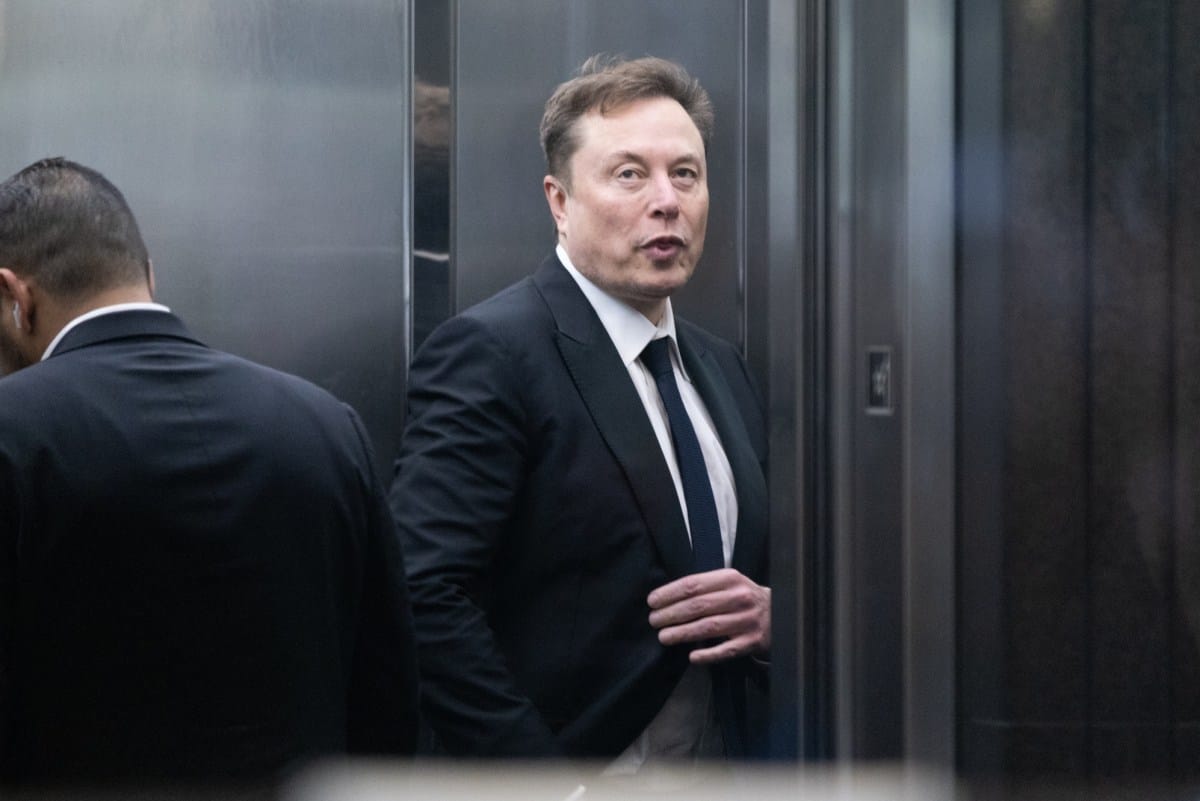
On Thursday in a California federal courtroom, Elon Musk was asked a simple question under oath: has xAI used OpenAI's models to train Grok? He paused, shifted, and said "Partly." That single word is the most consequential admission to come out of the AI industry's self-righteous campaign against model distillation — because the man leading that campaign just confessed his own company did exactly what he's been accusing Chinese labs of doing.
The exchange was brief. OpenAI's lawyer William Savitt asked if Musk knew what distillation means. Musk defined it correctly: using one AI model to train another. Savitt asked if xAI had done that with OpenAI. Musk said, "Generally all the AI companies [do that]." Savitt pressed: "So that's a yes." Musk: "Partly." Then, when asked whether OpenAI technology had been used in any way to develop xAI, Musk retreated to "It is standard practice to use other AIs to validate your AI." The courtroom transcript reads less like testimony and more like a man trying to close a door that is already open.
Here is the context that makes this significant beyond the courtroom drama. For the past two years, OpenAI, Anthropic, and Google have been running a coordinated public campaign framing distillation — particularly by Chinese AI labs — as an existential threat to American AI competitiveness. OpenAI sent a memo to a House committee in February arguing it was "ensuring China can't advance autocratic AI by appropriating and repackaging American innovation." Anthropic published a blog post specifically naming DeepSeek, Moonshot, and MiniMax as violators. Google called distillation "a method of intellectual property theft that violates Google's terms of service." The Trump administration issued a National Security Technology Memo in April 2026 directing US agencies to share intelligence about foreign distillation attempts with American AI companies. This is not a fringe concern. It is official industrial policy.
And now we know that xAI — the company whose CEO is simultaneously suing OpenAI for $150 billion claiming they betrayed their founding nonprofit mission — built Grok partly on the very technology OpenAI is trying to ban Chinese companies from using. The irony is structural, not incidental. Musk walked into that courtroom to argue that OpenAI's pivot to for-profit structures represents a fundamental betrayal of its stated purpose. Under cross-examination, he effectively argued that xAI shortcut the independent development path by using OpenAI's work to train its own models. You cannot coherently argue that OpenAI betrayed its mission by becoming commercial while your own company commercialized on the back of their research.
The legal reality is that distillation sits in genuinely murky territory. It is not explicitly illegal. But it frequently violates terms of service, and the distinction between "illicit" and "legitimate" use often depends on who is doing it. Frontier labs routinely distill their own models to create smaller, cheaper versions — Anthropic acknowledged this openly. The problem, as the industry defines it, is when competitors use distillation to acquire capabilities from other labs at a fraction of the development cost and time. The methods frontier labs use to detect and block it — preventing "suspicious mass queries" and systematic API probing — are not theoretical barriers. They are actively deployed.
For practitioners, the practical implications deserve more attention than the courtroom theater. If you are building on any frontier model API — whether OpenAI, Anthropic, Google, or xAI — you should assume the provider is monitoring for distillation patterns and has technical means to act on it. The legal framework is still being constructed: courts have not ruled on whether distillation that violates terms of service constitutes copyright infringement or breach of contract. That question is being actively litigated. But access revocation is not waiting for the courts. When Anthropic detected what it believed were terms violations by OpenAI, it revoked their API access. When it detected similar patterns from xAI, it cut them off too. These are not abstract concerns. They are operational risks with real precedent.
The competitive context also matters for anyone choosing which model to build on. Musk, when asked during testimony to rank the world's leading AI providers, placed Anthropic first, OpenAI second, Google third, and Chinese open-source fourth. He described xAI as "a much smaller company with just a few hundred employees." That is not the ranking of a company that has achieved escape velocity. It is the ranking of an also-ran that happens to have the most outspoken CEO. The distillation admission suggests one reason for that positioning: xAI's trajectory toward the frontier involved not just building from scratch with Colossus compute, but borrowing from the work of the labs it is now competing against and suing. Whether that matters to you as a builder depends on your perspective on model provenance — but it is now part of the public record.
The timing is also notable. This admission dropped in the same week that the SpaceX/Cursor $60 billion deal became public, where xAI's compute infrastructure is being positioned as a cornerstone asset in a major new developer ecosystem. The courtroom admission complicates the narrative of xAI as an independent AI powerhouse that earned its position through raw compute and clean engineering. The compute is real. The independence is murkier than advertised.
What should builders do with this? First, treat your API access as a business dependency with real counterparty risk — not an indefinite right. Second, understand that the legal status of distillation will be resolved in courts over the next several years, and the resolution will affect which models remain available and at what terms. Third, if you are evaluating Grok against Claude or GPT for a production system, the provenance question is now a legitimate data point in that evaluation — not just benchmark scores and pricing. A model that built its position partly on distillation may face different competitive dynamics as the legal environment tightens.
Musk went into that courtroom to prove OpenAI betrayed its founding principles. He left having proven that xAI built Grok partly on OpenAI's work — and argued that everyone does it. The industry has been happy to let that argument fly when it targets Chinese labs. The courtroom transcript now makes it impossible to pretend the practice is uniquely predatory when done by competitors and routine when done by everyone else. For an industry that has built a significant portion of its public credibility on the distinction between legitimate and illegitimate AI development, that is not a minor inconsistency. It is the kind of thing that erodes trust in the entire narrative — which matters more than any single lawsuit.
Sources: TechCrunch, The Verge, WIRED