Mustafa Suleyman: Microsoft's 'Superintelligence' Is Really About Selling AI to Enterprises
Microsoft's Mustafa Suleyman redefines superintelligence as enterprise value delivery, not sci-fi speculation, while launching competing models against OpenAI.

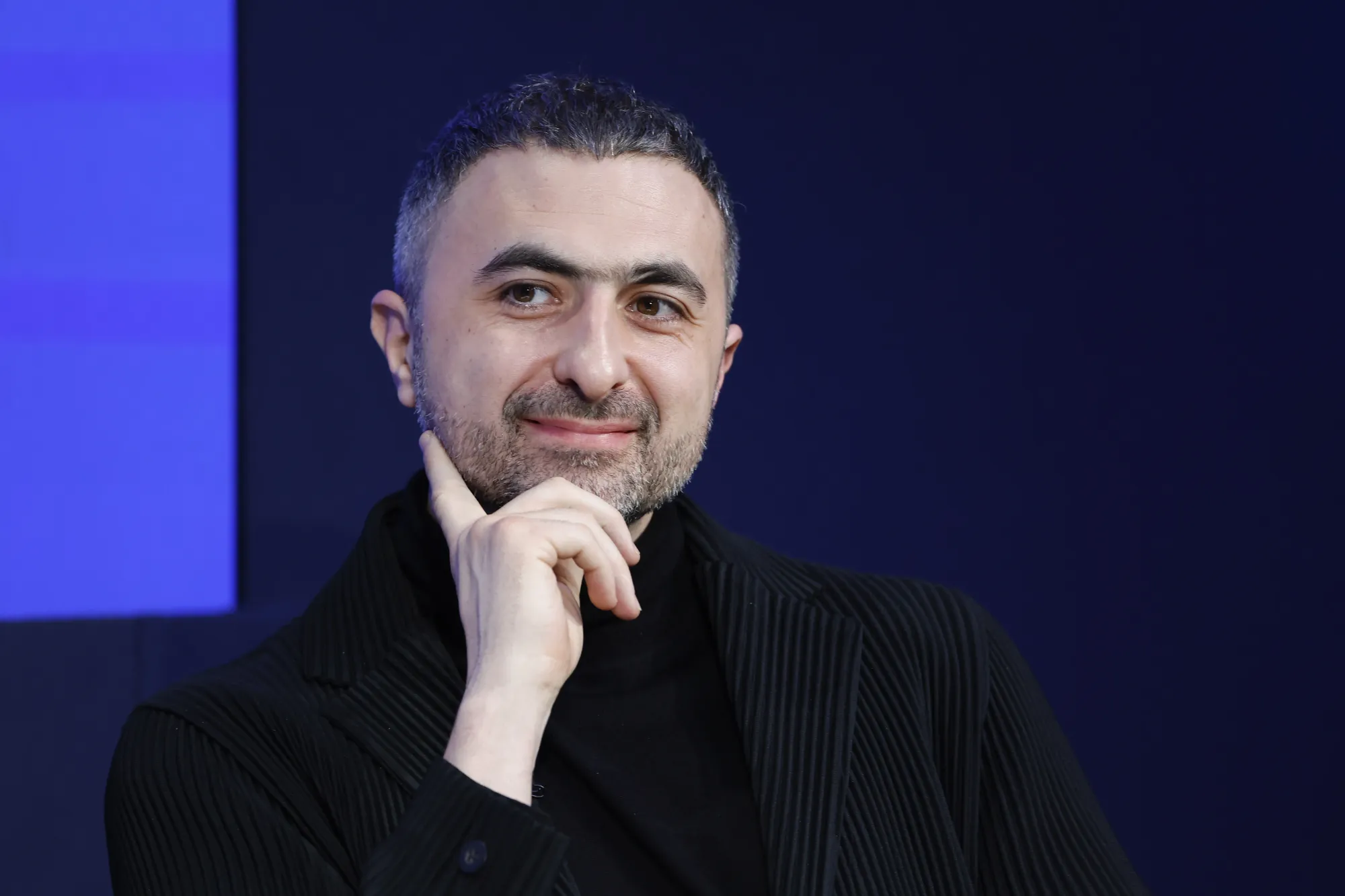
Mustafa Suleyman, the head of Microsoft's MAI Superintelligence team, doubled down on a pragmatic vision of AI that puts enterprise revenue over existential hype: "superintelligence means these models capable of delivering product value for millions of enterprises that depend on us." This marks a fundamental shift in how Microsoft's AI leadership approaches the term.
Suleyman's definition positions superintelligence as a commercial benchmark, not a sci-fi concept. He confirmed that after Microsoft's recent contract renegotiation with OpenAI, the company can now pursue its own superintelligence research while maintaining the OpenAI partnership. The dual-track strategy — competing models running alongside GPT integration — represents Microsoft's calculated bet on both open and closed AI ecosystems.
The strategic pivot extends to leadership structure: Suleyman has handed off day-to-day Copilot oversight to Jacob Andreou, now EVP of product, engineering, design, and growth, while focusing exclusively on frontier model development. This separation signals Microsoft's recognition that consumer productivity tools and enterprise infrastructure require fundamentally different approaches.
The timing matters. Yesterday, Microsoft launched MAI-Transcribe-1, MAI-Voice-1, and MAI-Image-2 — three production models priced below Google and OpenAI alternatives. The announcement wasn't just about new features; it was about Microsoft establishing its own model stack, a direct challenge to the OpenAI monopoly that once defined its AI strategy.
Microsoft's approach mirrors OpenAI's post-Sora pivot. Both companies now prioritize revenue-generating products over experimental research, reflecting investor pressure to deliver tangible business value. But Microsoft has a crucial advantage: enterprise relationships that predate the AI boom, giving it distribution that OpenAI can't replicate overnight.
The philosophical divergence between Microsoft and Anthropic grows starker. Suleyman's "business tool" framing contrasts sharply with Anthropic's safety-first approach, creating a bifurcated frontier AI market. This isn't just technical competition anymore — it's competing visions for how AI gets deployed in the real world.
The consequence for builders? More options, but more complexity. Microsoft's multi-model strategy means developers will need to navigate GPT, Claude, and Microsoft's own MAI models simultaneously. The tools ecosystem will fragment further as coding assistants, data pipelines, and workflow automation layer across multiple model families.