Salesforce Explains When to Use API, MCP, or A2A for Agentforce Integrations

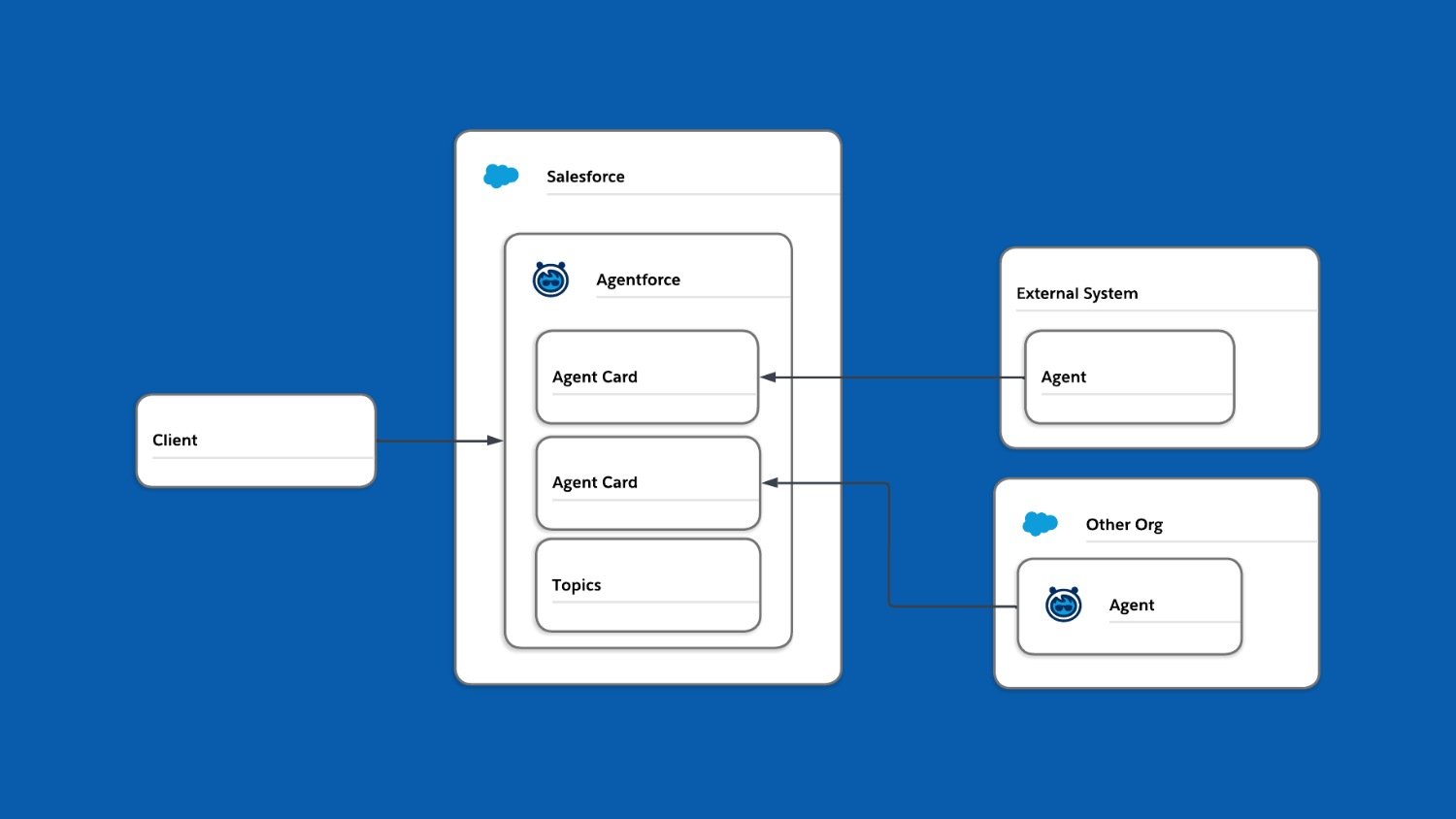
Salesforce published a practical decision guide this week for developers integrating external systems with Agentforce agents, and it cuts through one of the most common sources of confusion in the current agentic AI landscape: when to use a traditional API, when to reach for Model Context Protocol, and when to deploy Agent2Agent delegation. The answer depends heavily on what your workflow actually looks like, and Salesforce lays out the tradeoffs with enough clarity that the guidance generalizes well beyond Agentforce itself.
Traditional APIs remain the right choice for stable, request-response workflows where the integration contract is well-defined and unlikely to change. MCP earns its keep when agents need rich, real-time context injection from external tools — the protocol is designed for exactly that kind of dynamic, tool-heavy interaction. A2A, meanwhile, is built for scenarios where one autonomous agent needs to delegate meaningful subtasks to another, with each agent operating with its own identity and scope. Both MCP and A2A are currently in beta on the Agentforce platform, and Salesforce is careful to note that maturity curves differ.
As MCP and A2A adoption accelerates across enterprise platforms — not just Salesforce's — this kind of pattern guide fills a real gap. Most teams currently making these integration decisions are doing so by instinct rather than by framework, and having a clear mental model for when each pattern outperforms the others is exactly the kind of practical guidance the field has been missing.