SpaceX Buying Cursor Is the Clearest Sign Yet That Grok Build Is Not Just a Side Quest

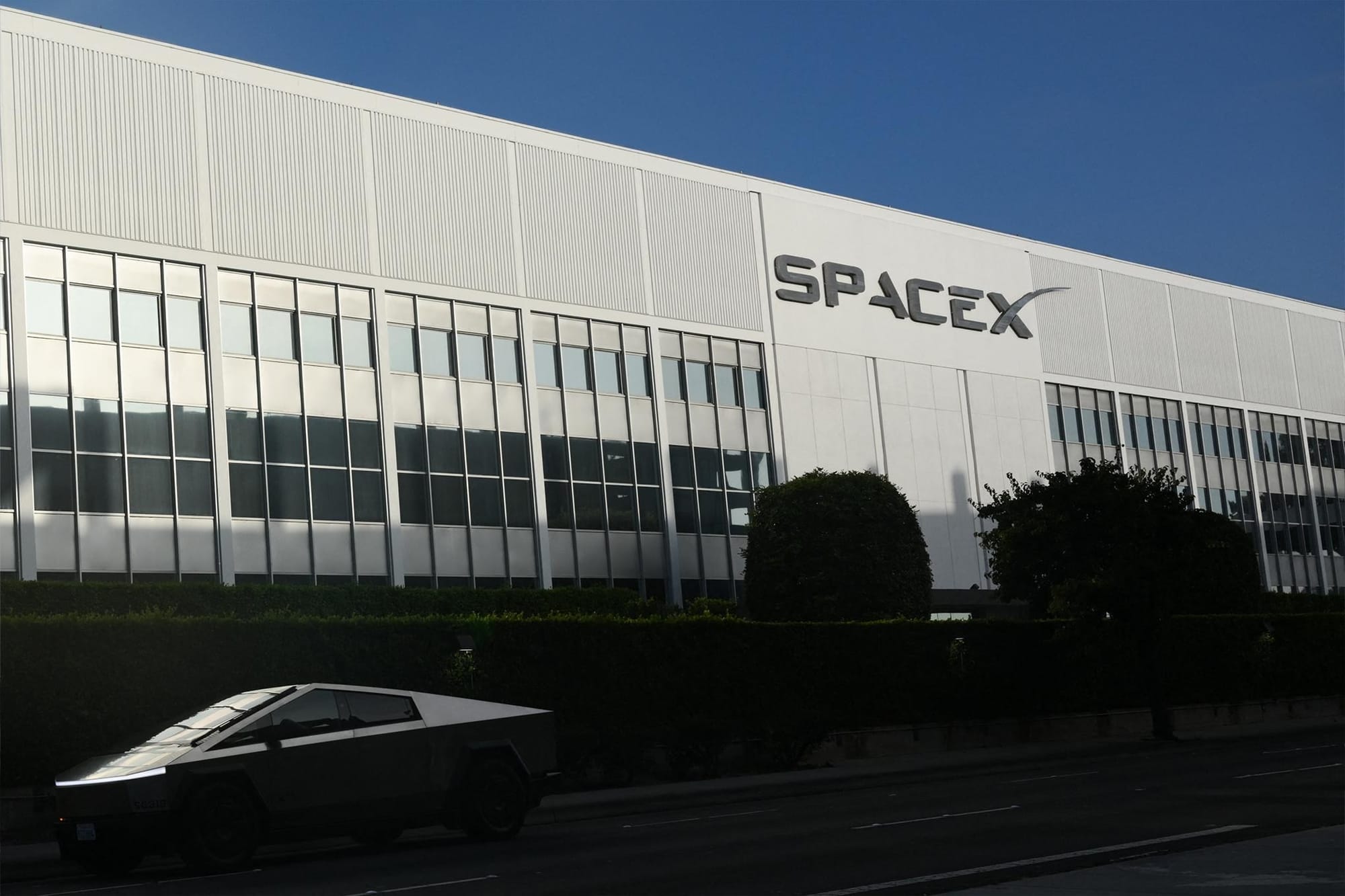
SpaceX buying Cursor for an implied $60 billion is easy to misread as another entry in the Elon Musk mega-deal ledger. The more useful read is narrower and more important for developers: xAI is buying the workflow layer Grok Build does not yet own.
The June 16 SEC filing says Space Exploration Technologies Corp., X67 Inc., and Anysphere, Inc. have entered into a merger agreement that would make Cursor a wholly owned subsidiary of SpaceX, subject to closing conditions and regulatory approvals. The consideration is stock, priced using the volume-weighted average closing price of SpaceX Class A common stock over the seven trading days before closing, with the deal built around an implied Cursor equity value of $60.0 billion. SpaceX says it expects the transaction to close in Q3 2026.
That is the financial story. The engineering story is in SpaceX’s own announcement: the company says SpaceXAI has been jointly training a model with Cursor for the past few months, and that model will be released in both Cursor and Grok Build. If that ships as described, Grok Build stops being merely xAI’s answer to Claude Code and Codex. It becomes one surface in a broader coding-agent stack: Cursor for the IDE and enterprise workflow, Grok Build for terminal, API, headless, and ACP-native use.
The acquisition target is not a model. It is developer gravity.
Cursor’s value is not just that it can call models. Lots of products can call models. Cursor sits where software work actually happens: inside editors, terminals, GitHub review loops, Slack workflows, and long-running agent tasks. Its product page describes agents that can run autonomously and in parallel, build and test features end to end, and operate across the terminal, Slack, and GitHub PR review. It also advertises model choice across OpenAI, Anthropic, Gemini, xAI, and Cursor’s own models.
That model-routing layer is strategically uncomfortable for every frontier lab. If developers use Cursor as the control plane, the model provider becomes a replaceable backend. Today it might be Claude. Tomorrow it might be Codex. For one class of task it might be Gemini or Grok. Cursor turns model selection into an implementation detail, which is great for customers and annoying for labs trying to own the whole workflow.
Buying Cursor gives SpaceX/xAI the thing Grok Build would have had to earn the hard way: distribution into teams that already budget for coding agents, already have procurement paths for developer tools, and already trust an agent to touch real repositories. Forbes reported this month that Cursor had reached $4 billion in annualized revenue, up from $3 billion in late April and $2 billion in February, with roughly 75% of run rate from business customers. Those numbers explain the price better than any benchmark chart. Enterprise workflow gravity is expensive because it is defensible.
Grok Build just got a second route into the market.
xAI’s Grok Build docs already describe a serious agent surface: an interactive terminal UI, headless scripting, bots, Agent Client Protocol support, custom model configuration, and early API access to grok-build-0.1 through the Responses API and OpenAI-compatible SDK paths. The recent Agent Dashboard announcement added another missing piece: a way to supervise multiple coding-agent sessions rather than pretending a terminal full of autonomous workers is self-managing.
But product quality and market access are different problems. Grok Build can improve quickly and still struggle to pull developers away from Claude Code, Codex, Copilot, Gemini CLI, OpenCode, and the existing Cursor habit. The acquisition changes that calculus. Grok-derived coding models can enter through Cursor without requiring users to abandon Cursor. If the joint model is good, it can become a default, a recommended route, or a high-performance option inside a tool developers already use.
That is the right strategic move. Winning the coding-agent market is not just about topping SWE-bench-style leaderboards. The boring criteria matter more in daily use: repo context retrieval, branch discipline, test execution, diff quality, permission handling, cost predictability, review behavior, rollback safety, and whether the agent gets out of the way when it is wrong. Cursor has years of product feedback on those failure modes. xAI has compute, models, and a desire to make Grok Build credible fast. The acquisition is the bridge between those assets.
Model neutrality is now the trust test.
The obvious risk is that Cursor becomes less neutral after closing. Cursor’s model choice is not a decorative feature; it is part of the enterprise value proposition. Teams want to route different work to different providers, manage cost, respect data policies, and avoid getting trapped in a single model vendor’s roadmap. SpaceX/xAI now has every incentive to privilege Grok models. It also has every incentive not to break the thing it just bought.
Engineering leaders should watch the defaults, not the press release. Does Cursor keep third-party models first-class? Do admin controls remain provider-neutral? Are Anthropic, OpenAI, Gemini, and other providers still available without degraded UX or hostile pricing? Can teams disable Grok routing if their policy requires it? Does Cursor expose enough telemetry to understand which model touched which repo, prompt, diff, and tool call?
Those questions will matter more than whether the first joint model wins a benchmark on launch week. Enterprise coding agents sit close to proprietary source code, secrets, tickets, deployment scripts, customer logic, and internal architecture. Cursor’s trust boundary is already sensitive. SpaceX/xAI ownership makes customers ask harder questions about training use, telemetry retention, cross-product data flow, and whether code interaction traces become part of the model-improvement loop. “We acquired your coding environment” is not a trivial procurement update.
The right answer is not vague reassurance. It is explicit controls: enterprise opt-outs from training by default, clear data-retention policies, model-specific routing logs, admin-level provider allowlists, exportable configuration, auditable agent traces, and a clean separation between product telemetry and model training data. If SpaceX/xAI wants Cursor to remain enterprise-grade, governance has to be a product feature, not a footnote.
The practitioner move: audit before the merge closes.
If your team uses Cursor, this is a good time to treat the tool like infrastructure. Inventory where Cursor agents can act: local repos, remote workspaces, GitHub, Slack, CI, issue trackers, terminals, secrets, package registries, production-adjacent scripts. Document which models are approved today and why. Check whether your enterprise settings cover training use, retention, and model routing. If you rely on Cursor rules, prompts, memories, or workflow configuration, make sure you can export or reproduce them elsewhere.
Then run the same tasks across your alternatives. Compare Cursor, Claude Code, Codex, Copilot, Grok Build, Gemini CLI, and OpenCode on more than output quality. Look at logs, approvals, branch isolation, cost visibility, failed-tool behavior, test discipline, and recovery when the agent makes a bad change. The point is not to flee Cursor. The point is to avoid discovering later that your software delivery loop quietly became dependent on one vendor’s strategic integration surface.
For startups building in the coding-agent space, the lesson is equally blunt. The durable layer is not “we have a wrapper around a good model.” It is workflow, distribution, evaluation data, governance, and user trust. Cursor was valuable because it owned the place where developers make decisions, not because it could spell “agentic” in a pitch deck. If model quality keeps leapfrogging, the application that owns the control plane has leverage.
That is why this deal belongs on the xAI beat. SpaceX is not merely buying a hot developer tool. It is buying a path for Grok into the daily work of serious engineering teams, plus the usage patterns that can teach a coding model where agents actually fail. The merge blocker is not technical ambition. It is trust. If Cursor stays genuinely model-neutral, governed, and boringly reliable, this could make Grok Build much more relevant overnight. If it becomes a captive funnel for xAI models, developers will notice exactly as quickly as they notice a bad diff.
Sources: The Verge, SpaceX SEC 8-K, SpaceX, xAI Grok Build docs, Cursor, Forbes