The Best Azure AI Post of the Day Is a Very Specific Lesson in Why Vision Pipelines Still Need Real Engineering

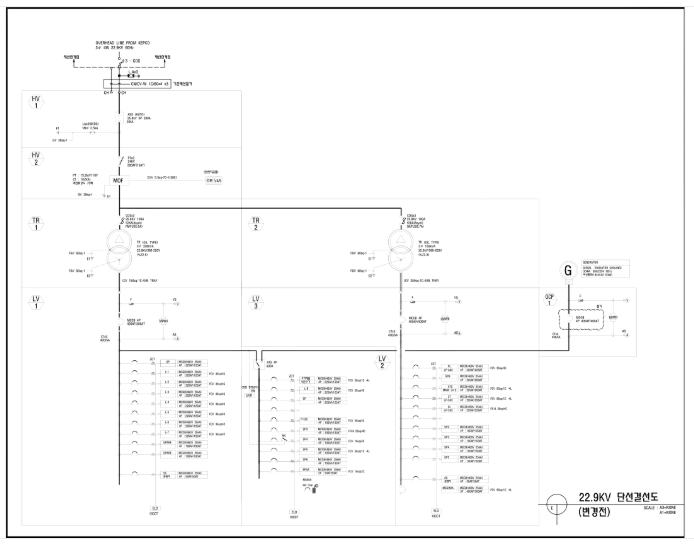
The most honest Azure AI post of the day is the one that admits a frontier vision model falls apart when you hand it a full industrial drawing and ask for a clean answer.
Microsoft’s walkthrough on extracting bills of materials from electrical single-line diagrams using Azure OpenAI GPT-5.4 and Azure Document Intelligence is nominally a niche document-processing story. In practice, it is a better guide to production multimodal engineering than most general AI launch posts. The headline is not that the model can parse complex drawings. The headline is that it cannot do it reliably without a lot of scaffolding, and Microsoft is willing to show the scaffolding.
That makes this article unusually useful. Too much multimodal AI discourse still pretends the last mile is prompting. It is not. The last mile is decomposition, validation, routing, cost control, and deciding exactly where not to trust the model.
The failure mode is the product lesson
Microsoft says whole-page BOM extraction “fails catastrophically.” Components get missed, hallucinated, or assigned to the wrong panel. That sentence is more valuable than half the benchmark decks in the market. It captures the core truth of multimodal systems in production: the model often fails not because it is dumb, but because the problem has been framed too broadly for it to stay grounded.
The fix was architectural. Instead of treating the page as the unit of analysis, Microsoft breaks the workflow into panels, then builds a five-stage pipeline around that smaller unit. Azure Document Intelligence handles broad structural detection first because it is faster, cheaper, and more deterministic. GPT-5.4 vision is used selectively to fill the gaps. The post notes that Document Intelligence figure detection is roughly 10 times faster than a GPT-5.4 vision request, which is exactly the kind of cost-performance detail practitioners should care about more than generic “AI-powered extraction” claims.
That pattern deserves to travel well beyond electrical drawings. Whether you are doing invoices, insurance packets, construction plans, healthcare forms, or logistics paperwork, the production rule is the same: do not spend premium model calls to rediscover structure a cheaper system can identify first.
Good multimodal systems are pipelines pretending not to be pipelines
The article’s engineering choices are the interesting part. Microsoft tiles pages into overlapping 2000-pixel regions with 400-pixel overlap to improve panel-name recall. It runs GPT and Document Intelligence in parallel, then cross-validates model-discovered names against OCR output to filter hallucinations. It uses a cascading rule engine for name matching, then an iterative locate-and-verify loop for panel boundaries, with up to 10 attempts per panel and oscillation detection to stop the model from bouncing between bad corrections.
That is not just implementation detail. It is a blueprint for how practitioners should think about multimodal reliability. Every one of those moves translates a fuzzy visual inference problem into a narrower, more testable step:
- Segment the document into regions small enough for the model to reason about.
- Let OCR and layout tooling establish geometric truth wherever possible.
- Cross-check semantic guesses against deterministic evidence before acting on them.
- Constrain iterative correction loops so the model cannot wander forever.
The broader point is that production AI systems increasingly look like distributed systems with a probabilistic component, not like magical monoliths. You win by tightening the interfaces between stages, not by believing a larger model will make system design optional.
There is a quiet cost argument here too
One of the more important subtexts in Microsoft’s post is economic discipline. Azure Document Intelligence v4.0 layout extraction is doing the cheap, boring work first, then GPT-5.4 vision gets reserved for ambiguity. That is not just clever architecture. It is a direct response to one of the nastier failure modes in enterprise AI: teams building workflows whose per-document cost makes success unaffordable.
Multimodal systems are especially vulnerable here because visual ambiguity creates an instinct to “just ask the model again.” But retry loops, wide crops, and full-page passes can quietly turn an otherwise attractive automation project into a budget sink. Microsoft’s staged design is a good reminder that cost control is not something you add after accuracy. It is part of the architecture from the start.
There is also a lesson in the use of few-shot guide images for boundary recognition. Instead of writing longer prompts to describe what counts as a panel edge, Microsoft gives the model visual references. That is a smart practitioner move. In many document-heavy workflows, the expensive part is not raw inference but repeated ambiguity resolution. If a reference image reduces retries and stabilizes interpretation, it is doing real engineering work.
What builders should do with this
If your team is working on document intelligence, steal the pattern, not the demo. Start with decomposition. Decide what a model absolutely must infer and what a deterministic system can establish more cheaply. Build explicit validation at every handoff. Measure cost per successful extraction, not just headline accuracy. And log enough intermediate state that when the model gets something wrong, you can tell whether the fault was detection, OCR, matching, or verification rather than shrugging and saying “AI issue.”
Also, be skeptical of vendors who show polished multimodal outcomes without talking about segmentation, validation, or fallback logic. If those details are absent, the ugly work is either hidden or not done yet.
My take: this is the kind of Azure AI story worth paying attention to because it treats multimodal automation as engineering instead of theater. The model helps, clearly. But the system works because Microsoft designed around the model’s weaknesses instead of pretending they were gone. That is how useful AI gets shipped.
Sources: Microsoft Tech Community, Microsoft Learn, Azure Document Intelligence layout docs