BEVPoolV3 Is the GPU Optimization Physical AI Actually Needs

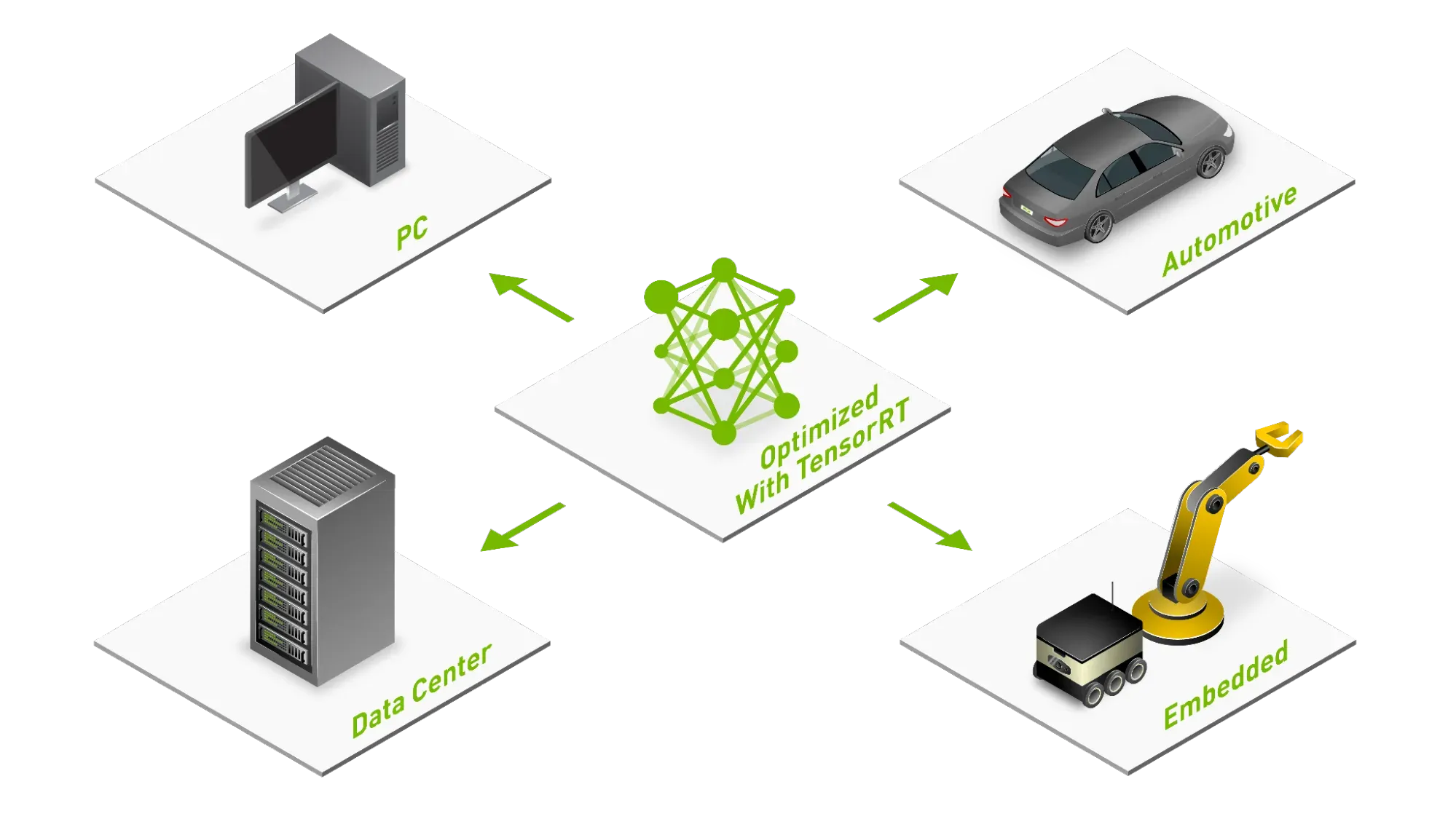
Physical AI keeps getting sold from the top of the stack down: humanoids, autonomous vehicles, warehouse robots, spatial computers, “world models,” and whatever phrase survived the keynote draft. NVIDIA’s latest developer post is useful because it starts where production systems usually hurt: a scatter-reduce kernel that has to finish fast enough for the planner to still have time to make a decision.
The post focuses on BEVPoolV3, NVIDIA’s optimized path for bird’s-eye-view pooling on its GPUs. BEV pooling is the operation that takes multicamera image features, combines them with depth information, and projects them into a shared top-down tensor. That tensor then feeds detection, occupancy prediction, mapping, trajectory forecasting, and planning. In other words: before the robot can act like it understands the world, this unglamorous memory-heavy operator has to make the camera soup usable.
That is why the numbers matter. NVIDIA’s canonical benchmark, derived from real nuScenes samples, uses roughly 209,000 scatter points, 80 feature channels, and a 49 MB BEV pooling working set. On an RTX PRO 6000 Blackwell Max-Q, the older V2-style TensorRT plugin path takes 274.0 microseconds. BEVPoolV3 cuts that to 17.3 microseconds in FP16 and 16.4 microseconds in FP8. On an RTX A6000, the DRAM-adapted FP16 path lands at 90.0 microseconds.
The tempting headline is “up to 42x faster.” The better headline is: the same operator is a different problem on different GPUs.
The cache hierarchy is the product feature
NVIDIA compares two GPUs that expose the central lesson cleanly. The RTX A6000 has a 6 MB L2 cache. The RTX PRO 6000 Blackwell Max-Q has a 128 MB L2 cache. A 49 MB working set spills far past the A6000’s L2, turning BEV pooling into a DRAM-bound workload. The same working set fits inside Blackwell’s L2, so after the initial fill the bottleneck shifts toward instruction issue, occupancy, dependency latency, and whether the kernel is structured well enough to use the hardware.
This is the kind of detail teams miss when they treat “GPU optimization” as a generic checkbox. A tuning strategy that is correct on Ampere can be merely adequate on Blackwell. A precision change that helps one memory regime can add decode overhead in another. A packed data structure that looks efficient in byte counts can map poorly to aligned memory transactions. The hardware changed, so the kernel’s bottleneck moved.
BEVPoolV3 attacks the problem in four practical ways: reducing duplicate depth loads, splitting the scatter map into five INT32 arrays, precomputing indices to remove runtime integer division, and making output ownership explicit so the kernel avoids atomics relative to the V2-style path. That five-array scatter map is not cosmetic. NVIDIA notes that packing ranks_depth, ranks_feat, and ranks_bev into an int3 creates an awkward 12-byte record that does not map cleanly to 16-byte aligned loads. Separate arrays let adjacent threads merge aligned loads and keep the instruction stream cleaner.
The prior BEVPoolV2 approach also had a repeated-index problem. For C=80 and 8-channel tiles, the same scatter indices could be loaded 10 times, producing roughly 25.1 MB of index traffic for data that only needed about 2.51 MB if read once. That is not a model architecture problem. That is the tax you pay when the kernel structure and the hardware memory path disagree.
Precision is not a religion
The FP8 result is useful, but the NVFP4 result is more instructive. BEVPoolV3’s FP8 path is fastest across NVIDIA’s Blackwell Max-Q TensorRT plugin-path tests: 16.4 microseconds in the canonical configuration, 39.8 microseconds in the xlarge C=80 case, and 22.0 microseconds in the wide C=256 case. Speedups over the V2 FP16 path range from 10.94x in the small configuration to 42.09x in the xlarge configuration.
Then NVIDIA tried NVFP4 and found it slower for this scatter-reduce regime. That should be printed on a sticker and attached to every AI infrastructure slide: smaller precision is not automatically better. NVFP4 is powerful for compute-bound Tensor Core matrix multiplication, where the hardware can amortize format handling across dense MMA work. In an L2-resident scatter-reduce kernel, per-element nibble extraction, decode, and scale handling add inner-loop work that can erase the theoretical byte savings. FP8 sits at the right point on the dtype ladder for this workload.
That is a practitioner lesson, not a benchmark footnote. Precision choice should follow the bottleneck. If the kernel is bandwidth-bound, smaller formats may help. If it is instruction-bound, extra decode work can make things worse. If the workload sits in cache, reducing bytes may matter less than reducing instructions and register pressure. The only honest answer comes from profiling the actual operator on the actual target GPU.
Robots ship on latency budgets, not vibes
The physical-AI connection is straightforward. BEV pipelines are common in autonomous vehicles, robotics, and spatial AI because a top-down representation gives downstream modules a shared spatial frame. But the control loop does not care how elegant the representation is if it arrives late. Perception latency eats planning time. Planning time eats safety margin. Safety margin is the thing you run out of before the demo becomes a product.
That makes BEVPoolV3 more important than its narrow name suggests. NVIDIA explicitly generalizes the method to sparse embeddings, voxelization, histograms, segmented reductions, and other gather/scatter-heavy operators. The playbook is portable: isolate the operator, measure the working set, compare it with the cache hierarchy, remove redundant memory traffic, avoid runtime index decoding, define output ownership, validate numerics against a trusted reference, and use Nsight Compute to confirm whether the active ceiling is bandwidth, instruction issue, or occupancy.
For robotics teams, the action item is uncomfortable but useful: profile the boring parts. Model cards rarely tell you that a voxelization step, post-processing kernel, embedding lookup, scatter map, or TensorRT plugin is where your latency budget is leaking. The keynote model may be the reason the project got funded, but the kernel is often the reason the robot feels late.
There is also a deployment caveat worth keeping. BEVPoolV3 is presented as a case study and TensorRT plugin path, not as a magic drop-in for every robotics stack. Teams still need to adapt the ideas to their camera count, channel dimension, deployment target, edge hardware, model shape, numerical tolerance, and memory hierarchy. NVIDIA also says FP8 speedups on edge-class platforms are not automatic because smaller problem sizes, register pressure, memory behavior, and conversion overhead can offset the dtype win.
That honesty is the reason this post is worth covering. Blackwell’s large L2 and FP8 support do not make physical AI fast by themselves. They make it possible for carefully structured kernels to turn hardware features into useful latency. The work is less glamorous than saying “world model,” but it is closer to the merge gate.
The practical takeaway: if you are building physical-AI systems, do not wait until the end to optimize perception plumbing. Treat gather/scatter operators as first-class production code. Benchmark them across target hardware. Track p50 and tail latency, not just average FPS. Validate precision changes with workload-specific accuracy and latency tests. And when someone proposes solving a 200-microsecond kernel problem by buying a bigger GPU, ask whether they have looked at the scatter indices first.
NVIDIA’s BEVPoolV3 story is a reminder that physical AI will not be won only by bigger models or better demos. It will be won by teams that can turn messy sensor data into timely spatial state on hardware they can actually deploy. Robots do not become useful because the abstraction got prettier. They become useful when the unsexy operators stop missing the control-loop budget.
Sources: NVIDIA Developer Blog, BEVPoolv2 paper, NVIDIA CUDA-BEVFusion, NVIDIA Nsight Compute Profiling Guide