BlueField-4 STX Makes Agent Security a Storage-Path Problem

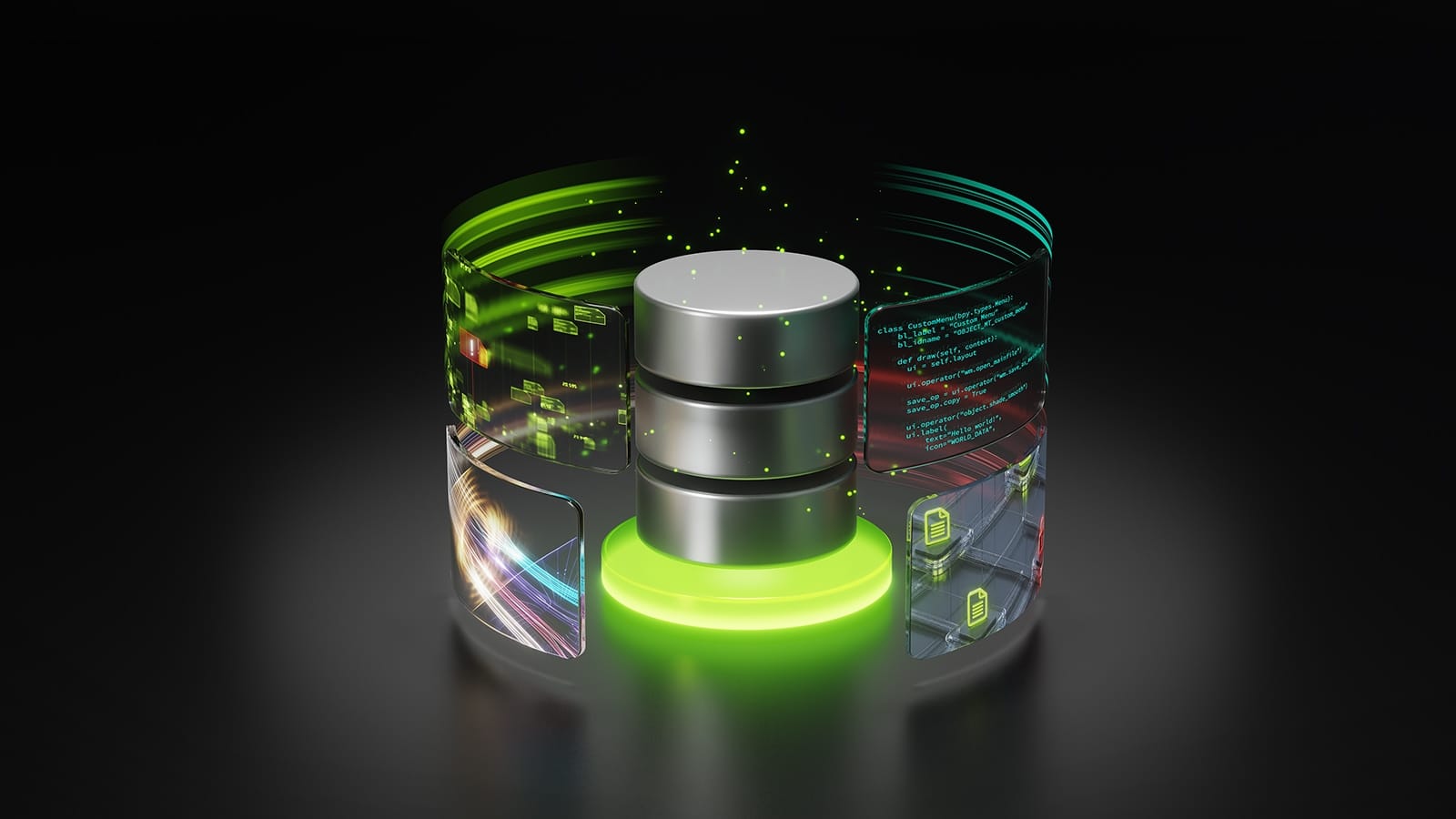
Agent security is usually sold as an application problem: add an approval prompt, scope a tool, log a transcript, maybe slap a policy engine next to the orchestrator and call it governance. NVIDIA’s Vera BlueField-4 STX announcement is more interesting because it starts from a less comfortable premise: if agents are going to continuously retrieve, write, cache, summarize, and reuse enterprise data, then the storage path is now part of the security boundary.
That sounds obvious until you look at how many production AI stacks still treat storage as passive plumbing. The agent asks for context. The RAG system fetches documents. The vector store returns chunks. The file system is assumed to be someone else’s problem, usually because the demo was built by the team trying to prove model utility rather than the team that gets paged after a data leak. Vera BlueField-4 STX is NVIDIA saying that assumption does not survive contact with enterprise-scale agents.
At GTC Taipei, NVIDIA announced new and enhanced DOCA security capabilities for Vera BlueField-4 STX, its accelerated storage architecture for AI factories. The headline numbers are built for slides: runtime threat detection up to 1,000x faster than existing agentless runtime approaches, and network plus file access enforcement at up to 800Gb/s. The more important claim is architectural. NVIDIA wants security enforced inline, in BlueField-4 silicon, while data continues moving between agents, workloads, context memory, files, storage systems, and networks.
Jensen Huang put the thesis plainly: “Agentic AI turns enterprise data into a living, real-time system — and that system must be protected where data moves, where context is stored and where agents act.” Strip away the launch-event polish and that is a useful framing. The agent risk is not only that a model says something wrong. It is that a semi-autonomous workload with useful permissions can become a high-speed data handling system whose behavior changes with prompts, tools, context, and retrieved state.
The useful move is enforcement in the data path
The STX security stack centers on three DOCA pieces. DOCA Vault is aimed at zero-trust file access, making sure authorized AI workloads can reach the right files with the right permissions. DOCA Argus provides runtime visibility into agent behavior and AI workload activity. DOCA Flow handles network isolation and sensitive-data protection across multi-tenant environments.
Those names matter less than where they run. BlueField operates in its own trusted execution domain, separate from the host system it is protecting. NVIDIA’s developer material emphasizes that this lets monitoring, telemetry, and policy enforcement continue even if the host or workload is compromised. That is the right security instinct. Host-based agents are useful until the host is exactly what you no longer trust.
DOCA Argus is the clearest example. NVIDIA describes it as using BlueField direct memory access and zero-copy techniques to inspect snippets of host memory without relying on software agents or consuming host CPU resources. It maps kernel-specific memory structures, observes processes and threads, tracks execution state, and compares workload behavior against expected manifests. The examples NVIDIA cites — unauthorized process execution, unexpected libraries, bash shell execution, reverse shell activity, file and network anomalies — are not exotic AI threats. They are boring runtime compromise signals. Good. Boring is what security needs more of.
The original analysis here is that AI does not replace conventional infrastructure security; it makes old assumptions fail faster. A compromised container running a normal web app is bad. A compromised agent with access to context memory, documents, RAG indexes, tool credentials, and cross-system workflows is worse because the blast radius includes both data and intent. It can read, transform, and redistribute information in ways that look like legitimate agent behavior unless the infrastructure can observe the difference.
Agent permissions are becoming infrastructure, not UX
For developers working closer to the application layer, STX is not a substitute for agent hygiene. You still need MCP allowlists, scoped tools, approval gates, secret redaction, repository boundaries, CI isolation, prompt-injection defenses, human-readable audit logs, and rollback. If your coding agent can read production secrets because “the model is trustworthy,” no DPU will save your architecture review.
But STX points at where enterprise agent platforms are heading. Permissions will not live only in chat UI affordances. They will also live around file systems, object stores, vector databases, KV cache, context-memory stores, tenant networks, and storage controllers. The data path has to know which workload is asking, what it is allowed to touch, whether its behavior has drifted, and whether the request fits the environment’s runtime policy. “We log it later” is not enough when agents operate at machine speed.
This is also why NVIDIA’s partner list matters. The announcement includes security vendors such as Akamai, Check Point, Cisco, CrowdStrike, F5, Fortinet, Palo Alto Networks, Xage, and Zscaler; storage and system players including Cloudian, DDN, Dell, HPE, IBM, MinIO, NetApp, Nutanix, VAST Data, and WEKA; and manufacturers such as ASUS, Foxconn, Gigabyte, QCT, Supermicro, Wistron, and Wiwynn. That is not just launch-logo inflation. Agent security crosses too many layers for one product team to own it. Policies from security platforms have to line up with storage semantics, workload identity, tenant isolation, and actual hardware deployments.
The risk is integration theater. A silicon-enforced security layer is only as useful as the policies it can express, the telemetry it can export, and the operational workflows it fits. Enterprises should ask hard questions before buying the story: Can DOCA Vault express the access model your agents actually need? Can Argus distinguish legitimate agent tool behavior from compromise without drowning operators in alerts? Can Flow isolate tenants without breaking throughput? Can your existing SIEM, EDR, IAM, and storage policy systems consume the signals in time to act?
What practitioners should do now
The practical takeaway is to map agent data movement before picking more agent tooling. Inventory where context lives: source files, document stores, embeddings, vector indexes, transcripts, tool outputs, cache layers, fine-tuning corpora, and temporary scratch space. Then identify who can read and write each layer, which actions are inline-enforced versus merely logged, and what happens when a workload is compromised.
Teams building enterprise agents should also separate assistant-level permissions from infrastructure-level controls. The assistant may know that a tool is “read-only,” but the infrastructure still needs to enforce file access, network paths, tenant boundaries, and runtime behavior. That means treating RAG stores and context memory as first-class security systems, not as convenient sidecars to the model.
Vera BlueField-4 STX-based platforms are expected from partners in the second half of 2026, so this is not something most teams will deploy tomorrow morning. But the design direction is worth adopting now: put controls where the data moves, not only where the agent explains itself. Agentic AI makes enterprise data feel alive. That is useful. It also means the storage layer can no longer pretend it is just a bucket.
Sources: NVIDIA Newsroom, NVIDIA Developer Blog, NVIDIA DOCA