Claude Code’s Official Plugin Marketplace Adds Airtable — and Fixes Its Supply-Chain Gate

The headline version is that Claude Code’s official plugin marketplace added Airtable. The more important version is that Anthropic fixed the scanner that is supposed to keep plugin marketplace updates from becoming a supply-chain blind spot. Airtable is the product hook. The safety gate is the story.
On May 11, Anthropic merged PR #1817 into anthropics/claude-plugins-official, adding an airtable marketplace entry that points to Airtable’s own skills repository. Two minutes later, PR #1815 landed with a less marketable but more consequential change: making the marketplace’s Scan Plugins workflow viable as a required check and ensuring weekly plugin SHA bump PRs are actually scanned. That sequencing is a useful snapshot of where Claude Code plugins are now. They are becoming a real distribution channel for skills, MCP servers, hooks, agents, settings, monitors, and binaries. Distribution channels need enforceable gates, not good intentions in YAML.
The Airtable integration is useful on its face. Airtable sits in the weird but important space between spreadsheet, database, workflow engine, and internal tool. Product teams use it for roadmaps, growth teams use it for campaigns, operations teams use it for queues, editorial teams use it for calendars, and startups use it for whatever should have become a real app six months ago. Giving Claude Code a packaged way to understand Airtable’s concepts and connect to its MCP endpoint could make common workflows much less tedious.
A plugin is a package of authority, not a nicer README
The new marketplace entry points to https://github.com/Airtable/skills, with the plugin located at plugins/airtable/, MIT licensed, categorized as productivity, and pinned to commit aaeb4f3ec8d462d694a13fe5c3d249c291bf8899 from tag 2026-05-06. Airtable describes the repository as “skills, hand-off conventions, and the official Airtable MCP server — everything an AI agent needs to drive Airtable competently.” The same package is intended for Claude Code, Codex, and agents that consume agentskills.io-format skills.
For Claude Code users, the package includes two named skills, airtable-overview and airtable-filters, plus a bundled HTTP MCP server at https://mcp.airtable.com/mcp. The install path runs through the marketplace: /plugin marketplace add airtable/skills, then /plugin install airtable@airtable-skills. Airtable’s README also exposes Codex plugin metadata and manual MCP configuration examples.
That portability is the interesting part. The agent ecosystem is converging on reusable instruction and capability bundles: Claude skills, Codex skills, MCP configuration, plugin manifests, handoff conventions, hooks, and tool metadata. This is good. It means teams can stop copy-pasting operational knowledge into every agent session. It is also dangerous, because a plugin is not just documentation. In Claude Code’s plugin model, packages can include skills that shape model behavior, agents, hooks, MCP servers, LSP servers, monitors, executables in bin/, and settings. A plugin is a package of authority.
Airtable’s current plugin looks modest: two skills and an HTTP MCP server. But the marketplace mechanism is general. The same path that installs Airtable conventions can install a hook that runs on tool use, an MCP server that reaches an external system, or a binary that appears on the Bash tool path. That is not an argument against plugins. It is an argument for treating plugin review like dependency review, because that is what it is.
The scan workflow bug is the part security teams should copy into their notes
PR #1815 is unusually explicit about the failure mode. The Scan Plugins workflow was supposed to be “the policy/safety gate for every change to marketplace.json,” but it was not actually enforceable in the way a required gate needs to be. Weekly bump PRs were opened with GITHUB_TOKEN, and GitHub does not trigger on: pull_request workflows for pull requests created that way. The result: roughly 20 plugins per week could be advanced to upstream HEAD with zero policy review.
That is a classic supply-chain bug because nothing about it looks dramatic until you draw the path. An upstream plugin repository changes. A weekly automation opens a bump PR. The marketplace pin moves. The scanner does not run because of GitHub’s recursion guard. The update looks like normal maintenance. If the upstream change added a risky hook, changed an MCP endpoint, widened settings, or introduced an executable, the marketplace safety gate would not have seen it.
The same PR fixed another CI trap: workflow-level paths: filters made the scan impossible to require reliably. Required checks that never report block unrelated PRs, so teams often make them optional, which is how “required” safety checks become advisory decorations. Anthropic’s fix drops the workflow-level path filter, uses a step-level diff check, always reports a scan check, and fails closed when ANTHROPIC_API_KEY is unset but a scan is needed. That is the correct pattern. A check must always report. A scanner that silently passes when its credentials are missing is not a scanner.
PR #1814, merged shortly before, adds another useful piece: pinning the bump action to a version that creates GitHub-signed server-side commits through GraphQL createCommitOnBranch, so weekly bump PR commits show as Verified and are not blocked by required-signature rules. Put together, the sequence says Anthropic is treating the plugin marketplace like a supply chain with signed update commits and enforceable scanning. Good. That is the minimum bar for a marketplace that can distribute agent capabilities.
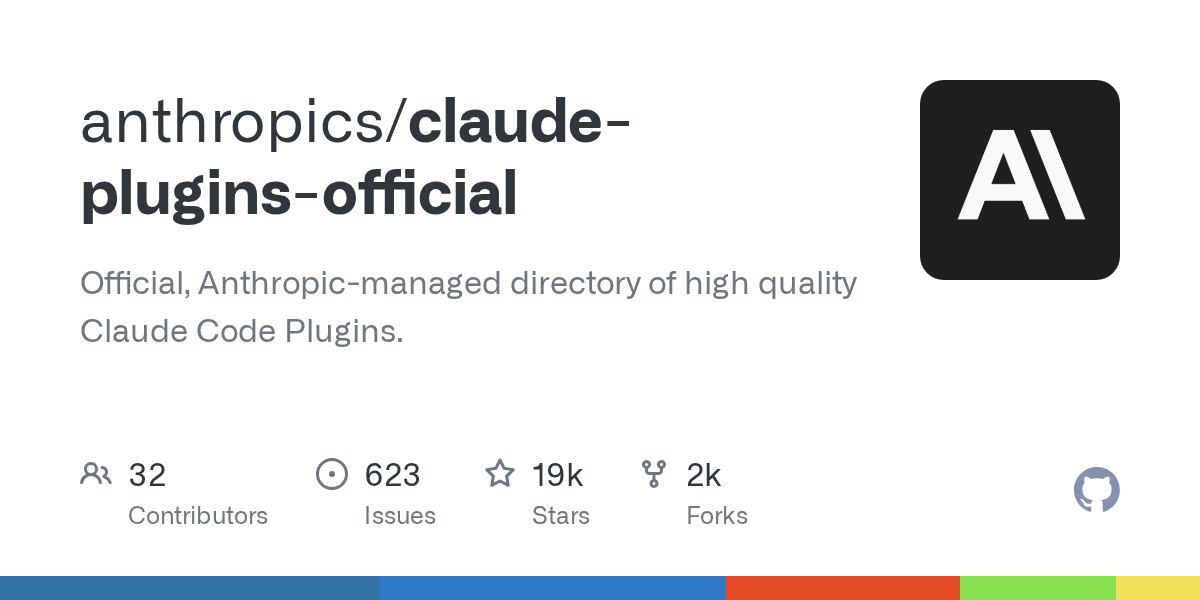
The repository’s scale makes this more than theoretical. At research time, anthropics/claude-plugins-official had 19,110 stars, 2,370 forks, and 631 open issues. The Airtable skills repo was much smaller, with 17 stars and 0 forks, but that is normal for a vendor-published integration. The risk is not “Airtable is suspicious.” The risk is that small plugin repositories can become high-trust installation targets because they appear inside an official marketplace.
Portable agent configuration is outrunning portable governance
The cross-agent packaging is worth pausing on. Airtable’s repo is built for Claude Code, Codex, and generic Agent Skills consumers. That is where the market is heading: write workflow knowledge once, reuse it across multiple agent runtimes. The productivity upside is obvious. The governance problem is that each runtime has different semantics around hooks, MCP permissions, sandboxing, credentials, local execution, and prompt authority. A package that is safe enough in one harness can have different implications in another.
This is the next version of the old “works on my machine” problem, except the machine is an agent runtime holding credentials and editing files. Portable skills need portable threat models, and we do not have those yet. Until then, teams should review the package contents in the context of the harness where it will run, not merely trust the upstream brand or the marketplace badge.
For practitioners, the Airtable plugin should be piloted deliberately. Review the skills and generated MCP configuration. Verify how OAuth or API-token handling works for the Airtable MCP server. Decide whether business-data access belongs in the same Claude Code session that can edit source files and run shell commands. Use claude plugin details <name> in newer Claude Code releases to inspect component inventory and projected token cost, but do not confuse inventory with approval. Somebody still has to decide which plugins may ship MCP servers, which may add hooks, which may install binaries, and who reviews upstream SHA bumps.
The broader takeaway is not that Claude Code plugins are uniquely risky. It is that they are finally important enough to deserve boring supply-chain controls. Pin sources. Require signed update commits. Scan every marketplace diff. Fail closed when scanners are unavailable. Make the check required. Keep an allowlist for plugins that touch external business systems. Re-review updates that add hooks, MCP servers, settings, monitors, or executables. If your internal agent marketplace does not have those basics, it is not a marketplace. It is a trust exercise with a nicer install command.
Anthropic adding Airtable is a sign the plugin ecosystem is becoming useful. Anthropic fixing the scan gate is a sign the ecosystem is becoming serious. Both matter, but only one should keep platform engineers awake. The future of coding agents will include portable plugins, shared skills, MCP endpoints, and workflow packages. The teams that benefit from that future will be the ones that treat those packages like dependencies from day one, not like snippets from a blog post.
Sources: anthropics/claude-plugins-official, Airtable skills repository, PR #1817: Add Airtable plugin, PR #1815: Make Scan Plugins a viable required check, Claude Code plugin documentation