Codex CLI 0.131.0 Is Mostly Plumbing — Which Is Exactly the Point

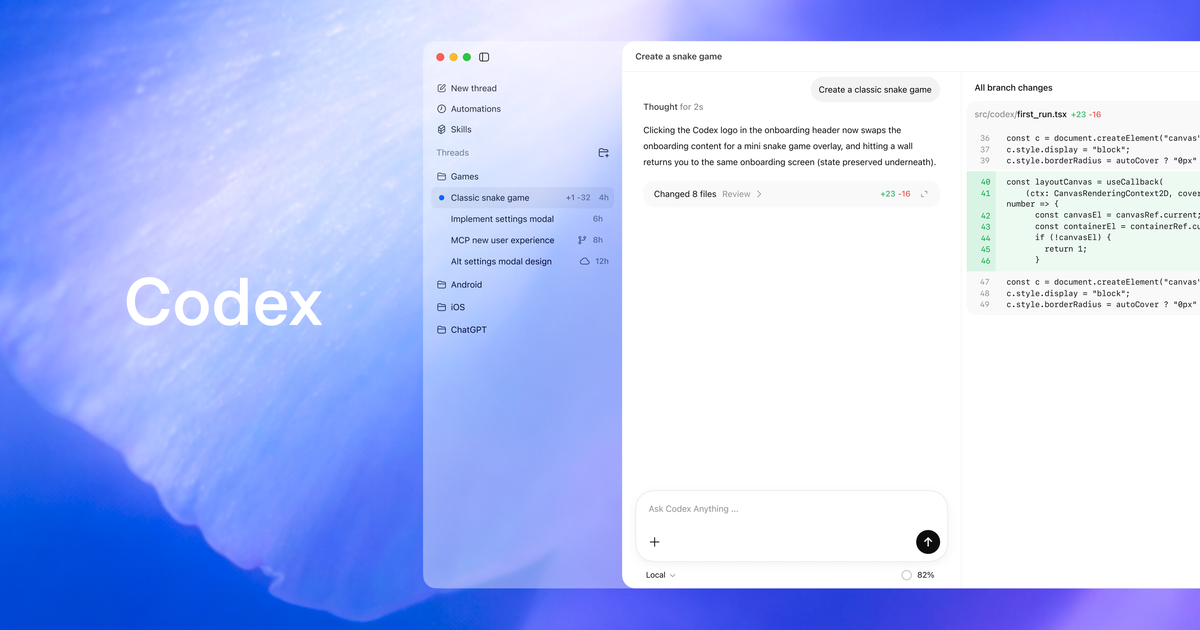
Codex CLI 0.131.0 is not a spectacle release. That is the compliment. OpenAI’s latest Codex CLI update is full of runtime work: richer TUI status, service-tier controls, permissions and approval visibility, plugin workflows, remote-control plumbing, Python SDK changes, codex doctor, Windows sandbox hardening, and safer local state. It is the kind of release that will not trend, because “diagnostics, permission profiles, and scoped write roots” do not make good launch copy. They do make serious developer tools.
OpenAI’s changelog lists Codex CLI 0.131.0 under May 18, 2026, with the install command npm install -g @openai/[email protected]. The GitHub release and compare view show a dense set of changes across the Rust CLI, app-server behavior, plugin hooks, remote environments, SDK surfaces, and sandbox logic. The headline is not one feature. The headline is that Codex is becoming less like a clever terminal assistant and more like an operable agent runtime.
Runtime visibility is the product now
The TUI changes are a good example. Codex now exposes more data-driven service-tier commands, blended token usage, permissions and approval mode, effective workspace roots, and better Markdown table behavior. That sounds cosmetic until you have a coding agent editing a repository under a deadline. Then the questions become painfully concrete: which service tier is this session using, what permissions does the agent think it has, what workspace roots are in scope, what approval mode is active, and how much usage is the task consuming?
Those details are not decorations. They are the operator interface for agentic development. A coding agent with unclear permissions is not safer because it asks for approval occasionally. It is only safer if users can understand what is already allowed, what requires escalation, and what remains restricted after escalation. A session with hidden service-tier behavior is not cheaper because nobody sees the meter. It is merely harder to debug the invoice. A workspace root that is misunderstood can turn a bounded task into accidental sprawl.
This is why runtime releases matter more than model announcements for teams already using agents. Model capability gets you the first successful demo. Runtime transparency gets you the fiftieth successful workday. Developers need to know what the tool is doing, what it can touch, how to stop it, and how to explain its behavior when something breaks.
codex doctor is boring in the way production tools are boring
The addition of codex doctor may be the most valuable item in the release. OpenAI describes it as support-ready diagnostics across runtime, auth, terminal, network, config, and local state. That is not glamorous. It is also exactly what an agent CLI needs once it touches shells, OAuth, local caches, plugin metadata, MCP-style tools, app-server processes, remote environments, and platform-specific sandboxing.
Without diagnostics, every failure becomes a guessing game. Is the agent stuck because auth expired? Is the terminal misconfigured? Did a plugin hook fail? Did network policy block a call? Did local SQLite state corrupt? Did a remote environment not register? Did a workspace permission profile resolve incorrectly? A diagnostic command gives users and support teams a shared artifact instead of screenshots, vibes, and “it worked yesterday.” Mature tools accumulate boring commands because boring commands reduce support entropy.
The local-state work points in the same direction. The release includes changes around preserving SQLite data, failing closed when state cannot open, adding recovery paths, and softening optional metadata sync failures. Those are unsexy details until they are the difference between a recoverable session and a corrupted local mess. Agent tools increasingly maintain state that affects behavior: histories, permissions, plugin metadata, workspace mappings, and remote-control references. Losing or half-opening that state can create confusing and unsafe behavior. Failing closed is the right instinct.
Sandbox details are where trust goes to be tested
The Windows sandbox fixes deserve more attention than they will get. The release references deny-read rules, scoped write roots, ineffective firewall policy, and PowerShell edge cases. Windows is where neat cross-platform sandbox abstractions meet path semantics, shell differences, policy surprises, and decades of compatibility behavior. If a coding agent claims sandboxing as a safety property, platform-specific edge cases are not footnotes. They are the property.
Permission-related fixes, including preserving managed read restrictions during escalation and cleaning workspace-root permission profile resolution, are also important. Approval prompts are easy to market and hard to implement correctly. The question is what survives escalation. If a user grants permission for one operation, does the system preserve read restrictions that policy says should remain? Does it widen access accidentally because a profile resolved too broadly? Does a remote session inherit more than expected? These are the details that separate real boundaries from user-interface theater.
The plugin and remote-control work expands the surface area further. Marketplace CLI commands, version-aware sharing, share checkout, clearer shared-workspace buckets, default-enabled plugin hooks, daemon-managed remote control, runtime enable/disable APIs, status reads, and registry-backed remote environments all point toward Codex as an ecosystem. That is powerful. It also means the trust boundary now includes plugins, hooks, metadata, remote registries, SDK routing, and app-server lifecycle. Extensibility is not free; it converts product features into governance obligations.
The Python SDK move to openai-codex / openai_codex, with pinned runtime-generated types, concurrent turn routing, approval modes, and integration coverage, reinforces the same direction. Codex is not just a CLI someone runs by hand. It is becoming something other tools can embed, control, and route around. That raises the bar for stable contracts. If developers build workflows on top of Codex, they need typed surfaces, predictable approval semantics, and compatibility signals.
For practitioners, the action is straightforward. Do not roll this straight into your most sensitive workspace and call it a day. Update in a non-critical repo, run codex doctor, inspect the new status and permissions displays, verify service-tier behavior, and test any plugin or SDK integration you rely on. If you use remote environments, validate enable/disable and status behavior. If you work on Windows, re-check sandbox assumptions before trusting them around secrets or restricted source. If your team compares Codex with Claude Code, Cursor, or Copilot, score this release by operability, not demo appeal.
My take: Codex CLI 0.131.0 matters because it is mostly below the waterline. Serious coding agents need diagnostics, permissions, sandboxing, service-tier visibility, remote-control boundaries, and plugin contracts. The model can write the patch; the runtime determines whether a team can trust, govern, debug, and afford the workflow around that patch. This release is plumbing. Plumbing is what keeps the building usable.
Sources: OpenAI Codex changelog, OpenAI Codex GitHub release, OpenAI Codex compare view