Colossus Was Supposed to Power Grok. Now Claude Is Paying the Rent.

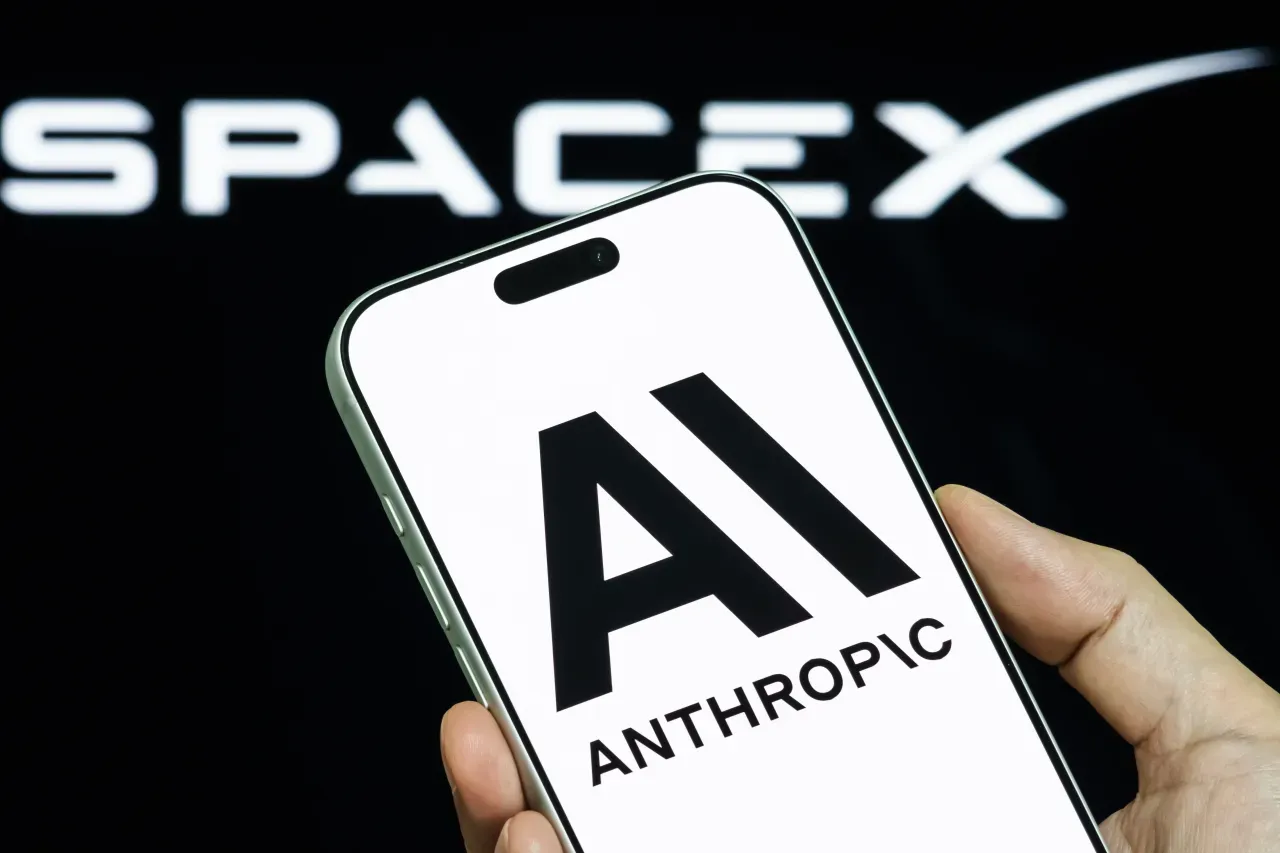
Colossus was supposed to be the engine room for Grok. Bloomberg now reports the more interesting—and more awkward—version of the story: SpaceX rented the full capacity of its Colossus 1 data center in Memphis to Anthropic after internal teams ran into technical challenges using the facility to develop and run Grok models.
That is not a small operational footnote. It changes the read on xAI from “frontier model lab with a huge compute advantage” to something more complicated: a company that may be better at assembling scarce AI infrastructure than turning that infrastructure into durable Grok product advantage. In the current market, that can still be an excellent business. It just is not the same business developers think they are buying when they evaluate Grok, Grok Build, or xAI’s API.
The Bloomberg claim lands one day after SpaceX’s public-market debut made AI central to the company’s valuation story. CNBC reported that SpaceX opened at $150, above its $135 IPO price, touched $176.52 intraday, closed around $161, and ended its first trading day with a market value around $2.1 trillion after raising $75 billion. Elon Musk framed the raise as fuel for a “significant growth phase,” including more than 100,000 satellites and eventually AI data centers in space.
That is the pitch-deck version. The engineering version is simpler: GPUs only matter when the software stack can keep them busy doing useful work.
Owning the cluster is not the same as using it well
Colossus has always been xAI’s favorite proof point. Build a massive Memphis data center, wire it into Grok training and inference, and use brute-force infrastructure as the wedge against OpenAI, Anthropic, and Google. The problem is that brute force still has to pass through distributed training, data pipelines, scheduling, storage, networking, observability, and product demand. A low-utilization supercluster is not strategic leverage. It is an extremely expensive space heater with a better investor-relations team.
MarketWise’s S-1-based analysis says Anthropic agreed to pay $1.25 billion per month for compute access across COLOSSUS and COLOSSUS II through May 2029, a contract worth up to $45 billion if it runs full term. It also says either side can exit with 90 days’ notice, Anthropic keeps ownership of its models and data, and SpaceX keeps the right to reclaim capacity for internal initiatives if needed. Those terms make sense for scarce compute. They also reveal how provisional this market still is: three-year headline number, three-month escape hatch.
MarketWise also cites reporting that Colossus utilization was around 11%, versus roughly 40% at rival labs, and says Grok app downloads fell from more than 20 million in January to about 8.3 million by April. Treat those numbers carefully—they are secondary reporting and app downloads are not enterprise adoption—but the directional signal matters. xAI may have built ahead of its own ability to consume the cluster productively. Anthropic, with Claude’s stronger enterprise and developer demand, apparently could.
There is no shame in renting capacity to a competitor. The AI economy is weird enough that rivals will buy, sell, and borrow from each other whenever the cluster is available and the price clears. But it is strategically awkward. If Claude is paying rent in the house built for Grok, then xAI’s infrastructure may be ahead of xAI’s product execution.
The compute-landlord model is real—and different from winning developers
The bullish interpretation is obvious: SpaceX/xAI may have accidentally—or deliberately—built a neocloud. If Anthropic is paying $1.25 billion a month and Google reportedly has its own large compute-access agreement, then Colossus becomes more than a training cluster. It becomes a scarce-capacity business with customers who have immediate demand and deep pockets.
That could be more financially attractive than waiting for enterprises to standardize on Grok. Compute revenue is legible. Model preference is fickle. A cluster with serious power, networking, and GPU availability can monetize even if Grok’s consumer brand has a messy quarter or Grok Build is still fighting for developer mindshare against Claude Code, Codex, Cursor, and Copilot.
But developers should not confuse those scorecards. “SpaceX can marshal capital and hardware at absurd scale” is one claim. “Grok is the best model or coding-agent backend for my team” is another. Colossus can be commercially valuable even if Grok remains a second-choice model for many workflows. Infrastructure strength can subsidize product iteration; it does not automatically create product-market fit.
This matters for teams evaluating xAI’s developer stack. Grok Build just received a plugin marketplace with Sentry, Vercel, MongoDB, Chrome DevTools, Cloudflare, and Superpowers integrations—a serious move toward agent distribution. But the benchmark that matters is not token price or logo count. It is accepted work per dollar: how many patches land, how many incidents are debugged, how many retries happen, how much human review time is required, and how often the agent tries to touch something it should not.
If Grok is cheaper but requires more babysitting, the discount is fake. If it handles real operational workflows cleanly, then xAI earns a routing lane. The only honest way to know is to run it against your repos, your tests, your deployment constraints, and your security boundaries.
The physical world is now part of your AI vendor risk
The Memphis story also has a physical-infrastructure edge that AI teams can no longer ignore. E&E News reports that the NAACP and environmental groups allege xAI has installed 11 new turbines since mid-May at its Mississippi gas plant, bringing the total to at least 57 methane gas turbines—enough, according to the groups, to power an estimated 738,000 to 950,000 homes. They also allege those turbines could emit five times the nitrogen oxide of nearby Memphis International Airport and that xAI made inconsistent or late disclosures to regulators.
Those allegations are not just local-politics background noise. AI infrastructure now means turbines, substations, transmission queues, emissions permits, water access, community opposition, and litigation. If your critical model vendor depends on capacity tied up in environmental or permitting fights, that is operational risk. It belongs in the same vendor review as uptime, data retention, model-version pinning, and SOC 2 paperwork.
The same is true of the Anthropic deal’s 90-day flexibility. If your roadmap depends on a capacity provider whose compute can be reclaimed, repriced, redirected, or litigated into delay, you need fallback routes. Multi-provider eval harnesses, model abstraction, and workload portability are not architecture astronautics anymore. They are how teams avoid being trapped when the compute market behaves less like cloud storage and more like airline seating during a storm.
The practical takeaway is boring, which usually means it is right: separate xAI’s infrastructure story from Grok’s product story. Colossus is evidence that SpaceX/xAI can build and monetize compute at enormous scale. It is not evidence, by itself, that Grok is the right default for production agents, developer tooling, or enterprise AI workloads.
For now, keep Grok and Grok Build in the benchmark harness. Test them on low-risk workflows where cost and speed matter. Measure accepted diffs, retries, tool calls, latency, incident-resolution quality, and review time. Watch whether xAI converts Colossus revenue into better models, better APIs, stronger governance, and more reliable developer tooling. If it does, the infrastructure advantage becomes product leverage. If it does not, SpaceX may still have a very good compute-landlord business—and developers should price Grok accordingly.
The line is clean: Claude renting the cluster built for Grok does not mean xAI failed. It means xAI’s infrastructure may be stronger than its product. Useful, profitable, and not the same thing as winning developers.
Sources: Bloomberg, SEC EDGAR, CNBC, MarketWise, Reuters, E&E News