DGX Spark Enterprise Manageability Is NVIDIA Treating Desktop AI Boxes Like Real Fleet Infrastructure

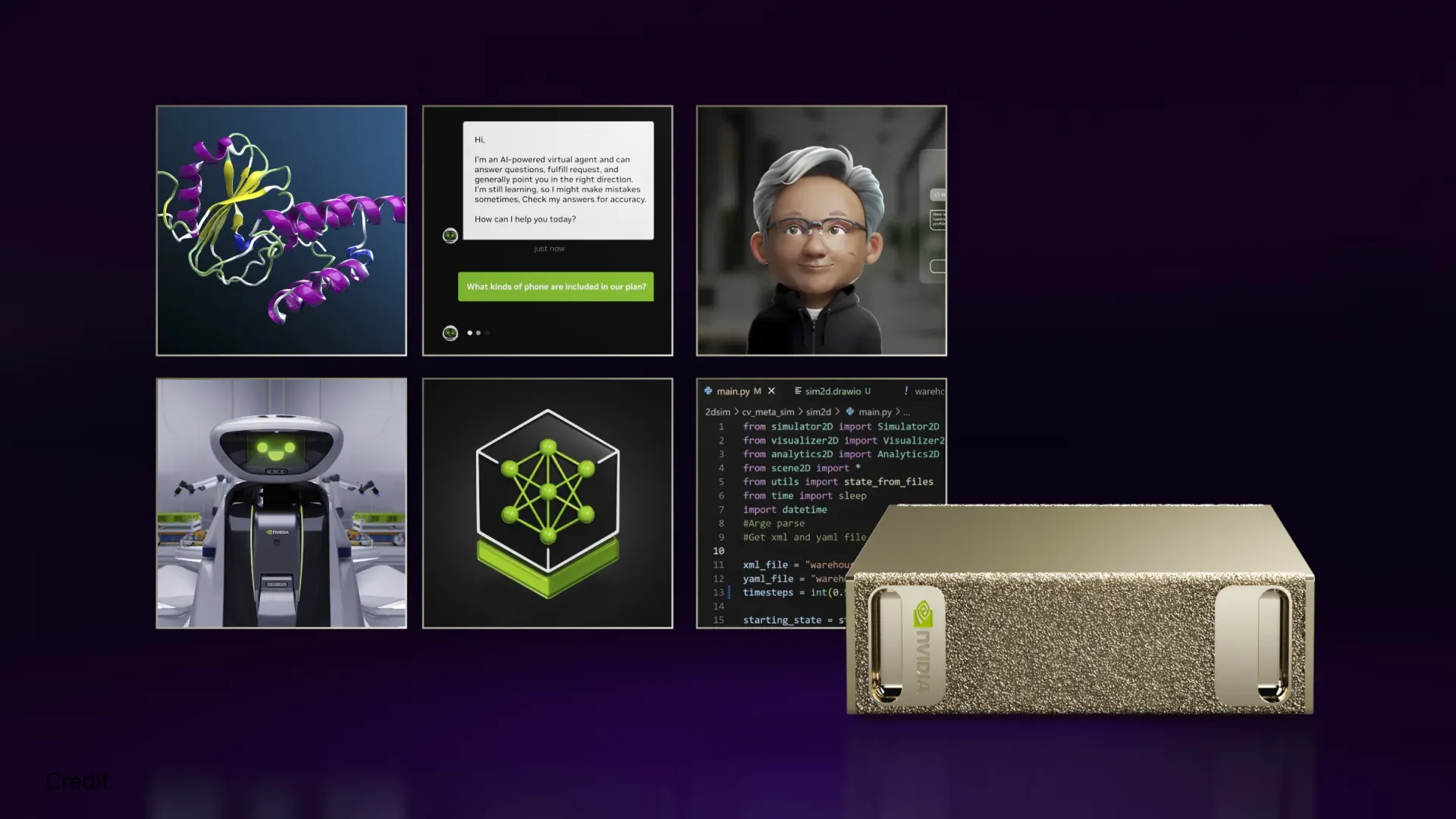
NVIDIA published a DGX Spark Enterprise Manageability framework last week, and if you blink you might miss why it matters. The press release language sounds like IT housekeeping: SSH, JSON, diagnostic collectors, update tooling. But the subtext is significant — NVIDIA is no longer pretending that desktop AI systems are solo developer workstations. A fleet of persistent, always-on AI assistant boxes sitting near sensitive code and data needs the same governance muscle as any server infrastructure. This post is the first time that governance story has been written down as a first-class framework rather than an afterthought.
The earlier DGX Spark and RTX Spark stories focused on what the hardware could do: local inference up to 200B parameters, 128GB unified memory, ConnectX-7 networking, CUDA compatibility, NemoClaw orchestration. Those are real advances. But they also create a management gap that large organizations cannot ignore. When you have 20 DGX Spark boxes in a lab, or 50 running in a secure development environment, or hundreds deployed across a global engineering org, "just use SSH" stops being a solution. It becomes a compliance problem with a name.
DGX Spark Enterprise Manageability answers that with six lifecycle phases: procurement and receiving, initial provisioning, ongoing monitoring, maintenance windows, incident response, and end-of-life with cascade or redeployment. That is a familiar IT vocabulary — most organizations already have playbooks for these phases on physical servers and virtual infrastructure. The useful part is that NVIDIA is publishing tooling that fits into those existing workflows instead of asking enterprises to build from scratch.
The agentless SSH plus bounded JSON output choice is the right architectural call. Enterprises already have orchestration systems — Chef, Puppet, Ansible, Landscape, Tanium, SCCM, and the like — that manage fleet configuration. Requiring a resident management daemon on every AI assistant endpoint would mean every one of those integrations needs a rewrite or a new certificate. Instead, NVIDIA ships collectors that run over SSH on demand and emit structured output, and controllers that require least-privilege sudo with change-management gates. That maps to how enterprise IT actually operates: tools that integrate with existing stacks beat tools that demand new ones.
The diagnostic tooling is where the story gets concrete. spark_diagctl.py has two modes. L1 health posture gives you a bounded JSON summary fast — the kind of output you can pull into a dashboard, a SIEM, or an automated ticket without waiting for a full workup. L2 deep evidence bundle pulls GPU telemetry, kernel logs, hardware event counters, PCIe state, firmware versions, and crash diagnostics into a structured artifact. reset_reason_reporter.py goes a step further: it correlates system event logs, BMC records, kernel oops, and firmware events to classify reboot causes conservatively rather than guessing. If your DGX Spark rebooted unexpectedly at 3am, this is the tool that tells you whether it was a power event, a driver crash, a hardware fault, or something you need to escalate to NVIDIA support.
The security capabilities deserve careful attention. Verified boot checks, encryption-at-rest state reporting, APT signing verification, factory reset with retirement certificate, and UEFI-backed asset metadata tags are not optional for organizations that handle proprietary code, credentials, or model artifacts on local inference hardware. A DGX Spark box sitting on an engineer's desk is going to accumulate embeddings, fine-tuning data, tool outputs, and transcripts that may contain sensitive context. The ability to prove the device is in a known secure state — and later prove it was cleanly wiped before decommissioning — is the difference between a compliant deployment and a data-loss incident waiting to happen.
Air-gapped provisioning is the other piece that matters for regulated environments. Custom Installation supports USB provisioning, local server images, cloud-init, OEM Data partition hooks, and fully disconnected fleets. Organizations in financial services, healthcare, defense, and other sectors where data cannot leave the building need a path to onboard AI assistant hardware that does not require internet access during setup. NVIDIA is not guessing about this requirement; it is naming the exact provisioning mechanisms that map to real enterprise network topologies.
The limitation worth naming: manageability does not solve the economics. A fleet of DGX Spark systems that are perfectly governed, securely booted, and cleanly retired is still a fleet of expensive hardware that needs to justify its compute cost against cloud API alternatives. The 128GB unified memory, 1 PFLOP FP4, and GB10 Grace Blackwell chip are compelling specs for local inference. But procurement, floor space, power, cooling, and IT support all add real cost. Organizations should be measuring utilization, task fit, and cost-per-completed-workflow — not just raw performance — before committing to a fleet deployment.
The P0 SEO overlap here is telling. Today's research brief flags MCP security coding agents, agent tool permission policy, and local AI coding agent cost as top practitioner concerns. This post sits exactly at that intersection. Before an agent gets a tool policy, the machine running it needs a hardware policy. Before the model gets a token budget, the fleet needs a provisioning record, a diagnostic baseline, and an update cadence. DGX Spark Enterprise Manageability is not glamorous. It is, however, the layer that determines whether local AI infrastructure becomes a sustainable enterprise category or a series of impressive demos that IT quietly refuses to support at scale.
If your organization is evaluating DGX Spark or similar local-agent hardware, the right first question is not "which model can it run?" It is: how do you provision a fleet without internet access? How do you prove the device left the factory in a known secure state? How do you stage a driver update across 30 boxes without a maintenance window? How do you collect a diagnostic bundle before the device gets reimaged? How do you retire a box and prove the model artifacts and embeddings are gone? If the vendor cannot answer those questions with tooling, not just documentation, the demo is not production-ready yet.
Sources: NVIDIA Developer Blog | DGX Spark Enterprise Manageability docs