Google’s Education AI Study Finally Gives Gemini a Number Builders Can Argue With

Google’s latest education AI post is useful for one reason most AI education announcements are not: it gives us numbers worth arguing with.
That is a low bar, but a necessary one. The AI-in-schools conversation is usually trapped between demo optimism and moral panic. One side shows a chatbot patiently explaining fractions. The other imagines every student outsourcing thought to a machine. Both can be true in slices, and neither tells builders what matters: did the tool improve learning, under what conditions, for which students, at what cost, with what teacher support, and how do we know?
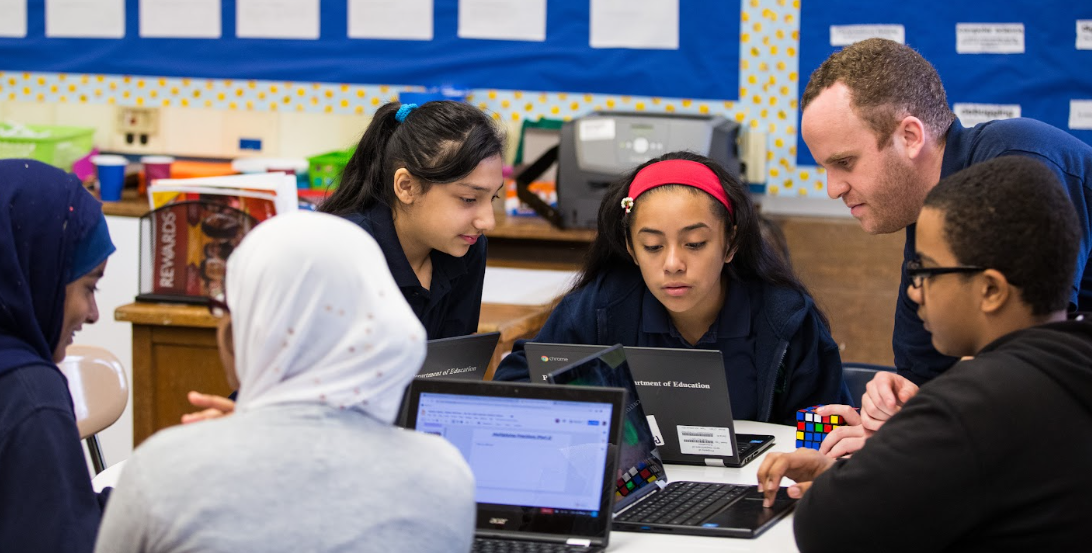
Google’s new results from Sierra Leone and Northern Italy do not settle those questions. They do something better: they make the questions concrete. The company says it ran an eight-week pre-registered randomized controlled trial in Sierra Leone with Fab AI and local teachers, randomly assigning 48 math classrooms — nearly 1,800 Grade 7 and 8 students — to use Gemini-powered Guided Learning or continue regular classwork. Students using the tool improved scores on externally validated assessments by +0.26 standard deviations, which Google equates to roughly 1.2 to 1.7 years of typical learning progress in low- and middle-income countries.
That is the kind of claim that deserves attention precisely because it can be scrutinized. A standard deviation gain is not a marketing adjective. It is an effect size. It invites comparison, replication, subgroup analysis, and debate over study design. In an industry addicted to “users loved it” as an impact metric, this is progress.
The usage threshold is the product story
The most interesting number may not be +0.26. It may be 12 hours. Google says 69% of Guided Learning students reached the intended 12-hour usage threshold, with average usage across schools at 15 hours. Students who reached the recommended amount of usage saw larger gains of +0.38 standard deviations, which Google says moves an average student from the middle of the class to the top third.
That is impressive, but it needs careful reading. High usage may indicate the tool caused more learning. It may also indicate motivated students, stronger classroom implementation, better teacher facilitation, more reliable access, or some mix of all of the above. The technical report matters here, and independent replication will matter more. Still, the usage threshold is a useful product insight: education AI is not magic dust sprinkled on a lesson plan. It is an intervention that needs enough time-on-task to matter.
That should sound familiar to anyone building AI products outside education. The model is rarely the whole product. The workflow around it determines whether users build skill or merely generate artifacts. Guided Learning’s stated design is to avoid being an answer machine. It asks probing questions, breaks problems into steps, and adapts explanations using Gemini models grounded in learning science. That design choice matters. If the tool’s job is to develop understanding, then the fastest answer may be a product bug disguised as convenience.
This is the lesson most AI productivity tools still have not internalized. If your product is supposed to make users better — better programmers, analysts, writers, operators, doctors, teachers — then the interface needs moments of productive friction. It should sometimes ask the next question instead of handing over the finished output. It should reveal reasoning steps, surface uncertainty, and make practice unavoidable. Otherwise, you are not building a tutor or a coach. You are building an outsourcing layer with friendly typography.
Teacher productivity is promising, but squishier
The Northern Italy study is a different kind of evidence. Google says it worked across the Don Bosco school network using surveys, focus groups, and more than 560 detailed teaching activities with 700 educators and 9,000 students, spanning primary, secondary, and vocational training. Educators used Gemini for Education to assist with content creation and scaffolding. Teachers reported that 80–99% of students in each class mastered planned lesson skills, with examples ranging from parabola geometry to writing Java code. They also reported a 70% reduction in administrative-task time, reallocating that time to one-on-one mentorship and student support.
There is a lot to like here, and a lot to keep in the “needs review” column. A 70% admin-time reduction is huge if it holds up under more rigorous measurement. But self-reported productivity gains are not the same evidentiary category as a randomized trial. Teachers may be enthusiastic. The deployment context may be unusually supportive. The tasks may have been chosen because they suit Gemini well. None of that invalidates the result; it just means product teams should not copy the headline without copying the measurement discipline.
The concrete workflows are the valuable part. Lesson scaffolding, personalized materials, geometry explanations, Java-code practice, administrative preparation, and individualized student support are not vague “AI transformation” language. They are jobs to be done. They suggest a pragmatic entry point for AI in schools and workplaces: remove repetitive preparation burden while preserving the human expert’s judgment, relationship, and accountability.
That is the sane version of AI augmentation. Teachers are not bottlenecks to eliminate. They are the system’s most important context window. A tool that gives a teacher back time for mentoring is potentially useful. A tool that routes students around the teacher because the demo looks cleaner is institutional vandalism with a prompt box.
Builders should copy the evaluation posture, not the claim
The obvious risk is external validity. Sierra Leone junior-secondary math classrooms and Northern Italy school networks are not interchangeable with a U.S. suburban district, an Indian state school, a Brazilian municipality, or a company’s internal developer-education program. Connectivity, language, device access, teacher training, classroom norms, curriculum alignment, parental trust, and assessment design will decide whether the result travels.
That does not make the work irrelevant. It makes it more useful as a pattern. Define the outcome before deployment. Use a control group when you can. Measure usage intensity, not just signups. Report effect sizes, not vibes. Separate student learning from teacher time savings. Publish enough methodology that outsiders can critique the work. And when you see stronger outcomes among high-usage students, resist the urge to call that proof until you understand why usage differed.
For AI product teams, the bigger takeaway is that learning products should optimize for durable capability, not short-term output. In coding tools, that means distinguishing “the patch compiles” from “the developer understands the system better.” In enterprise training, it means measuring transfer to real tasks, not course completion. In analytics tools, it means asking whether users make better decisions, not whether they produced more charts. Education is simply where the measurement problem becomes impossible to ignore.
Google is also tying these studies to a broader training push: expanding the Google AI Educator Series in India across Maharashtra, Chhattisgarh, Assam, Ladakh, and Punjab School Education Board, localized into six languages in the first year; and partnering with the African Union Commission to support AI literacy across 55 member states, including Gemini for Education and NotebookLM onboarding for universities. That context matters because teacher readiness is not a side quest. It is the deployment substrate.
LGTM for publishing measurable outcomes instead of another polished classroom demo. Needs review on replication, independent access to methods, and whether the high-usage gains survive outside partner-supported pilots. The right practitioner response is not “Gemini solves education.” It is “this is what a serious AI impact claim should start to look like.” More of that, please. Fewer dashboards full of accounts created.
Sources: Google, Google LearnLM, Google Guided Learning