Microsoft’s Industrial AI Roundup Is Marketing, But the Numbers Are the Useful Part.

Microsoft’s industrial AI roundup is polished corporate storytelling, which means the safest default is skepticism. But the useful part is not the headline claim that AI is “enabling the future of industrial work.” The useful part is the implementation detail: Azure AI Speech, Azure OpenAI in Microsoft Foundry, GitHub Copilot, Azure AI Search, Cosmos DB, Teams, machine telemetry, KPI stores, and domain databases being used as translation layers between expert knowledge and operational decisions.
That matters because industrial AI is where vague assistant demos go to become accountable software. A wrong answer in a slide deck is annoying. A wrong answer in precision machining, plant operations, financial controllership, or infrastructure engineering can waste material, delay production, mislead executives, or create safety risk. These examples are worth reading not because Microsoft found four customers willing to say nice things, but because the numbers expose what useful enterprise AI tends to look like: constrained domains, deep data preparation, workflow integration, and measurement.
The model is not the system
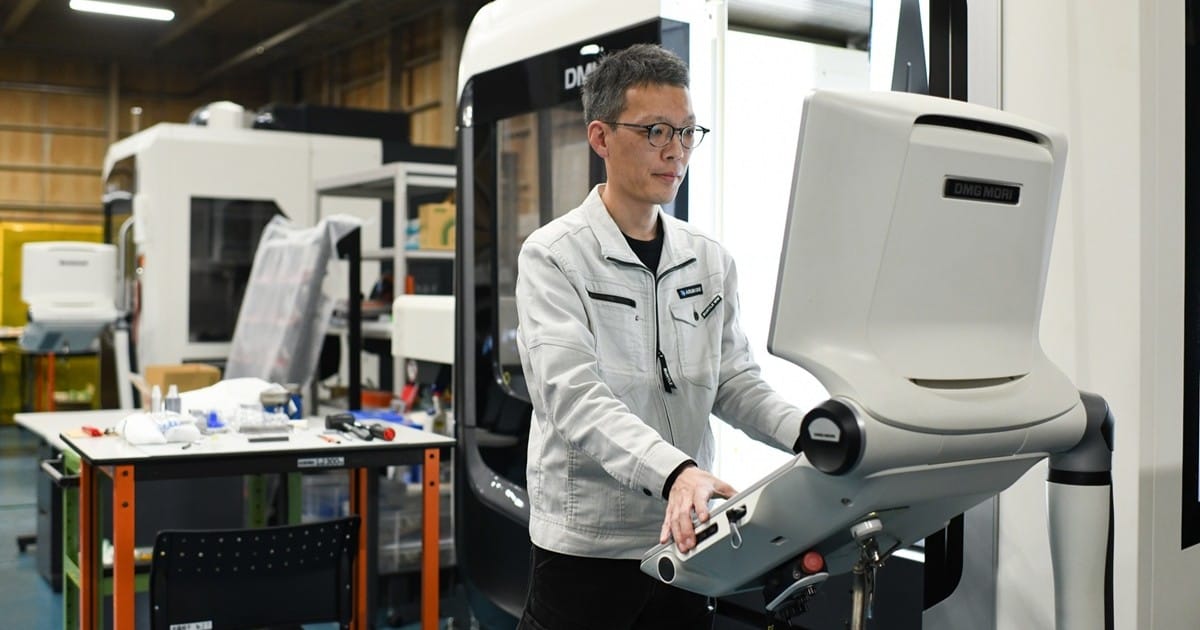
The strongest case is ARUM in Japan. Its KAYA prototype uses Azure AI Speech and Azure OpenAI in Microsoft Foundry to guide junior workers through precision machining steps in natural language. That is the demo-friendly layer. The deeper asset is ARUMCODE, which runs on Azure, was developed with help from GitHub Copilot, and converts CAD files into machine instructions, including tool choice and cutting sequence.
The numbers are unusually concrete. ARUM says a skilled machinist previously took more than an hour to create a program for an aircraft wing rib the size of a mobile phone. ARUMCODE does it in four minutes. The system was trained on a database of part materials, shapes, cutting patterns, tools, and 4 million cutting conditions. It took 12 years before ARUMCODE was ready to ship. ARUM says it has automated metal processing’s 12-step production process from drawing to finished part; ARUMCODE became commercially available in 2021, and TTMC Type F launched in May 2025.
That timeline is the part executives should not skip. The generative interface looks modern because the domain work was not. Four million cutting conditions and a dozen years of product development are doing more heavy lifting than the avatar in the yellow jumpsuit. KAYA may be the thing people remember from the demo, but ARUMCODE is the moat. Teams that want the chatbot without the domain model are trying to install the roof before pouring the foundation.
The business impact is real enough to pay attention to. ARUM has sold 40 TTMCs at 330 million yen, or about $2.1 million each, and more than 200 manufacturers in Japan use ARUMCODE through ARUM Factory 365. CEO Takayuki Hirayama says profits have increased eight- to ten-fold compared with the old subcontractor business. Counterpoint’s Marc Einstein estimates Japan’s precision manufacturing sector at about $15 billion, with roughly 60% market share in specialized areas such as precision equipment for semiconductors, robotics, and optics. That is not “AI productivity” as a vibes metric. That is software eating a production bottleneck.
Cemex shows why imperfect accuracy can still be useful
Cemex’s LUCA Bot is a different pattern: executive decision support rather than shop-floor instruction. It is used by about 100 senior leaders, trained on thousands of internal economic and financial data points, and built in Microsoft Foundry with Azure OpenAI, Azure AI Search, Azure Cosmos DB, Azure App Service, Microsoft Teams, and Azure Storage. Microsoft says LUCA Bot processes more than 120 KPIs, broken down by region, country, and plant, across a decade of data. It includes more than 60 preloaded prompts and was trained on more than 35,000 questions.
The accuracy numbers are the best part because they are not perfect. Cemex reports 400 to 500 queries per month, 82% accuracy for analysis, and 92% accuracy for data, benchmarked weekly against 500 predefined questions. That is good enough to change how executives retrieve and interpret information in a controlled environment. It is not good enough to remove human accountability. Cemex appears to understand the difference: access is restricted by authorized region and business line, only basic session data is saved, updates happen monthly, and weekly benchmarks keep the system from becoming an untested oracle.
Practitioners should take that as the pattern. Constrain the domain. Define the KPI vocabulary. Ground the system in governed data. Give users prompts that match the workflow. Restrict access by business context. Benchmark with stable test questions. Expand only after the operating model works. The boring scaffolding is the product.
This also illustrates a useful distinction between answer accuracy and decision quality. A system can retrieve the right number and still support a bad conclusion if it lacks context, caveats, or causal understanding. Conversely, a system with imperfect analysis accuracy can still create value if it reduces lookup time, standardizes definitions, and pushes leaders toward better questions. The right evaluation is not “did the model sound smart?” It is “did this improve the decision process without hiding the uncertainty?”
Factories do not need chatbots. They need feedback loops.
Obeikan’s example moves from knowledge work into operations. The company connected 1,200 machines and 280 assembly lines through its O3sigma platform, reporting a 30% efficiency boost and millions of dollars in savings. That is the kind of claim that deserves scrutiny, but the architectural direction is right: machine connectivity, production-line telemetry, and root-cause analysis before conversational sugar.
The New Zealand geotechnical-data example points at the same shape from another industry. Fragmented engineering data slows decisions. AI becomes useful when it helps practitioners find, interpret, and apply domain evidence faster, not when it generates plausible paragraphs over a messy archive. Whether the domain is soil conditions, plant efficiency, or CNC machining, the work is the same: capture operational data, impose useful structure, connect it to the people making decisions, and keep humans in the loop where mistakes are expensive.
This is why Microsoft Foundry’s role in these stories is more interesting than the brand placement. Foundry and Azure OpenAI are not replacing the system. They are sitting inside a larger architecture that includes search, storage, application hosting, speech interfaces, Teams workflows, code assistance, data authorization, and operational telemetry. The model is one layer. The system is the product.
For engineering teams, the first action is to identify the bottleneck before selecting the AI surface. ARUM had a skilled-labor shortage and a slow CAM-programming process. Cemex had leaders digging through reports and email chains for financial answers. Obeikan had handwritten logs and delayed root-cause analysis. The AI interface worked because it mapped to a painful, specific workflow with measurable before-and-after behavior. If your AI proposal starts with a model name instead of an operational failure mode, it is probably upside down.
The second action is to treat evaluation as a product feature. Industrial AI needs test sets, benchmarks, data-lineage checks, access controls, escalation paths, and rollback plans. If the system touches confidential financial data, design files, machine instructions, plant performance, or infrastructure decisions, a bad answer is not merely a hallucination. It is a business event. Identity, authorization, model/version tracking, human review, and audit logs belong in the first architecture diagram, not the compliance appendix.
The third action is to respect the data work. ARUM’s 12-year path and 4 million cutting conditions are not a footnote; they are the lesson. Enterprise teams with chaotic data, undefined metrics, and undocumented process rules should not expect a conversational layer to create discipline for them. It will make the chaos easier to query, which is not the same thing as making it correct.
Microsoft’s roundup is marketing, yes. But it is the useful kind because the examples accidentally argue against lazy AI adoption. The grounded version of enterprise AI does not look like a chatbot pasted on top of every workflow. It looks like domain expertise turned into operational software, with generative interfaces acting as translators between messy real-world systems and the people responsible for decisions. That is less glamorous than “AI transformation.” It is also much more likely to work.
Sources: Microsoft Source, ARUM case study, Cemex LUCA Bot case study, New Zealand geotechnical data case study, Obeikan case study, Microsoft Foundry Models docs, Azure AI Speech docs, GitHub Copilot