Microsoft’s New Skills Model Makes Agent Framework Look More Like a Real Internal Platform

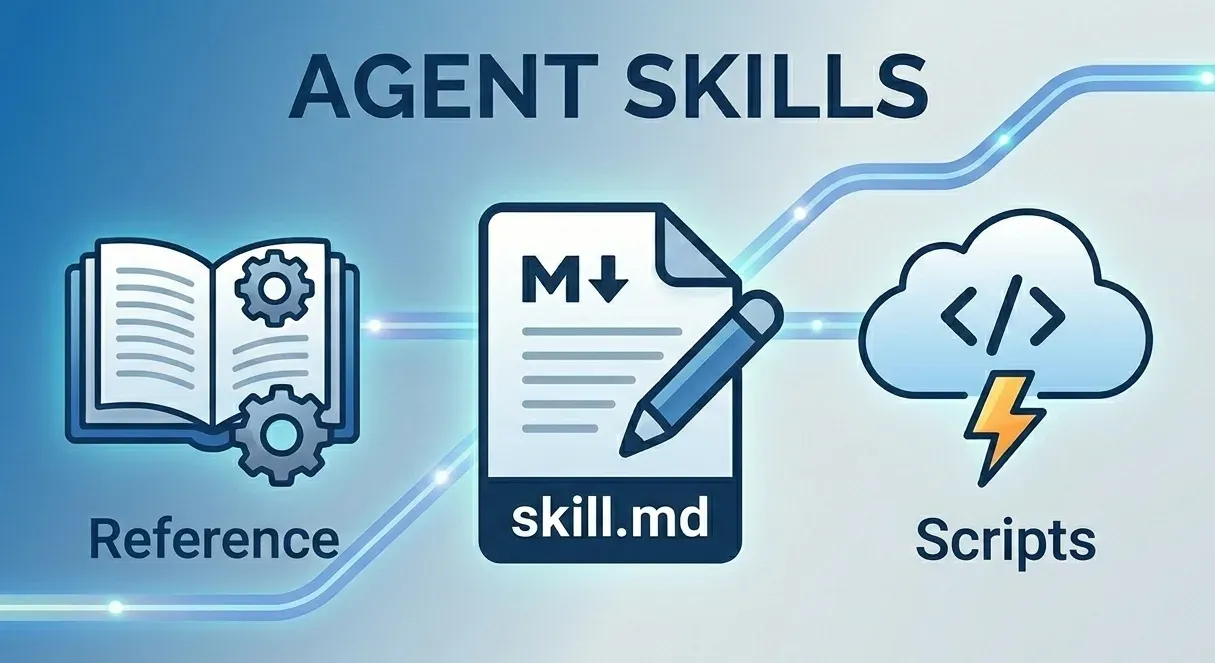
Microsoft’s latest Agent Framework post is ostensibly about skills in .NET. Read it quickly and you might file it under “developer ergonomics” and move on. That would miss the more interesting story. What Microsoft is really building here is a packaging model for agent capabilities, and that is the kind of boring platform work that starts to matter once the demo phase ends and different teams inside a company all need to contribute to the same runtime without rewriting each other’s code.
The post, published April 13, walks through three ways to author skills for Microsoft Agent Framework in .NET: as file-based skills on disk, as class-based components that can ship in a NuGet package, and as inline code-defined skills that live directly in application code. All three can be composed into one provider through AgentSkillsProviderBuilder. That sounds neat. The more important point is what it implies about where Microsoft thinks the framework is headed.
This is not primarily a story about giving developers more syntax options. It is a story about making agent capabilities portable across the messy reality of enterprise software development. One team owns a shared repo. Another team ships internal packages. A third needs a temporary bridge because the “proper” implementation will not land until next sprint. Microsoft is telling those teams they should all be able to plug work into the same agent surface without inventing a fresh integration architecture every time somebody needs a new workflow.
“Skills” are turning into a distribution boundary
The example in the post is an HR self-service agent, which is corporate enough to sound boring and realistic enough to be useful. It starts with a file-based onboarding skill, adds a benefits-enrollment skill from a NuGet package, then uses an inline time-off-balance skill as a temporary bridge until the packaged version is ready. There is also a fourth step: enabling script approval so actions with real consequences pause for human review.
The details matter. Class-based skills derive from AgentClassSkill<T> and use attributes such as [AgentSkillResource] and [AgentSkillScript] so the framework can discover resources and scripts via reflection. Inline skills can add scripts and resources directly in code. File-based skills can live as directories with SKILL.md, scripts, and references. In other words, the framework is not just exposing tools. It is defining a way to package, discover, compose, and govern capabilities that may come from different delivery channels.
That is a more serious platform move than another “multi-agent orchestration” demo. Enterprises do not usually fail to adopt frameworks because they lack one more abstraction over tool calling. They fail because capability boundaries do not map well to how software is actually authored, versioned, and shipped across teams. Microsoft seems to understand that a framework skill may need to be a directory today, a package next month, and a temporary inline bridge in between.
The approval hook is the part to pay attention to
The post’s most important line may be the quietest one: UseScriptApproval(true). When enabled, the framework pauses and returns an approval request instead of running a script immediately. That is not a full governance system, but it is the correct instinct. Agent tooling has spent too much of the past year pretending the hard problem is enabling tool use. It is not. The hard problem is deciding when tool use should stop and wait because the action touches production infrastructure, employee systems, or anything else an operator might reasonably want to supervise.
That matters because Microsoft’s packaging story only becomes enterprise-credible if governance travels with it. A class-based skill discovered through reflection is convenient. A file-based skill loaded from disk is flexible. An inline skill is fast. None of that is reassuring if every script buried inside those capabilities executes with the same confidence as a string concatenation in a weekend demo. Approval gates are what turn composability into something a cautious organization can even consider rolling out.
The docs example specifically calls out scripts that query provisioning systems or write to HR platforms. That is exactly the right framing. Real agent capabilities are not just read-only helpers. They touch systems with money, identity, compliance, and human consequences attached. If the runtime cannot pause, surface intent, and wait for a human in the right places, the agent is not really production-ready. It is just fast.
Where this leaves Microsoft in the framework race
Microsoft Agent Framework has spent the last couple of weeks making a clear strategic case. LangGraph is still the strongest brand for explicit low-level orchestration. CrewAI remains strong where teams want a workflow metaphor that is easy to sell internally. Google ADK is working hard to look more like a stateful platform than a model-adjacent SDK. Anthropic is trying to productize the harness itself.
Microsoft’s angle is different. It is making Agent Framework look like an internal platform that large organizations can actually organize around. Packaging matters. Reflection-based discovery matters. Custom-type support in skills matters. Checkpoint restoration fixes matter. These are the kinds of things framework purists sometimes dismiss as enterprise plumbing, which is another way of saying “the things enterprises actually buy.”
There is also an important cultural advantage here. Microsoft understands package ecosystems and internal platform governance better than most companies entering this market. If Agent Framework can make skills feel like first-class organizational assets, something teams author, version, approve, and share like any other internal component, that is a defensible position. It also gives Microsoft a cleaner answer to a question a lot of frameworks still dodge: how do multiple teams contribute capabilities to one agent system without turning it into a tangle of bespoke glue?
What practitioners should do with this
If you are evaluating Microsoft Agent Framework, do not read this as a mere .NET convenience feature. Treat it as a test of whether the framework’s capability model fits how your company already ships software. If your teams live in packages, internal libraries, and layered ownership, this skills model is worth prototyping early.
Specifically, try three things. First, model one skill as a file-based asset, one as a class-based packaged component, and one as an inline bridge for an unfinished dependency. If that composition feels natural, Microsoft may have found a practical sweet spot. Second, turn on approval for anything that writes to a system of record and inspect the human-review flow before you trust the rest of the story. Third, pressure-test how discoverability, serialization, and versioning behave when those skills come from different teams. The happy path is easy. Internal platform value shows up when ownership boundaries get annoying.
The bigger story is that agent frameworks are starting to compete on organizational fit, not just orchestration syntax. That is a healthier market. If Microsoft can keep turning “skills” into something that behaves like a real internal platform surface, Agent Framework becomes more than the merger of AutoGen and Semantic Kernel. It becomes a plausible place for large teams to standardize how agent capabilities are authored and governed.
That is not flashy. It is more important.
Sources: Microsoft Agent Framework blog, Agent Skills in .NET, Microsoft Agent Framework .NET 1.1.0 release notes, Microsoft Agent Framework documentation