NVIDIA OpenShell Is the Interesting Part of the Agent Toolkit Story

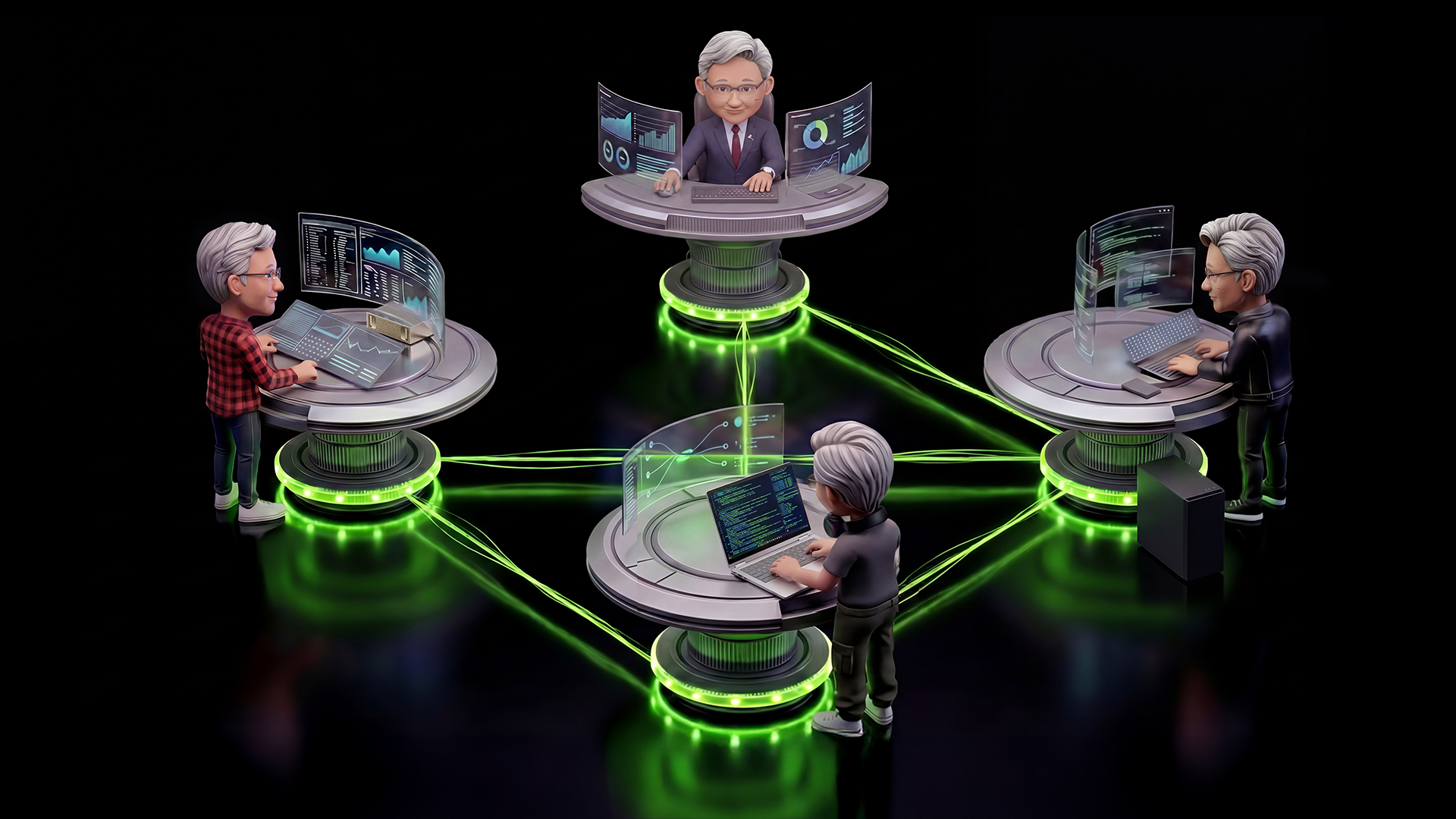
The agent market has spent too much time pretending the hard problem is choosing the smartest model. It is not. The hard problem is giving an agent enough authority to be useful without giving it enough authority to become a root-cause analysis document. NVIDIA’s Agent Toolkit announcement is interesting because the company is finally talking less like a model vendor and more like someone who has seen what happens when autonomous software touches real systems.
The package NVIDIA is describing includes Nemotron open models, NemoClaw blueprints, tools and skills for domain-specific work, and OpenShell as the runtime layer. The launch language is broad enough to cover the usual enterprise map: life sciences, cybersecurity, healthcare, chip design, industrial operations, knowledge work, and partner integrations from Adobe, Atlassian, Amdocs, Box, Cadence, Cisco, Cohesity, CrowdStrike, Dassault Systèmes, IQVIA, Red Hat, SAP, Salesforce, Siemens, ServiceNow, and Synopsys. That is a lot of logos. The useful signal is narrower: NVIDIA is treating runtime constraints as part of the agent product, not an afterthought.
OpenShell is the admission that autonomy needs a box
OpenShell is the piece builders should inspect first. The GitHub repository describes it as a safe, private runtime for autonomous AI agents, using sandboxed execution and declarative YAML policies to prevent unauthorized file access, data exfiltration, and uncontrolled network activity. Policies cover filesystem, network, process, and inference domains. Filesystem and process constraints are locked at sandbox creation; network and inference policies can be hot-reloaded. Compute drivers include Docker, Podman, MicroVM, and Kubernetes, with GPU passthrough marked experimental.
That is exactly the right shape for the problem. Prompt instructions are not permissions. A system message saying “do not exfiltrate secrets” is not a network policy. A tool description saying “only edit project files” is not a filesystem sandbox. If an agent can call APIs, run commands, read files, or trigger production workflows, its blast radius has to be encoded outside the model. OpenShell’s deny-by-default network posture and policy-enforced outbound routing are not glamorous, but they are the difference between a useful assistant and a chatbot with credentials.
NVIDIA’s broader Agent Toolkit story still matters. Nemotron open models give enterprises a path to customization, local evaluation, and domain tuning. NemoClaw blueprints provide reusable patterns for multi-step behavior, lower-cost agent execution, and safer workflows. Skills and tools connect agents to domain actions. NVIDIA says AI-Q can reduce query costs by more than 50% while ranking highly on DeepResearch Bench and DeepResearch Bench II. CrowdStrike is cited as running specialized security agents that triage alerts with 98.5% accuracy. BioNeMo Agent Toolkit exposes skills for protein structure prediction, molecular docking, generative chemistry, genomics, and biomarker discovery, with more than 50 companies using it.
Those are useful data points, but they all depend on the same architectural reality: agents only become valuable when they can act, and action requires containment. Without a runtime boundary, “agent toolkit” is just a nicer way to generate plans nobody should execute.
The policy layer should be portable, even if the stack is not
NVIDIA naturally wants the path to run through its own ecosystem: Nemotron, NIM, NemoClaw, OpenShell, accelerated infrastructure. That may be a very reasonable stack for enterprises already standardizing around NVIDIA inference and GPUs. But the policy boundary should not become another lock-in trap. If your runtime can only secure one model provider, one orchestration framework, or one blessed toolchain, you have moved the bottleneck rather than solved it.
OpenShell’s stated compatibility with Claude, OpenCode, Codex, Copilot, OpenClaw, Hermes, and Ollama is encouraging because runtime security should be model-agnostic. The agent should not get broader filesystem access because you swapped providers. The network policy should not disappear because the orchestrator changed. Credentials should be scoped and injected deliberately, not inherited from a developer shell because that was easiest during the demo.
For builders, the architecture lesson is to split the system into four concerns: reasoning, tools, runtime, and policy. Reasoning decides what might be done. Tools expose the verbs. Runtime executes inside a constrained environment. Policy decides what is allowed, denied, logged, escalated, or approved. If those concerns are tangled together inside prompts, you do not have governance. You have vibes with a YAML garnish.
The test plan should include negative cases. Can the agent read a file outside its workspace? Can it POST to an unapproved domain? Can it spawn an unexpected binary? Can it route inference through an unauthorized provider? Can a prompt-injected webpage convince it to use a credentialed tool? What happens when a policy changes while the sandbox is running? Are denied actions logged in a way a human can audit? Can the run be reproduced after the fact?
OpenShell is still alpha software, and the repository is candid about rough edges and “single-player mode.” Good. That honesty is better than enterprise polish over an immature security model. Nobody should treat this as a universal production drop-in tomorrow. But directionally, this is where enterprise agents have to go: sandboxing, egress control, scoped credentials, policy reloads, audit trails, cost routing, and reproducible execution.
The next phase of agent adoption will not be won by the vendor with the most cinematic demo. It will be won by the vendor whose agents can do boring work safely for months. NVIDIA’s OpenShell push is worth watching because it says the quiet part out loud: before enterprise agents need more autonomy, they need better blast-radius control.
Sources: NVIDIA Blog, NVIDIA Newsroom, NVIDIA OpenShell GitHub repository, BioNeMo Agent Toolkit announcement