NVIDIA’s Earth Day Post Is Really a Quiet TensorRT and Edge Inference Victory Lap

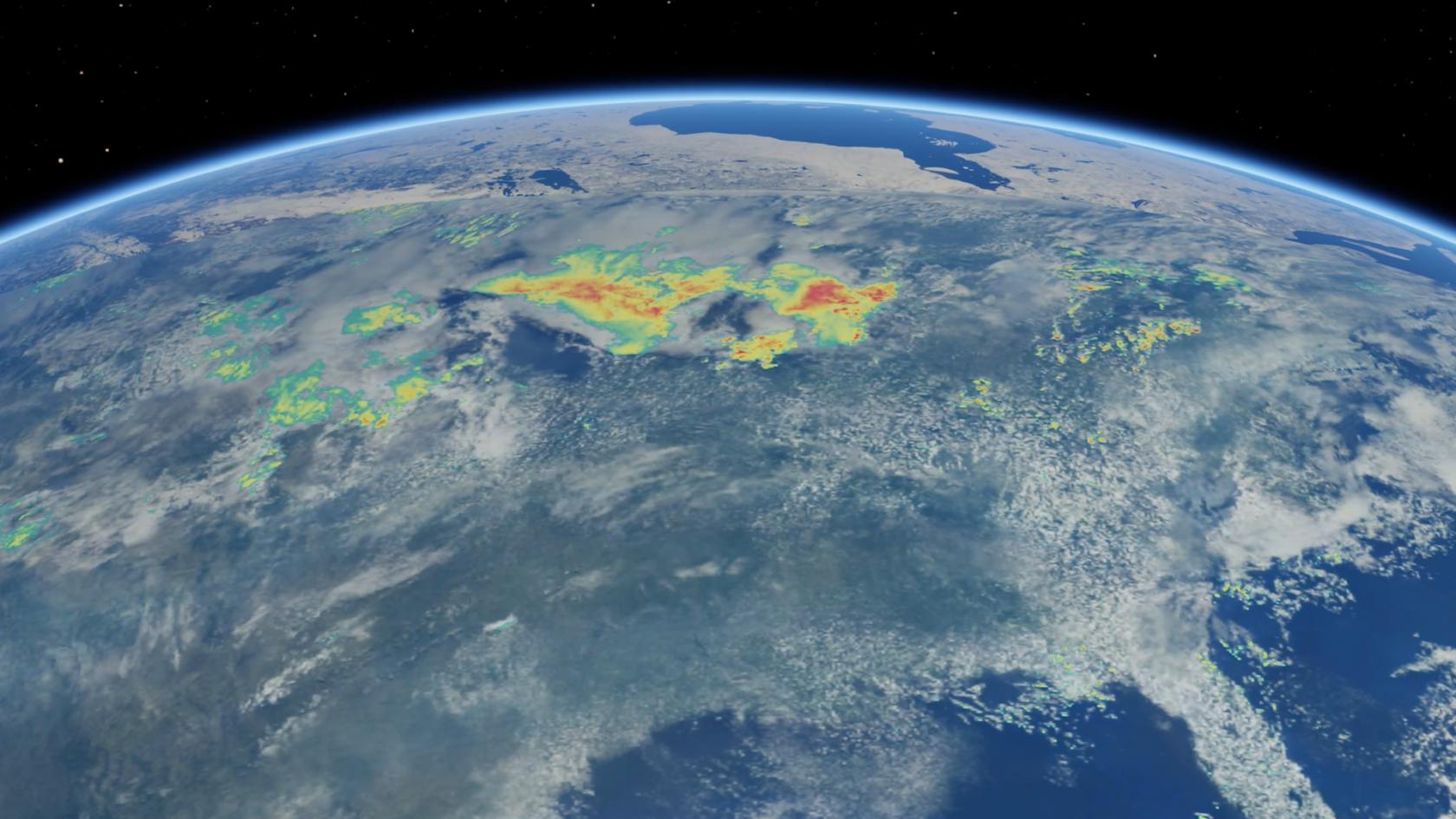
NVIDIA published an Earth Day roundup today, and on first glance it looks like the sort of corporate sustainability post most engineers skip on contact. Fair enough. The branding is soft, the examples are broad, and “AI is helping the planet” is now a well-worn genre. But this one is more revealing than it wants to admit. Read past the Earth Day framing and it turns into a compact map of where NVIDIA thinks accelerated inference earns its keep outside the chatbot bubble.
The five featured examples, climate forecasting, orangutan monitoring, robotic recycling, tsunami warning, and satellite-edge analysis, all point to the same underlying thesis. The next useful wave of AI is not just about larger models in centralized clouds. It is about getting the inference path close enough to the data, cheap enough to run repeatedly, and fast enough to change a real-world decision before the moment has passed.
That is a more interesting story than environmental virtue signaling because it is fundamentally about systems design.
The unglamorous bottleneck is where these projects live or die
Take Earth-2 Global Data Assimilation. NVIDIA says the model can run on a single GPU and turn raw observation data into a global atmospheric snapshot in minutes. It also says preprocessing raw observations can consume nearly half of the National Weather Service’s compute budget in forecasting workflows. That is the kind of detail practitioners should pay attention to, because it exposes where value is actually created. The sexy part of weather AI is the forecast. The expensive part is often the ugly pipeline work before the forecast exists at all.
That same pattern shows up again and again in the roundup. The orangutan work is not interesting because AI can classify images, everyone knows that. It is interesting because field surveys are painfully slow, aerial capture is much faster, and the real bottleneck becomes reviewing the imagery. NVIDIA cites one study where a model processed 1,800 aerial images in under five minutes on a single GPU after being trained on 800 high-resolution images using eight NVIDIA GPUs. Another study achieved over 99% accuracy and precision in classifying whether images contained nests. That is not just a benchmark flex. It is a reminder that automation matters most when it removes the human review step that was previously making scale impossible.
The pattern here is simple: when the data arrives faster than people can act on it, the winning stack is the one that shortens the path from sensor to decision.
AMP is the most important example because it is the least romantic
If you want the cleanest practitioner lesson in the whole post, ignore the rainforest and the satellite and look at the recycling plant. AMP says it has diverted more than 2 billion pounds of material from landfills, avoided an estimated 739,000 metric tons of CO2-equivalent emissions, and achieved a roughly 90% recovery rate compared with about 75% at conventional plants. It also says moving to NVIDIA Hopper GPUs cut inference energy consumption in half, while TensorRT and Triton Inference Server power edge inference in the field.
This is the kind of story engineers should trust more than a beautiful demo. Recycling is a brutal operational environment. Inputs are messy, economics are unforgiving, and performance matters only if it translates into throughput, lower plant cost, and better recovery. If AI still looks good there, it is probably doing real work.
The AMP case also exposes the practical future of industrial AI more clearly than most vendor material does. Model quality matters, but plant design matters too. NVIDIA notes AMP can use roughly two-thirds the number of conveyor belts in similar-size traditional plants because AI and robotics make sorting faster and more efficient. That is a systems-level outcome, not an isolated software win. Engineers building edge-AI systems should read this as permission to stop optimizing only for model metrics and start optimizing for facility design, energy draw, hardware footprint, and operator simplicity.
Edge inference keeps showing up because bandwidth and latency keep winning the argument
The Planet example points in the same direction from a different angle. Orbital Today reports that Pelican-4 used an NVIDIA Jetson Orin module to run aircraft detection directly on the spacecraft, with early raw-image accuracy around 80%. That number is not magical yet, but the architecture is. Planet wants to move from collecting images and waiting on downlink plus ground processing to producing useful insight products much faster, potentially in minutes instead of hours.
This matters because satellite and remote-sensing systems are extreme versions of a problem many industries already have. Shipping all the data home before making a decision is often too slow, too expensive, or both. Once that becomes obvious, the software stack changes. Compression, model size, fault tolerance, container isolation, batch behavior, and on-device inference performance all matter more than abstract model cleverness.
The same thing is true, in softer form, for the Earth-2, tsunami-warning, and conservation examples. They all reward compute that is near the event, tightly integrated with the pipeline, and able to turn a flood of raw input into something an operator can use. This is why NVIDIA keeps pushing Jetson, TensorRT, Triton, Hopper, and domain-specific frameworks instead of talking only about foundation models. The money is in the part that makes AI operational.
There is a real lesson here for builders, and it is not “do good with AI”
Practitioners should take three concrete ideas from this roundup. First, optimize data movement before you obsess over model novelty. In most edge and industrial workloads, the hidden cost is not that the model is too dumb. It is that the data pipeline is too slow, too centralized, or too expensive. Second, design for the environment where inference runs, not the one where the model was trained. A beautiful model in a notebook is useless if your production system depends on intermittent connectivity, power constraints, harsh sensors, or slow human review loops. Third, look for boring metrics. Recovery rate, image-review time, preprocessing cost, energy consumption, and time-to-alert are better indicators of product value than vague claims about “AI transformation.”
NVIDIA’s roundup also quietly reinforces a broader industry trend: environmental, geospatial, and industrial AI are converging on the same infrastructure shape. There is an edge layer that ingests and triages. There is a fast inference layer that decides what matters. There is a heavier back-end layer that aggregates, retrains, simulates, and archives. The teams that win will be the ones that engineer those boundaries cleanly, not the ones that merely train larger models.
Of course, this is still a curated vendor post, so caution is warranted. Roundups are built from success cases. They do not tell you what retraining costs look like, how many pilots never reached deployment, what failure rates operators tolerate, or how much systems integration pain sits behind the polished example. The tsunami claim of results in under two-tenths of a second and a 10-billion-fold speedup is striking, but builders should treat it as a research result with specific assumptions, not a universal performance promise. Likewise, an 80% early orbital-detection accuracy number is a sign of progress, not proof that in-space inference is solved.
Still, the throughline is real. NVIDIA is showing where its stack wins when the job is not “chat with a PDF,” but “turn raw physical-world data into action before the window closes.” That is a much healthier place for AI infrastructure to prove itself. And it is probably where a lot of long-term value will be built, because the customers in these markets care less about demo theater and more about whether a system saves money, prevents loss, or helps someone act faster.
The best read on this Earth Day post is not that NVIDIA wants applause for caring about the planet. It is that the company sees environmental and industrial workloads as fertile ground for the next phase of edge inference adoption. On that point, it is probably right.
Sources: NVIDIA, Orbital Today, NVIDIA Earth2Studio