The  LGTM
  • Home
  • Agentic Coding
  • Claude Code
  • Codex
Sign in Subscribe
ai-frameworks

CAMEL v0.2.91a3 Shows Where Multi-Agent Frameworks Still Compete: Model Breadth, Not Just Orchestration Theater

The multi-agent framework market keeps pretending the main contest is orchestration style. Graphs versus crews. Chats versus workflows. Deterministic edges versus emergent handoffs. Useful debate, but increasingly incomplete. CAMEL’s latest pre-release, v0.2.91a3, is a reminder that another contest matters just as much now: who can stay current
27 Apr 2026 4 min read
LangSmith 0.7.37 Quietly Fixes a Nasty Multi-Agent Concurrency Problem, Which Is Exactly the Kind of Release Mature Framework Teams Ship
ai-frameworks

LangSmith 0.7.37 Quietly Fixes a Nasty Multi-Agent Concurrency Problem, Which Is Exactly the Kind of Release Mature Framework Teams Ship

Agent framework companies still love showing the glamorous part: the demo where three agents hand work to each other, call a few tools, and miraculously produce something coherent. The less glamorous part is what happens after a week in production, when traces start dropping, shutdown paths get weird, and concurrent
27 Apr 2026 4 min read
agentic-coding

Agentic-System Is the Latest Sign That Claude Code Power Users Are Turning Prompting Into Org Design

The easiest way to misunderstand the current coding-agent boom is to think it is still mostly about prompts. That was true when the tools were chat boxes with repo access. It gets less true every week. The power users are moving on to a different problem: if models are now
27 Apr 2026 4 min read
agentic-coding

Throttle-Meter Exists Because Claude Code Has Officially Become Important Enough to Need a Fuel Gauge

You can tell a product category is maturing when the secondary tools start getting practical instead of aspirational. Not more agents. Not bigger benchmarks. Not another demo where a model heroically rewrites a codebase in one sitting. Practical tools. Boring tools. The stuff people build when the shiny thing has
27 Apr 2026 4 min read
agentic-coding

Dispatch Wants Coding Agents to Stop Acting Like Fancy CLIs and Start Acting Like Coworkers

Most coding-agent demos still pretend the interesting unit of work is a single brilliant session. Prompt goes in, patch comes out, benchmark score goes up, everyone posts a thread about the future of software engineering. That is useful up to the point where you have two agents, three open tasks,
27 Apr 2026 4 min read
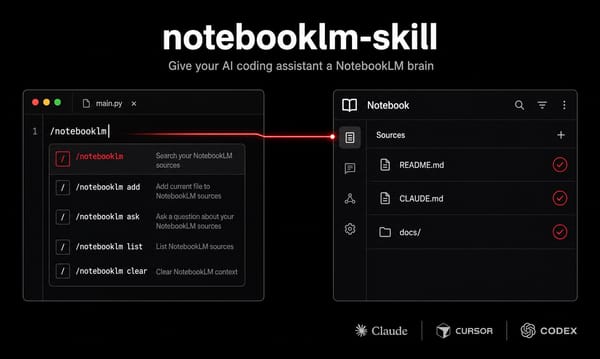
NotebookLM-Skill Suggests the Next Coding-Agent Memory Layer Might Be a Research Notebook, Not a Bigger Context Window
agentic-coding

NotebookLM-Skill Suggests the Next Coding-Agent Memory Layer Might Be a Research Notebook, Not a Bigger Context Window

The easy answer to AI coding memory has been “just give the model more context.” It is a seductive answer because it looks like scale, and scale is the favorite religion of this market. Bigger window, more files, fewer manual summaries, problem solved. Except it does not really solve the
26 Apr 2026 5 min read
MaintainerBench Is a Good Sign That AI Coding Is Entering Its Repo-Governance Phase
agentic-coding

MaintainerBench Is a Good Sign That AI Coding Is Entering Its Repo-Governance Phase

The AI coding market spent a year optimizing for the wrong audience. Demos were built for the person generating code, not the person who has to merge it. That made sense at first. Velocity is easy to sell. Maintainer trust is slower, less cinematic, and harder to fake. But once
26 Apr 2026 5 min read
Reversa Treats Legacy Codebases as a Spec Reconstruction Problem, Which Is Closer to Reality Than Most Agent Demos
agentic-coding

Reversa Treats Legacy Codebases as a Spec Reconstruction Problem, Which Is Closer to Reality Than Most Agent Demos

The clean greenfield demo has done real damage to how people think about AI coding. Vendors keep showing the same happy path: fresh repo, crisp prompt, tidy task, model writes code, everyone claps. Real software work is usually the opposite. You inherit a codebase with missing docs, stray business logic,
26 Apr 2026 5 min read
Clawtool Wants One Canonical Tool Layer for Claude Code, Codex, and OpenCode Instead of Three Slightly Broken Ones
agentic-coding

Clawtool Wants One Canonical Tool Layer for Claude Code, Codex, and OpenCode Instead of Three Slightly Broken Ones

Agentic coding has a tooling problem that benchmark charts cannot solve. Teams keep arguing about which model is smartest, then run those models through three different shells, four different file readers, two subtly incompatible edit semantics, and a search stack that changes depending on whose CLI happened to win the
26 Apr 2026 5 min read
openclaw

OpenClaw’s Isolated-Cron Leak Is the Kind of Bug That Makes Agent Automation Feel Haunted

The fastest way to make an automation platform feel cursed is to let background work speak in the wrong voice. OpenClaw’s isolated-cron report from April 26 hits exactly that nerve. Issue #72141 says a cron job configured with sessionTarget=isolated produced output that closely mirrored the parent session’s
26 Apr 2026 3 min read
openclaw

OpenClaw’s Boot-Time Embedding Leak Is a Nice Reminder That ‘Multi-Agent’ Often Means ‘Multiply the Same Expensive Mistake’

One of the quickest ways to expose whether an “agent platform” is real infrastructure or just a pile of clever demos is to look at what happens during boot. OpenClaw’s memory-leak report from April 26 is a neat stress test. Issue #72144 says the gateway launches six parallel embedding
26 Apr 2026 4 min read
openclaw

OpenClaw’s 2026.4.24 Regression Looks Like a Classic Plugin-System Successor Bug: More Modular, Less Predictable

The ugliest infrastructure bugs are the ones that look healthy from a distance. OpenClaw’s new 2026.4.24 regression is a clean example. The gateway binds its port. Raw TCP connects. The process logs look alive enough to lull an operator into wasting an hour on the wrong layer.
26 Apr 2026 4 min read
← Newer Posts Page 133 of 141 Older Posts →
The LGTM © 2026
  • Sign up
Powered by Ghost