The  LGTM
  • Home
  • Agentic Coding
  • Claude Code
  • Codex
Sign in Subscribe
Microsoft Foundry’s APIM Pattern Makes the AI Gateway Boring Enough for Production
azure-ai

Microsoft Foundry’s APIM Pattern Makes the AI Gateway Boring Enough for Production

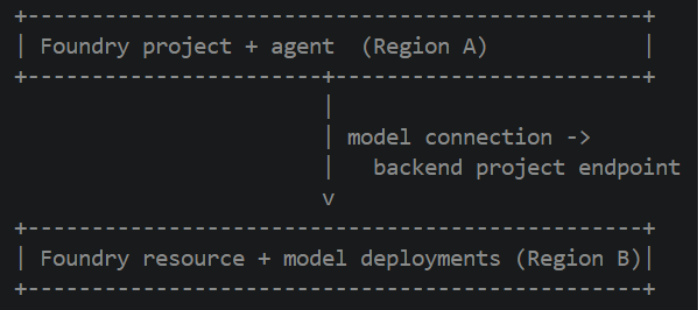
Enterprise AI architecture keeps rediscovering an old truth: the hard part is not calling the model. The hard part is calling the right model, from the wrong region, under the right identity, without punching a hole through your network model or your compliance story. Microsoft’s new guidance on cross-region
20 Jun 2026 5 min read
Codex Starts Giving Context Windows Provenance, Not Just Token Counts
codex

Codex Starts Giving Context Windows Provenance, Not Just Token Counts

Token counters are table stakes now. The more interesting question is whether a coding agent can explain how it arrived at the context it is using after compaction, rollback, resume, and a few long-running tool sessions have rearranged the furniture. That is the useful read on OpenAI’s latest Codex
20 Jun 2026 5 min read
MCP’s write_file Escaping Problem Is Really a Tool-Call Serialization Tax
claude-code

MCP’s write_file Escaping Problem Is Really a Tool-Call Serialization Tax

Base64 is ugly. Retry loops caused by broken JSON tool calls are uglier. A fresh issue in the Model Context Protocol servers repository proposes adding an optional content_base64 parameter to write_file, plus a matching newText_base64 path for edit operations. The request is narrow: let agents send file
20 Jun 2026 4 min read
Claude Code Routines Need Output-Branch Contracts, Not Prompted Git Etiquette
claude-code

Claude Code Routines Need Output-Branch Contracts, Not Prompted Git Etiquette

Scheduled coding agents are not chat sessions with alarms. They are job runners. Job runners need output contracts. That is the uncomfortable lesson in a fresh Claude Code issue reporting that scheduled cloud Routines can finish work on a harness-assigned branch such as claude/stoic-fermi-azzeU instead of the canonical branch
20 Jun 2026 4 min read
Claude Code 2.1.185 Turns a Retry Message Into a Production-Signal Problem
claude-code

Claude Code 2.1.185 Turns a Retry Message Into a Production-Signal Problem

Sometimes the smallest changelog item is the one that tells you where the product is hurting. Claude Code 2.1.185 shipped with one public note: the stream-stall message now says “Waiting for API response · will retry in …” instead of “No response from API · Retrying in …”, and the hint appears
20 Jun 2026 4 min read
Qwen Code’s June 20 Safety Fixes Are About Consent and Boundaries
qwen

Qwen Code’s June 20 Safety Fixes Are About Consent and Boundaries

The most important Qwen Code work on June 20 was not a model upgrade. It was a trio of small safety fixes about consent, path boundaries, and ignore-file semantics. That sounds painfully specific because it is. It is also exactly where local coding agents earn or lose trust. Shortly after
20 Jun 2026 5 min read
Qwen Code v0.18.4 Turns Local Agents Into Runtime Infrastructure
qwen

Qwen Code v0.18.4 Turns Local Agents Into Runtime Infrastructure

Qwen Code v0.18.4 is easy to undersell if you read it as a grab bag of CLI features. Extensions, token accounting, workflow budgets, wakeups, daemon health, QQ Bot support, loop detection — none of those sound like a single launch narrative. That is exactly why the release matters. Alibaba’
20 Jun 2026 5 min read
openclaw

OpenClaw’s Cross-Channel Session-Origin Bug Is a Multi-Agent Identity Boundary in Miniature

Conversation continuity is not identity continuity. That is the cleanest way to read OpenClaw issue #95325, a fresh cross-channel session bug where the same user talks to an agent in Slack and then Telegram under session.dmScope: "main". The chat moves. The delivery route updates. But Slack-specific origin
20 Jun 2026 3 min read
OpenClaw’s Slack Channel-ID Fix Shows Why Name-Based Allowlists Need Runtime Proof
openclaw

OpenClaw’s Slack Channel-ID Fix Shows Why Name-Based Allowlists Need Runtime Proof

Slack bots are where agent security stops being abstract. A workspace channel looks friendly to humans — #general, #ops, #customer-escalations — but the API cares about channel IDs, account tokens, membership, scopes, and method-specific behavior. OpenClaw PR #95313 fixes a mismatch in that translation layer, and the lesson is broader than Slack:
20 Jun 2026 4 min read
openclaw

OpenClaw’s Safe-Redirection PR Draws the Line Between Approval Gates and Approval Theater

Approval prompts are a security feature until they become a reflex test. OpenClaw PR #95331 is interesting because it fixes a tiny annoyance — safe shell commands with harmless redirections like 2>/dev/null requiring manual approval — without pretending the shell is suddenly simple. That is the right ambition for
20 Jun 2026 3 min read
OpenClaw’s CJK Token-Precheck Bug Shows Why Agent Cost Controls Need Real Token Accounting
openclaw

OpenClaw’s CJK Token-Precheck Bug Shows Why Agent Cost Controls Need Real Token Accounting

Token budgets are becoming one of the least glamorous pieces of AI infrastructure, which is usually how you know they matter. OpenClaw PR #95327 looks, on first pass, like an internationalization fix: Chinese-heavy tool output was being counted too aggressively, causing a Qwen-backed agent to declare defeat before the provider
20 Jun 2026 4 min read
CrewAI 1.14.8a2 Moves Flow Definitions From Config That Runs Toward Config That Can Fail Fast
ai-frameworks

CrewAI 1.14.8a2 Moves Flow Definitions From Config That Runs Toward Config That Can Fail Fast

Declarative agent workflows are growing up, which means they are becoming boring in exactly the ways production teams need. The interesting question is no longer whether a YAML file can trigger an agent. Of course it can. The question is whether that file can be linted before it spends money,
20 Jun 2026 5 min read
← Newer Posts Page 17 of 141 Older Posts →
The LGTM © 2026
  • Sign up
Powered by Ghost