TacticAI Comes to Brazil: How Google DeepMind's Football AI Ended Up Inside Palmeiras' Training Room

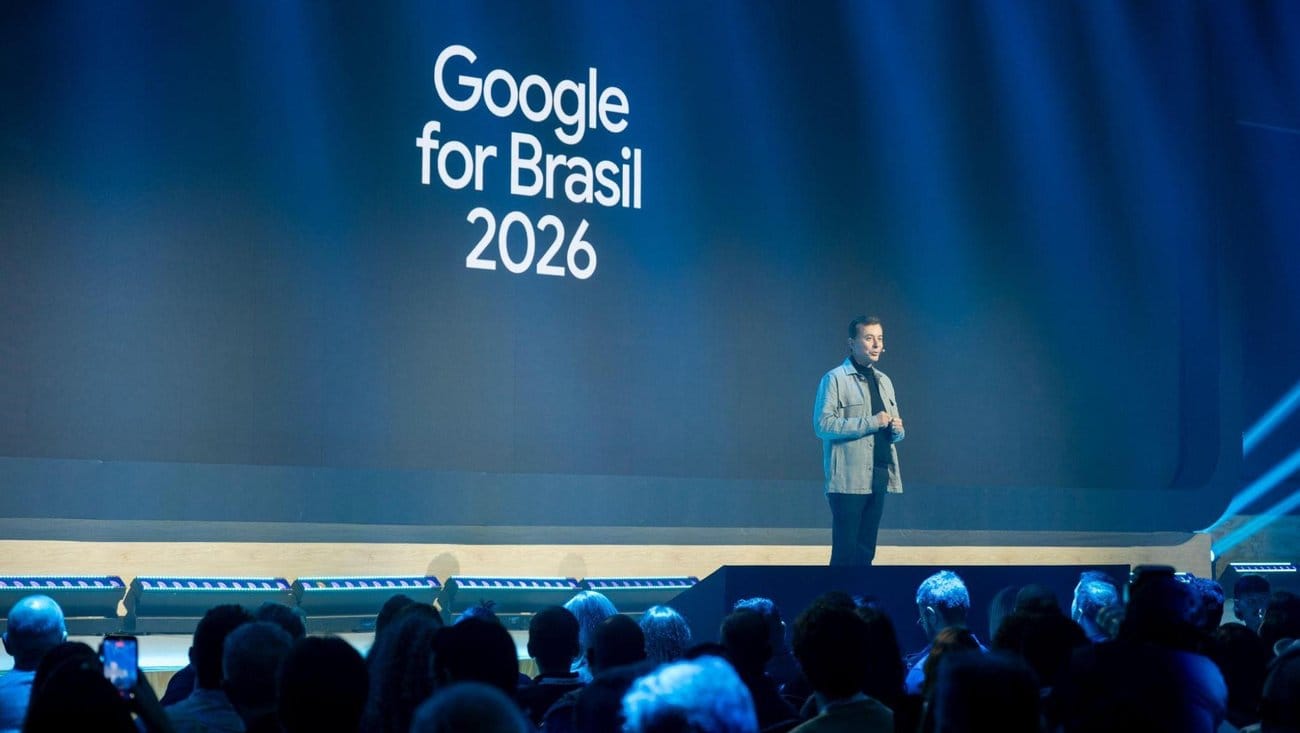
When Google announced that TacticAI — the football tactics assistant it built with Liverpool FC — was coming to Brazil, the press coverage read like a victory lap. Palmeiras, Brazil's biggest club by revenue, and the CBF, Brazilian football's governing body, both signed on to use Google's DeepMind sports AI. The timing is not subtle: the 2026 FIFA World Cup is months away, Brazil hasn't won it since 2002, and Google's investment in Brazil at its annual Google for Brazil event was substantial enough to include free ENEM exam practice, 100,000 career certificates, AI startup funding, and cloud training for millions. TacticAI is the marquee announcement. Everything else is the commercial context.
That framing is fine as far as it goes, but it misses the engineering substance worth examining for practitioners. TacticAI's original DeepMind research paper described a system that uses player tracking data to generate tactical suggestions — specifically focused on corner kicks and set pieces, where the spatial constraints are well-defined and historical data provides strong priors. The Palmeiras deployment claims something different: the system can predict play flow up to 8 seconds ahead using player positioning data in real time. That's a harder problem. Corner kick analysis is post-hoc and structured; in-game flow prediction is continuous, dynamic, and subject to the full complexity of human football. Whether the same model architecture handles both, and what the underlying positioning data pipeline looks like in a live training or match environment, are questions the announcement doesn't answer.
The architectural question matters more than the partnership narrative. What does "Gemini-powered" actually mean here? The most likely implementation is a Gemini model running on Google Cloud that processes raw player tracking telemetry — probably from GPS vests, ball sensors, or computer vision cameras — and returns natural language tactical suggestions through a custom interface the coaching staff uses. The alternative is something more agentic: the model proposes tactical adjustments, the staff reviews them, the model updates its suggestions based on feedback, and the cycle continues during preparation sessions or halftime. The announcement is deliberately vague, which is typical for sports technology announcements that need to sound impressive without revealing competitive technical details. But the vagueness makes it harder to evaluate whether TacticAI in Brazil is a validated production system or a high-profile pilot.
For builders working on AI-assisted decision support in high-stakes environments, the Palmeiras case is a useful stress test of the trust problem. The original TacticAI research paper includes human evaluation results showing coaches preferred TacticAI's suggestions over actual Liverpool tactical decisions in a significant fraction of cases. That sounds like a validation. It is also a warning: coaches in a research study are evaluating suggestions in a controlled setting. Coaches in a World Cup preparation environment are evaluating suggestions backed by DeepMind's brand, Google's compute, and positioning data they may not fully understand the limitations of. A plausible-sounding AI tactical read that a coaching staff overweights because of institutional trust is a different failure mode than a bad suggestion that gets rejected. This is the same pattern playing out in medical AI, legal AI, and financial AI — the "AI said it, so it must be informed" bias that turns plausible outputs into consequential decisions.
The World Cup timing is Google engineering a mandate. Brazil is preparing for what is effectively a national priority sporting event, and the pressure to use every available tool is immense. Google is positioning itself as that tool. The broader investment commitments — the training programs, the startup funding, the free Gemini trials through bank and telco partnerships — are all building a Google AI ecosystem in Brazil at a moment when the country is politically and culturally receptive. TacticAI is the headline that justifies the relationship. The infrastructure, the training, the Gemini integrations across Google products, the startup pipeline — that's the durable commercial position Google is building beneath it.
The Copa America context is worth noting as a calibration point. Brazil hosted and won the 2019 Copa America. The 2024 edition was in the United States. The 2026 World Cup is in the United States, Mexico, and Canada. Brazil has not been a major international champion since 2019, and the 24-year gap since their last World Cup win is a real source of national pressure. The TacticAI deployment at this moment is not coincidental — it's Google offering to be part of the solution to a problem that matters to an entire country's sports culture. Whether that produces better tactical decisions on the field is unknowable until after the tournament. What's knowable now is that the deployment is happening at the highest-stakes moment possible for Brazilian football, which means the evaluation conditions are extreme and the results will be scrutinized accordingly.
For the practitioner community, the interesting takeaway isn't whether TacticAI will win Brazil the World Cup — that's a question for December, not June. The interesting takeaway is what the deployment architecture implies about Google Cloud's sports analytics stack and how it differs from pure research systems. TacticAI in Brazil is a production deployment of something that was, four years ago, a DeepMind research paper. The path from research to federation-scale deployment is the actual engineering story. The questions that matter for builders: how does the positioning data get from the training ground to the model? What's the latency between data capture and suggestion delivery? How does the coaching staff interact with the system's outputs — dashboard, natural language chat, structured reports? Does the system learn from the staff's feedback? These are the questions that determine whether TacticAI is a useful tool or a sophisticated demonstration. Google's announcement doesn't answer them, which is itself informative about where sports AI deployment actually is versus where the press coverage implies it to be.
Sources: Google Blog, Poder360, Olhar Digital