The Pentagon's Classified AI Deals Are Not a Revenue Story. They Are an Infrastructure Validation.

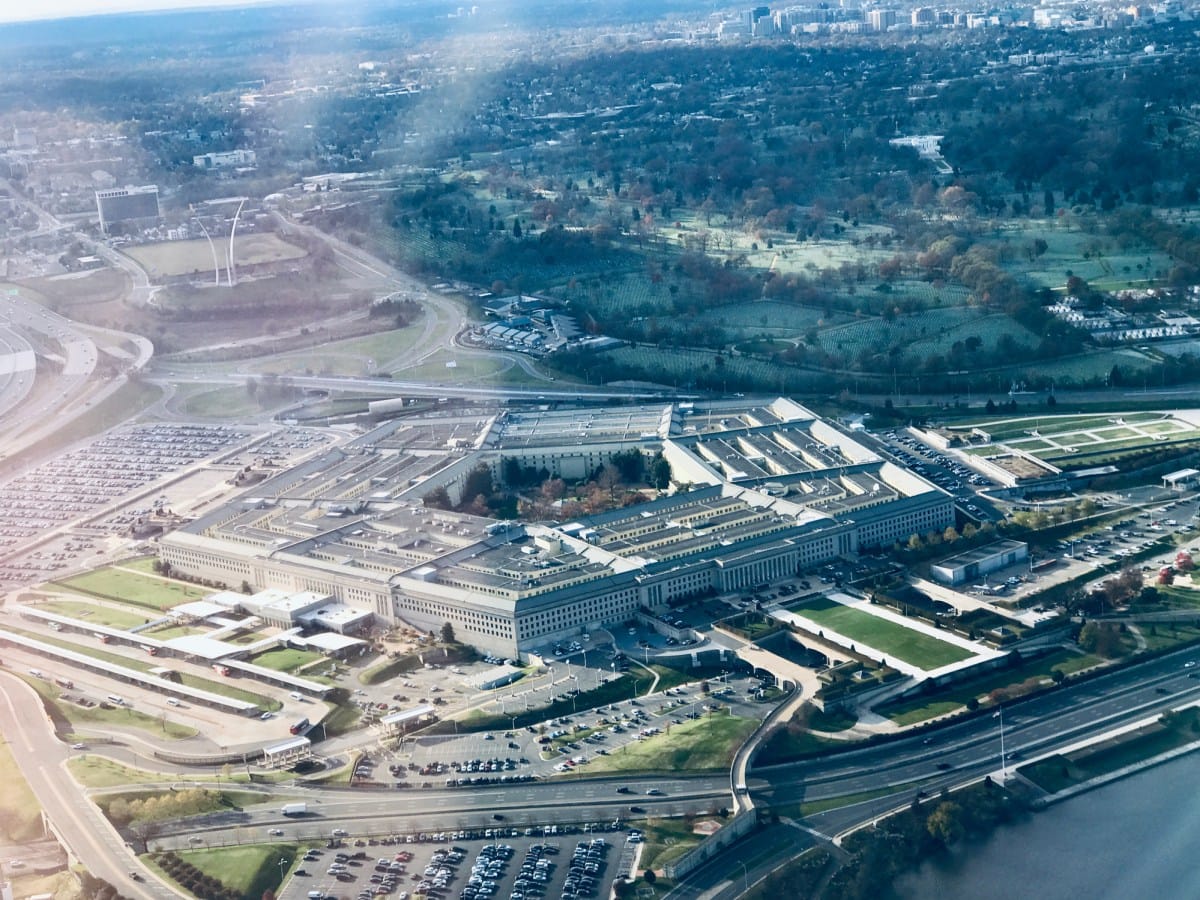
The announcement was easy to file under "defense contractors doing defense things." Seven companies, a press release, some broad language about AI-first transformation. That framing misses what actually happened on May 1, 2026.
The Pentagon did not just sign vendor agreements. It formally created a product category. Classified cloud AI — AI workloads running on air-gapped or semi-isolated government networks — existed before this announcement, but it existed as custom integration work with unclear legal footing. What changed is that Microsoft, AWS, Nvidia, and Reflection AI now have documented vendor relationships covering AI deployment on classified networks for lawful operational use. That is a supported product surface, not a one-off build.
For Azure shops, the concrete implication lives in Azure Government, Azure Secret, and the classified cloud regions that have existed for years. Those environments were always capable of running AI workloads in principle. What they lacked was an explicit vendor framework that said "AI model deployment is covered under your existing contract terms." That ambiguity is gone now. Defense agencies and their contractors have a procurement pathway to deploy, operate, and audit AI on classified infrastructure under structured vendor relationships.
The compliance angle deserves more attention than it typically gets in breathless "Pentagon goes AI" coverage. Classified AI workloads still require full CMMC compliance, FedRAMP High or equivalent authorization, and organization-specific ATOs. This announcement does not simplify any of that. What it does is narrow the vendor-selection question. If your organization is already operating in Azure Government or pursuing an ATO for classified work, Microsoft's formal classification as an approved AI vendor under these agreements means one less legal variable in the procurement conversation. The sales motion becomes more legible. The implementation roadmap becomes more standard.
The open-source signal is worth isolating. Breaking Defense reported that the Pentagon explicitly sought both open-source and proprietary model vendors to avoid single-source dependency. That language is deliberate and carries weight. The DoD is telling the market that closed models alone are not a acceptable vendor strategy for classified workloads. For Azure teams building defense-adjacent products — not necessarily classified work, but anything that might touch regulated defense data — this reinforces the wisdom of keeping model selection flexible. Defaulting to a single closed model's API for workloads that could eventually fall under defense compliance requirements is now a documented strategic risk, not just a theoretical one. Azure AI Foundry's multi-model catalog strategy aligns with this direction; the Pentagon's statement validates the approach at the policy level.
What this announcement is not: a revenue catalyst. No pricing, no timeline, no contractual amounts. The announcement is framework, not product. Azure teams should not expect immediate demand signals or procurement urgency from defense customers. What they should expect is that the groundwork is being laid for a market segment that was previously blocked by legal and procurement ambiguity. That is a 2027–2028 story, not a Q2 2026 story.
The thing to watch is what "first on Azure" means going forward. OpenAI is now distributeable across AWS and Google Cloud under the amended Microsoft partnership. But for classified workloads specifically, Microsoft's position as an approved vendor with existing classified infrastructure is a structural advantage that AWS and Google Cloud will need time to replicate. If you are building defense-adjacent products today, Azure's classified cloud lead is worth factoring into architecture decisions even if the classified work is distant on your roadmap.
The real takeaway is mundane and underreported: the classified cloud AI market just became a supported enterprise product category with documented vendor pathways. For builders who work in or adjacent to defense, that is a market signal worth tracking — not because the headline is exciting, but because procurement conversations that used to stall on "can we even do this legally?" now have an answer.
Sources: TechCrunch, The Guardian, Breaking Defense, Bloomberg