Vera at Los Alamos Is NVIDIA’s Reminder That Agents Need CPUs

The least fashionable part of agentic AI may be the part that decides whether agents are actually useful: the host CPU. GPUs get the keynote. Models get the benchmark charts. But serious agents spend a suspicious amount of their lives not generating tokens: launching tools, running code, parsing files, starting containers, moving data, scheduling simulations, checking policies and waiting for the world outside the model to respond.
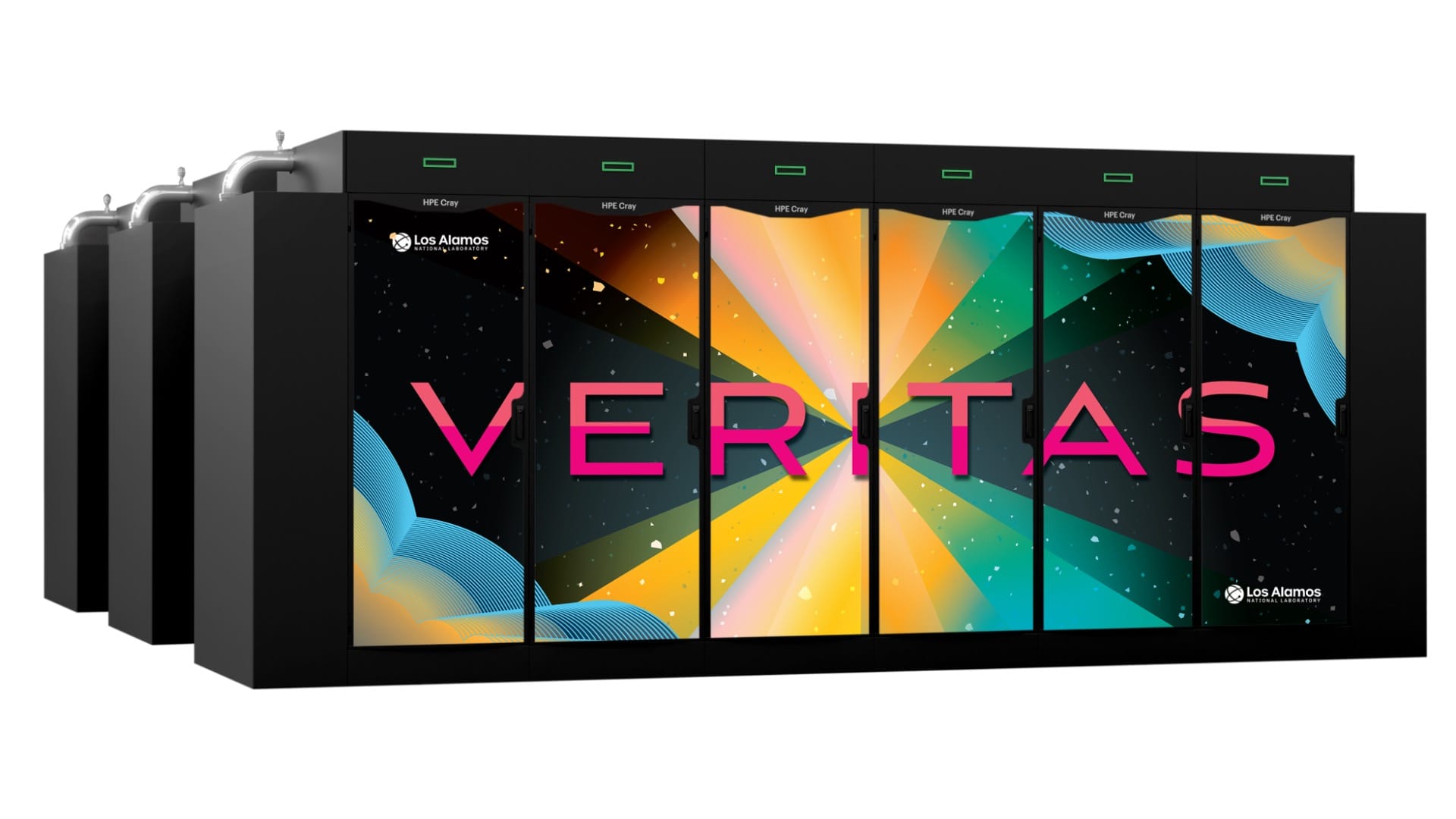
That is why NVIDIA’s Vera CPU story at Los Alamos is worth reading as more than another HPC procurement note. Los Alamos National Laboratory’s upcoming Mission, Vision and Veritas supercomputers will combine NVIDIA Vera CPUs, Rubin GPUs, HPE Cray Supercomputing GX5000 systems and NVIDIA Quantum-X800 InfiniBand. NVIDIA says early LANL testing shows Vera delivering 7x higher performance on URSA agent workloads than the CPUs in Crossroads, and over 3x higher performance on Branson, an open source Monte Carlo heat-transfer simulation tool.
The headline is “Vera at Los Alamos.” The useful angle is sharper: NVIDIA is arguing that agents make CPUs strategically interesting again.
Agents are tool loops with a model call inside
LANL’s URSA — Universal Research and Scientific Agent — is described as a modular, feedback-driven AI framework for helping scientists brainstorm hypotheses, plan experiments, run simulations and analyze results. That is not a chatbot with a lab-coat prompt. It is a workflow engine that has to coordinate traditional scientific tools, domain data, simulations and analysis loops.
That workload shape matters. A frontier model call may be GPU-bound, but the surrounding work often is not. Agents need to execute Python, compile code, spin up sandboxes, inspect files, call services, transform outputs, enforce permissions and keep state across steps. In a scientific setting, they also need to prepare simulation inputs, launch jobs, consume partial results and decide what to try next. The agent’s wall-clock performance is the sum of all those pieces, not the marketing number for tokens per second.
NVIDIA’s Vera product specs are aimed directly at that host-side pressure: 88 custom Olympus cores, 176 threads, up to 1.2 TB/s LPDDR5X memory bandwidth, up to 1.5 TB memory, 3.4 TB/s SCF bisectional bandwidth and up to 1.8 TB/s coherent NVLink-C2C bandwidth between Vera CPUs and NVIDIA GPUs. NVIDIA also claims Vera can deliver up to 1.8x better agentic sandbox performance than leading x86 CPUs and support racks with up to 256 Vera CPUs running more than 22,500 concurrent environments.
Read those specs in the context of agents and they stop sounding like generic CPU bragging. Memory per core matters when tool loops are stateful and data-heavy. CPU-GPU coherence matters when simulations and AI inference share working sets. Many concurrent environments matter when agents need isolation instead of one giant trust-me process. The CPU is not back because matrix multiplication got boring. It is back because the system around the matrix multiply got complicated.
Los Alamos is a better proof point than an enterprise demo
Mission, Vision and Veritas are not ordinary enterprise clusters. Mission is expected to be operational in 2027 as the fifth Advanced Technology System in the National Nuclear Security Administration’s Advanced Simulation and Computing program, replacing Crossroads for classified national-security workloads. Vision is also planned for 2027 and will support materials, nuclear science, energy modeling, biomedical research and AI. Mission is expected to include Vera Rubin GPU nodes plus 2,300 standalone Vera CPUs on HPE Cray GX240 blades; Veritas is planned with roughly 1,150 standalone Vera CPUs alongside Vera Rubin nodes.
That standalone CPU footprint is the tell. If the only story were “GPUs are fast,” you would not need to emphasize thousands of CPUs. LANL’s workloads mix simulation, data movement, orchestration and AI. The Branson result is particularly useful because Monte Carlo heat transfer is not an LLM vanity benchmark. It is a classic scientific simulation workload, the kind of thing an agent may need to run, inspect and rerun as part of a broader research loop.
The URSA result is more speculative but more strategically interesting. NVIDIA says Vera delivered 7x higher performance on URSA workloads than Crossroads-era x86 CPUs. We should not overfit that claim: Crossroads CPUs are not a complete survey of modern x86 or Arm servers, and vendor comparisons always deserve independent replication. Still, the workload category is right. Agentic scientific AI will expose host-side bottlenecks faster than a neat inference benchmark ever could.
For practitioners, the immediate lesson is to profile the whole agent. Not the model. The agent. How long does container startup take? How much wall time goes to Python tools? Are generated tests CPU-bound? Does retrieval spend more time parsing than searching? Are policy checks serializing the loop? Are simulations waiting on input preparation? Are GPUs idle because host-side orchestration cannot feed them? The failure mode is common: the GPU graph looks expensive, so everyone stares at it, while the task completion time is quietly being burned on the CPU.
The procurement checklist changes
If you are buying or building infrastructure for long-running agents, the questions need to move beyond accelerator count. Ask about CPU memory bandwidth, memory capacity per core, process isolation overhead, container density, sandbox startup latency, CPU-GPU data movement, filesystem metadata performance, networking tail latency and scheduler behavior under thousands of small tool calls. Ask whether your observability stack can break down an agent run by model time, tool time, queue time, simulation time, parse time and policy time.
That last point matters because agents make hidden latency visible to users. Batch training can hide many sins in a long job. Interactive or semi-interactive agents cannot. A scientific agent that takes ten minutes to decide on the next simulation because the host side is thrashing is not “thinking deeply.” It is waiting badly.
There are migration caveats. Vera is Arm-based, and production teams should treat that as a real porting project, not a footnote. Container images, compiler behavior, native dependencies, monitoring agents, profiling tools and operational muscle memory all need testing. LPDDR5X memory and coherent CPU-GPU links may be excellent for the target workload, but compatibility still decides adoption velocity. The correct engineering posture is enthusiasm with a benchmark harness, not keynote-driven procurement.
The broader industry point is hard to dodge: agent infrastructure is balanced systems engineering. GPUs remain central, but agents are not a pure tensor-core workload. They are orchestrated, stateful, tool-using systems that stress CPUs, memory, storage, networks and isolation primitives. NVIDIA wants Vera to be the CPU for that world. Whether buyers choose Vera or not, the architectural argument is sound.
The next time someone reduces agent performance to model latency, ask for the wall-clock trace. If the agent spends half its life in tools, sandboxes and simulations, the CPU was never a sidecar. It was part of the product.
Sources: NVIDIA Blog, NVIDIA Vera CPU, Los Alamos National Laboratory, NVIDIA Newsroom