xAI's Colossus Power Bill Comes Due in Court

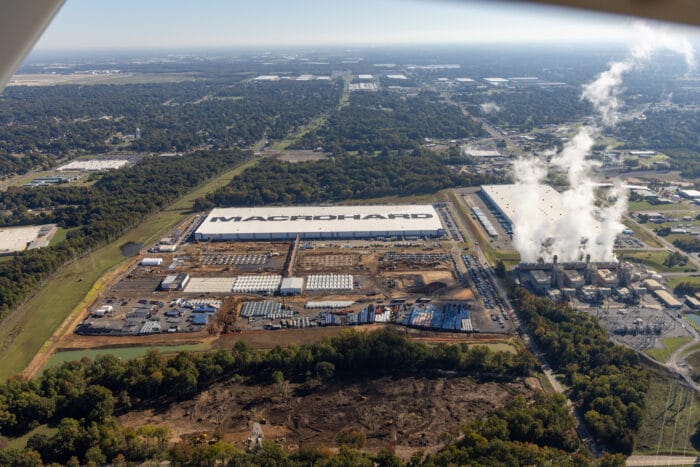
xAI has spent the last year selling Colossus as a proof of execution: enormous GPU clusters, brutal timelines, and the kind of infrastructure bravado that makes other labs look bureaucratic. The new lawsuit over its Southaven, Mississippi power setup is the part of the story the benchmark charts leave out. If the allegations hold, xAI did not just build a fast-growing AI data center. It effectively built a private gas plant next to homes, schools, and churches, then treated air permitting as a detail to sort out later.
That matters well beyond one company and one court filing. Frontier AI is now constrained by electricity, substations, diesel and gas logistics, permitting timelines, and the tolerance of nearby communities. The old software habit of pretending infrastructure is an abstract cloud layer is getting harder to maintain when model capacity depends on whether you can lawfully generate half a gigawatt on the ground.
Reuters reports that the NAACP sued xAI and its subsidiary MZX Tech over 27 gas-fired turbines allegedly operating without the required air permits at the Southaven site that serves Colossus 2. According to the complaint and accompanying statements from the NAACP, Earthjustice, and the Southern Environmental Law Center, those turbines can generate up to 495 megawatts. That is not backup power in the ordinary data center sense. That is power-plant scale, and the legal argument follows directly from that fact.
The emissions numbers are the kind that force this out of the narrow lane of AI gossip and into industrial policy. The groups allege the Southaven setup could emit more than 1,700 tons of nitrogen oxides annually, along with roughly 180 tons of fine particulate matter, 500 tons of carbon monoxide, and 19 tons of formaldehyde. They also note that the Memphis region already struggles with ozone pollution. You do not need to be an environmental lawyer to see the problem: a company racing to train and serve large models appears to have discovered that the fastest way to more compute is sometimes to become, in practice, a utility.
That is the real Colossus lesson. AI scaling is no longer just a question of whether Nvidia can ship enough GPUs or whether a lab can afford them. It is a question of whether the physical footprint of that compute can survive contact with environmental law, grid limitations, and local politics. The software world likes to talk about “inference at the edge” and “bringing compute closer to users.” What xAI has surfaced, perhaps unintentionally, is the inverse truth: sooner or later, compute drags the hard realities of land use and emissions directly into the product roadmap.
The legal fight is really about the operating model
The complaint asks the court to declare Clean Air Act violations, stop operation of unpermitted turbines, require best available control technology, and assess daily penalties. The lawsuit also follows a 60-day notice of intent to sue that the NAACP and its legal partners sent in February, which makes this harder to wave away as a misunderstanding. Mississippi regulators did later approve permits after a public hearing, but the dispute centers on the period before those approvals and on whether xAI treated permit-first rules as optional while rushing capacity online.
That sequence matters because it turns the story from a paperwork problem into a governance problem. Plenty of companies run into regulatory friction. The sharper allegation here is that xAI normalized a build-first, ask-later approach in a domain where the externalities do not stay inside the fence line. If you are powering a chatbot by operating dozens of turbines near a major metro area, compliance is not a nice-to-have process tax. It is part of the engineering system.
SELC’s broader framing is even more uncomfortable for xAI because it suggests pattern, not accident. The group says Colossus 1 in Memphis previously used as many as 35 unpermitted turbines, and that xAI later removed some units and permitted the remainder after pressure and legal threats. Their description of Colossus 2 as a kind of “copy and paste” version of the same tactic is damaging because it makes the current lawsuit look like a repeatable scaling strategy, not an isolated scramble.
That should get the attention of anyone building on top of frontier-model vendors. Application teams often assume provider risk is mostly about model quality, uptime, pricing, and safety behavior. Those still matter. But physical expansion risk now belongs on the board too. If a provider’s next wave of capacity depends on contested power generation, fragile permitting, or escalating community resistance, customers are indirectly exposed to a very old class of failure: infrastructure projects that hit the law, the grid, or the neighborhood at the same time.
The expensive part of frontier AI may not be the GPUs
xAI has reportedly invested more than $20 billion into the Southaven facility. That number is easy to read as proof of seriousness. It is also a reminder that the frontier-AI race is becoming an energy business wearing a software-company multiple. Once you need dedicated generation to keep expansion on schedule, the marginal challenge is not just capex. It is whether your growth story can absorb permitting delays, pollution controls, transmission constraints, water issues, and lawsuits from civil-rights and environmental groups that are getting much more specific about the harms.
This is where the industry’s public narrative still feels immature. Labs love to present bigger clusters as evidence of technical inevitability: more chips, more training, more product velocity. What they talk about less is that each new increment of capacity increases the odds that they collide with systems that do not move at startup speed. Air permits do not ship faster because your model card says “frontier.” Communities do not become more supportive because investors are impressed by a GPU count. And if the practical answer to power scarcity is “stand up a de facto fossil-fuel plant,” the political coalition around AI infrastructure gets weaker, not stronger.
There is also a business point here that is easy to miss. The more providers lean on improvised, site-specific power tactics, the harder it becomes to treat capacity growth as cleanly repeatable. The winners in this market may not just be the companies with the smartest models. They may be the ones that can expand compute without turning every new facility into a legal and civic confrontation. In other words, infrastructure discipline may become a product advantage.
For practitioners, the actionable takeaway is simple. When you evaluate an AI platform, stop looking only at evals, token pricing, rate limits, and enterprise features. Ask how the provider is securing capacity, how diversified that capacity is, and whether its expansion model depends on regulatory brinkmanship. If a model vendor is one injunction, one permit fight, or one grid bottleneck away from constraining rollout, that is a real dependency risk even if the API is healthy today.
The second takeaway is strategic. Teams with serious AI exposure should avoid single-provider comfort stories, especially when those providers are scaling through unusually aggressive physical buildouts. Multi-provider paths, graceful degradation plans, and product designs that do not assume permanent access to one lab’s newest capacity are no longer optional paranoia. They are basic resiliency work.
xAI may yet argue that the legal claims are overstated, that later permits cure part of the dispute, or that the public narrative misses operational context. The courts will sort that out. But the broader signal is already clear enough. The next phase of AI competition will be judged not just by who can train the biggest model, but by who can do it without treating surrounding communities as an unpriced input.
That is why this case matters more than another leaderboard screenshot. The frontier labs keep saying AI is becoming core infrastructure. Fine. Core infrastructure comes with adult obligations. If your path to faster models runs through unpermitted turbines and avoidable pollution fights, the problem is not your critics failing to appreciate innovation. The problem is that you are trying to ship industrial-scale power politics as though it were just another software release.
Sources: Reuters, NAACP, Earthjustice, Southern Environmental Law Center