Copilot Cowork Gets Plugins, Mobile, Agent 365 Controls, and Claude Opus 4.7. Translation: Microsoft Wants Agents to Do Work, Not Just Chat About It.

Microsoft’s Copilot Cowork update is easy to misread as a feature bundle: plugins, partner integrations, Fabric IQ, Dynamics 365 workflows, mobile support, Agent 365 controls, and Claude Opus 4.7. The more useful read is sharper: Microsoft is trying to turn Copilot from a place where knowledge workers ask questions into infrastructure where agents are delegated work.
That is the right ambition. It is also the moment the product stops being merely helpful and starts needing the same governance discipline as any system that can read, write, route, and act across business data.
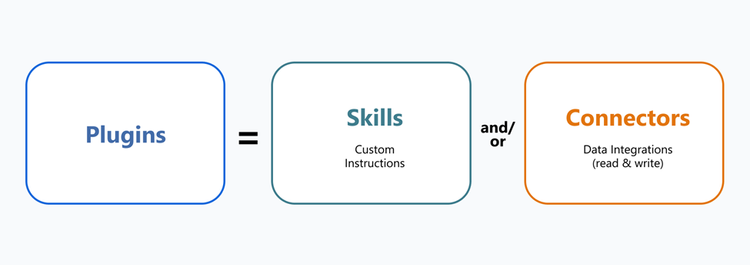
Cowork plugins can include skills, connectors, or both. Microsoft explicitly describes read/write connectors as allowing Cowork to read data and, where configured, create or update records. Partner integrations for LSEG, Miro, monday.com, and S&P Global Energy are coming in the next few weeks, with Adobe, Atlassian, Box, Enosix, Harvey.AI, Money Forward, Morningstar, and Swoop by Prezi also named as partners on the way. Dynamics 365 plugins bring Sales, Customer Service, and ERP workflows into the picture. Fabric IQ begins with Power BI grounding, letting Cowork move from noticing a trend to acting inside a workflow.
That is not a chatbot roadmap. That is an authority model.
Read/write connectors are where the toy phase ends
The phrase “read & write” should make every Microsoft 365 admin slow down. A read-only agent that summarizes a deck can waste time or embarrass someone. A read/write agent connected to CRM, ERP, ticketing, planning, finance, or customer-service systems can create operational state. It can update records, route work, trigger follow-up, and leave humans cleaning up after a confident mistake.
That does not mean the feature is bad. In fact, it is the feature that makes Cowork potentially useful. Knowledge workers do not need another answer box. They need systems that can collect context, compare options, draft artifacts, assemble evidence, update structured records, and hand work across teams without making the human copy-paste between five SaaS tabs.
The engineering requirement is to treat Cowork less like chat and more like a junior employee with API credentials. You would not give a new hire broad CRM write access without training, supervision, and auditability. Agents deserve the same skepticism, with fewer onboarding pastries.
Agent 365 integration is therefore not a decorative enterprise checkbox. Microsoft says Cowork is integrated with Agent 365 for observability, security, and governance, extending identity, compliance, and endpoint protections from users to agents. That is the control plane that makes the rest of the feature list credible. Without it, plugins and write connectors become a sprawl engine.
Teams adopting Cowork should decide who owns each plugin, which connectors are approved, what identity the agent acts under, which actions require human confirmation, how outputs are retained, and how rollback works when an agent writes the wrong thing. If the answer is “we will figure it out after the pilot,” congratulations, you have built a shadow integration platform with a friendly icon.
Model choice is strategic, but evaluation gets harder
The Claude Opus 4.7 announcement is more important than it may look. Microsoft says Opus 4.7 is available in Copilot Cowork for Frontier users and in Copilot Studio early release cycle environments, with rollout to Copilot in Excel. The company describes it as faster and more precise, with improved tool selection, better instruction following, output checking, and higher-resolution image reading.
This is Microsoft leaning into Copilot as a model orchestration layer rather than a single-model product. That is good product strategy. Different models really do have different strengths, especially once workflows involve tool choice, long context, document analysis, structured outputs, or spreadsheet-heavy reasoning.
It also makes enterprise evaluation harder. “Copilot handled it” is not a sufficient test condition if the workflow can run on different model backends over time. A contract-review plugin, sales-risk workflow, or supplier-approval assistant may behave differently under GPT, Claude, or whatever model arrives next quarter. The model is part of the workflow’s behavior, not an implementation detail administrators can ignore.
Practitioners should build evaluation sets around the actual tasks Cowork will perform: representative customer records, messy spreadsheets, ambiguous policies, false-positive cases, permission edge cases, and examples where the correct answer is “do not act.” Test tool selection. Test refusal behavior. Test whether the agent asks for clarification before mutating a record. Test the same workflow under the model choices users will be allowed to select.
This is especially important because Cowork tasks can keep progressing in a protected, sandboxed cloud environment and move across devices. Microsoft is also rolling Cowork into the Microsoft 365 Copilot app on iOS and Android for eligible Frontier users. Cross-device continuity is useful, but it reinforces that these are long-running delegated tasks, not ephemeral prompts. Governance has to follow the task, not the browser tab.
The workflow skeleton should stay deterministic
The best version of Cowork will not be “let the agent do everything.” It will be deterministic workflow skeletons with agentic steps inserted where judgment, synthesis, or context assembly actually helps.
Use Cowork to gather account context, compare market inputs, draft a customer brief, extract contract issues, identify changes in a Power BI dashboard, or prepare options for a manager. Then force outputs into structured fields, approvals, scopes, and downstream validation before a business system is mutated. Models are good at turning messy context into plausible plans. Business platforms are good at enforcing state transitions, permissions, and audit trails. Do not swap those responsibilities because the demo looked clean.
The community reaction, while still early, points in the same direction. A recent r/microsoft_365_copilot thread with 89 votes and 24 comments argued that users get better results when they stop prompting Cowork like Chat and delegate outcome-oriented work. Another r/CopilotPro thread with 56 votes and 29 comments framed Cowork as the shift from chat to execution. That is exactly the behavior Microsoft is productizing: not “answer my question,” but “make progress on this task and come back with work product.”
That change will require user education as much as admin configuration. Prompting a coworker is different from querying a search box. Users need to describe desired outcomes, constraints, source systems, review points, and acceptable actions. Admins need to ensure the agent cannot exceed those boundaries just because the user phrased a request confidently.
Fabric IQ and Power BI grounding are where this can get particularly valuable. Most organizations already have dashboards full of signals nobody has time to operationalize. If Cowork can notice a trend, pull supporting context, draft an action plan, and prepare the CRM or planning-system updates for approval, that is meaningful productivity. If it can update records directly without clear scope and review, that is a future incident report.
The LGTM take: Microsoft is right to push Copilot beyond chat. Work is not done in chat; work is done when systems change state. But the moment agents can use plugins, read/write connectors, Fabric context, Dynamics workflows, mobile continuity, and multiple frontier models, they stop being assistants and start becoming operational actors. Treat Cowork like delegated-work infrastructure, or it will become another place where enterprise permissions go to multiply.
Sources: Microsoft 365 Copilot Blog, Microsoft Claude Opus 4.7 announcement, Microsoft Learn Cowork documentation, Microsoft Fabric IQ documentation, Microsoft Agent 365 GA announcement