DeepMind Is Going Back to Games — This Time the Lab Is an MMO With Markets, Memory, and Grudges

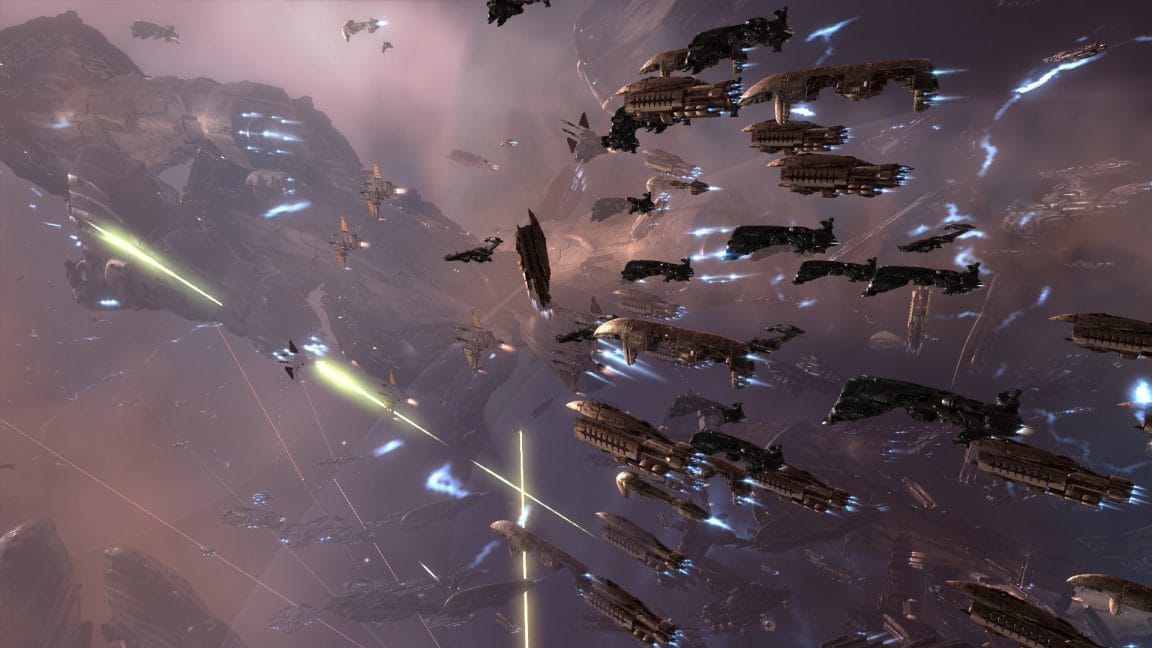
DeepMind going back to games is not the interesting part. DeepMind has always used games as laboratories: Atari for reinforcement learning, Go for search and self-play, StarCraft for partial observability and real-time strategy, SIMA for instruction following across 3D worlds. The interesting part is that Google’s next lab looks less like a board and more like a civilization with spreadsheets, scams, logistics, market manipulation, grudges, and twenty years of institutional memory.
Ars Technica reports that Google DeepMind has taken a minority stake in Fenris Creations, the newly independent studio formerly known as CCP Games, and will use EVE Online for research into “intelligence in complex, dynamic, player-driven systems.” The transaction around CCP’s independence is sizable on its own: management and aligned investors bought the studio out from Pearl Abyss in a $120 million deal, with Fenris continuing to operate from Iceland with studios in Reykjavík, London, and Shanghai. The company says there will be no restructuring or layoffs, which is the first sentence every MMO community wants to see before the phrase “AI partnership” enters the room.
The research target is the actual story: long-horizon planning, memory, and continual learning. DeepMind will run controlled experiments in an offline version of EVE Online on a local server, not on the live Tranquility server. Fenris and Google also say they will explore new gameplay experiences enabled by the technology. That last clause is where the promise and the risk live in the same hangar.
EVE is not just another game benchmark
Most game-based AI benchmarks are useful because they are bounded. Go has clean rules and perfect information. Atari has visual inputs and simple action spaces. StarCraft adds fog of war, real-time decisions, and tactical complexity. EVE adds something stranger: persistence. The world does not reset after a 20-minute match. Actions have consequences that can unfold over days, months, or years. Players build markets, alliances, logistics chains, industrial capacity, espionage networks, and reputation systems that survive individual sessions.
That makes EVE unusually relevant to the current weakness of agent systems. Today’s agents are decent at bounded tasks with crisp feedback. They are far worse at maintaining goals over long timelines, remembering what matters, adapting when other actors change strategy, and operating inside messy multi-agent environments. EVE is basically a stress test for all of that. It is a world where planning is not just pathfinding; it is diplomacy, resource allocation, risk management, market timing, deception, and patience.
Fenris CEO Hilmar Veigar Pétursson put the pitch clearly in his player letter: “EVE is one of the few environments where questions about intelligence can be explored inside something that already behaves like a living world.” He also emphasized that the initial research will happen in controlled, offline versions of EVE not connected to Tranquility. Google DeepMind’s Alexandre Moufarek called it “a one-of-a-kind simulation for testing general-purpose artificial intelligence in a safe sandbox environment.” Demis Hassabis, in the Fenris announcement, tied the partnership back to DeepMind’s history with Atari DQN, AlphaGo, AlphaStar, and SIMA, arguing that games remain the right training ground for testing AI algorithms.
The offline-server detail is not a footnote. It is the safety boundary. DeepMind gets a complex environment without injecting experimental agents into a live economy where real players have paid subscriptions, years of assets, and the emotional attachment that only spreadsheet wars can create. Researchers can run controlled scenarios, replay conditions, instrument the world, create synthetic populations, and evaluate outcomes without making New Eden’s next market crash a research artifact.
The transfer problem is real, but the benchmark problem is worse
There is an easy skeptical take here: “Learning in EVE does not equal learning in the real world.” Correct. Simulated economies are not real economies. EVE players are not a representative sample of human organization. The social norms of New Eden are weird even by MMO standards; betrayal is practically a design pillar. An agent that learns to survive EVE may learn patterns that do not transfer cleanly to enterprise workflows, robotics, or public-sector planning.
But the alternative is not pristine realism. The alternative is the current benchmark landscape, where many agent evaluations are too short, too toy-like, too static, or too easy to game. If the industry wants agents that can handle memory, long-horizon planning, and multi-agent dynamics, it needs environments where those capabilities are actually necessary. EVE is imperfect in the way useful testbeds are imperfect: messy, adversarial, instrumentable, and rich enough to break brittle systems.
For practitioners building agents, the lesson is not “train your product on an MMO.” It is to audit your own evaluations for time horizon and social complexity. If your agent claims to manage workflows, can it operate across weeks? Can it recover context after interruptions? Can it distinguish stale plans from live constraints? Can it handle other actors with conflicting goals? Can it explain why it changed course? If your benchmark resets every episode and rewards only immediate task completion, you are not testing the capabilities your roadmap promises.
That is why EVE is a better signal than another leaderboard bump. It reflects a shift from single-turn intelligence toward situated behavior. The hard part of useful agents is not producing a fluent plan. It is maintaining a plan while the world changes, other actors push back, and the consequences of yesterday’s decision finally arrive.
The player trust problem will decide whether this stays clever
The governance issue is obvious because EVE’s players are not passive content consumers. They are the content. The economy, alliances, wars, scams, and legends are player-built systems. That is exactly why DeepMind wants the environment, and exactly why Fenris has to be careful about changing it.
For now, the messaging is disciplined: offline research first, no direct impact on the live game, no layoffs, no restructuring, no change in creative direction. Fenris also has business reasons to be cautious. Its announcement says EVE closed 2025 with a record-breaking November, the second-highest revenue quarter in the game’s more than 20-year history, more than $70 million in 2025 revenue, and strong reserves. You do not casually experiment on that kind of live service unless you enjoy explaining churn charts to a board.
The danger zone is the phrase “new gameplay experiences.” AI-driven NPCs, training simulations, player assistants, market tools, narrative systems, or synthetic factions could be genuinely interesting. They could also flatten the player-driven weirdness that makes EVE valuable. If an AI system starts optimizing the fun out of the economy, simulating political conflict too cleanly, or giving some players better strategic tooling than others, the community will notice immediately and loudly. EVE players have spent two decades weaponizing asymmetry. They will not miss a new one.
For game developers, the practical guidance is boring and important: keep research separate from live economies; communicate boundaries before players invent worse ones; publish what data is and is not used; never let “AI-enhanced” become a euphemism for eroding player agency. For AI teams, the guidance is just as sharp: do not confuse controlled simulation performance with permission to touch real communities. Human systems are not staging environments.
The best version of this partnership is compelling. DeepMind gets a richer environment for studying agents with memory and long-term goals. Fenris gets research resources and possibly new tools for a game built around complexity. Players get a studio back under independent ownership, at least on paper, and maybe new experiences that respect what makes EVE EVE.
The worst version is also easy to imagine: corporate AI language, vague assurances, and experiments that treat a living world as a sandbox because someone forgot that the sand has tenants.
For now, the correct read is cautious interest. DeepMind is not just returning to games; it is looking for worlds where intelligence means planning under uncertainty with other agents in the loop. EVE is ridiculous, hostile, economic, political, and stubbornly alive. That may make it one of the better AI labs available — as long as everyone remembers it is someone else’s home before it is Google’s testbed.
Sources: Ars Technica, Fenris Creations, EVE Online