Google AI April 2026 Roundup: Gemma 4, Cloud Next Agentic Wave, and the Kaggle Vibe Coding Course

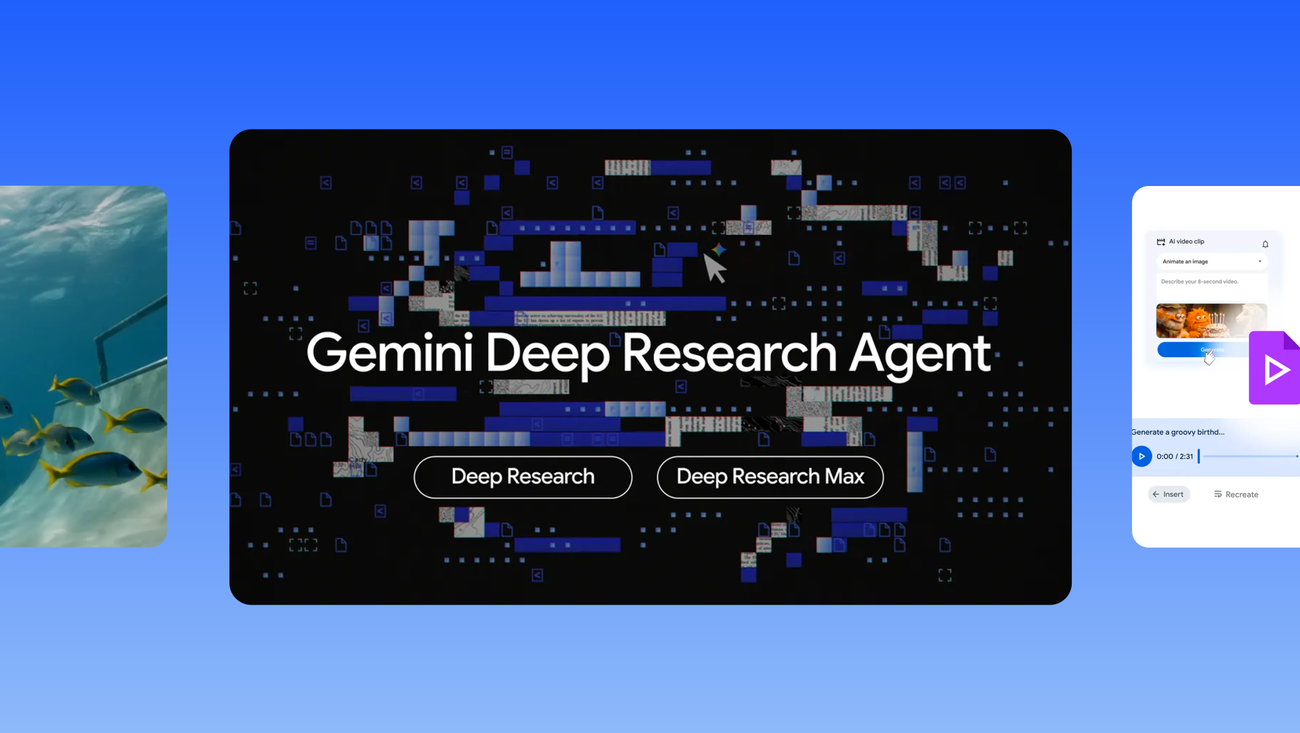
Google published its April AI roundup on Sunday. If you're building with AI coding tools, two things in it are worth your attention: Gemma 4, and what Google is doing with the Kaggle vibe coding course. The rest is enterprise infrastructure news — relevant if you're deploying at scale, ignorable if you're building.
Gemma 4 is Google's newest open-weight model, and the company is not being modest about it. The claim: "byte for byte the most capable open model." Whether that holds up in independent testing is a separate question — Google's marketing language and independent benchmark results don't always converge — but the direction matters regardless. Open-weight models are the backbone of local coding agent deployments. No per-token API costs, runs on hardware you own, no rate limits except what your GPU imposes. For the cost-conscious segment of the agentic coding market that The Register identified last week, this is the tier where the economics stop being theoretical.
The specific use case is worth spelling out. A developer running a local coding agent with an API-connected frontier model pays per token. At usage-based billing — which GitHub Copilot is switching to on June 1, which Anthropic shifted earlier this year — that cost accumulates. A developer running Qwen 3.6 27B locally pays once for the hardware and then nothing per token. Gemma 4, if it performs as Google claims, is another option in that category. The competitive pressure this puts on API-priced coding agents is real: when the local model is "good enough," the per-token cost of the cloud model has to justify itself against zero.
The enterprise orchestration layer is moving faster than the model wars
The Gemini Enterprise Agent Platform announcement is enterprise infrastructure, not a coding tool. Skip it if you're an indie developer. Don't skip it if you're building for or deploying in enterprise environments, because this is where the deployment context for the next five years is being defined.
The pitch: organizations need a governance and orchestration layer for autonomous agents. Not just "can the agent do the task" but "which agents can do what, with what context, subject to what oversight." Google is positioning its platform as that control plane — the thing that sits between the models and the enterprise systems those models interact with. The 32,000 attendees at Cloud Next and the 260+ announcements suggest the enterprise agentic infrastructure market is not theoretical anymore. It's being built, sold, and deployed.
This matters for a specific reason that's easy to miss in the model benchmark noise: the models are commoditizing faster than the orchestration layer. Gemma 4 competes with Qwen 3.6. GPT-5.5 competes with Claude 4.7. Those comparisons are real, but they're also increasingly temporary — new releases compress the gap every few weeks. The governance platform, the audit trail, the access controls, the integration with enterprise identity and data governance — those are sticky. They take years to build and enterprise buyers commit to them for longer cycles. Google's bet is that owning the orchestration layer matters more long-term than winning the next benchmark comparison.
Google is running a land expansion play on Kaggle
The most strategically interesting announcement in the roundup is also the least technically impressive: Google put a "vibe coding" course on Kaggle. Registration is open for June 2026. The pitch: teach people how to use AI agents to build software without getting bogged down in syntax. "Start building software today."
This is not a product announcement. It's a market expansion bet. Google is not trying to win existing developers who already have AI coding tool preferences — that's a zero-sum competition with OpenAI, Anthropic, and GitHub. Instead, they're trying to create new users for whom AI-first software development is the default paradigm, not a learned skill. If the Kaggle course works — if it genuinely teaches non-developers to ship software using AI agents — it expands the addressable market for Google's AI stack in a direction none of the competitors are attacking.
The course being free and hosted on Kaggle is deliberate. Kaggle is a community Google owns. The learners who come through it will use Google infrastructure by default — Vertex AI, Gemini API, the Google Cloud ecosystem. The course isn't a product. It's a pipeline. By the time a student finishes "start building software today" and wants to scale what they've built, the habit is set and the infrastructure is Google.
This is the long game that the AI coding tool press mostly misses. The model comparison articles get the clicks. The Kaggle vibe coding course gets a footnote. But the course is how Google grows its developer base in directions where it can win outright, rather than fighting for a share of an existing market where OpenAI and Anthropic have structural advantages. For builders: the course itself is probably worth your time if you're new to AI coding agents and want a structured starting point. For everyone else: watch what Google does with the students who come out the other side.
Sources: Google Blog, Gemini Enterprise Agent Platform, Gemma 4 announcement