Google Cloud Next 2026: The Infrastructure Behind the Agentic Era Takes Shape

There's a quiet arms race happening in enterprise cloud infrastructure, and the prize is the control plane for agentic AI at scale. You don't hear about it as much as the model wars — no benchmark drama, no Twitter beef between lab CEOs — but it's the infrastructure story that will determine how fast agentic coding spreads beyond early adopters into the enterprise mainstream.
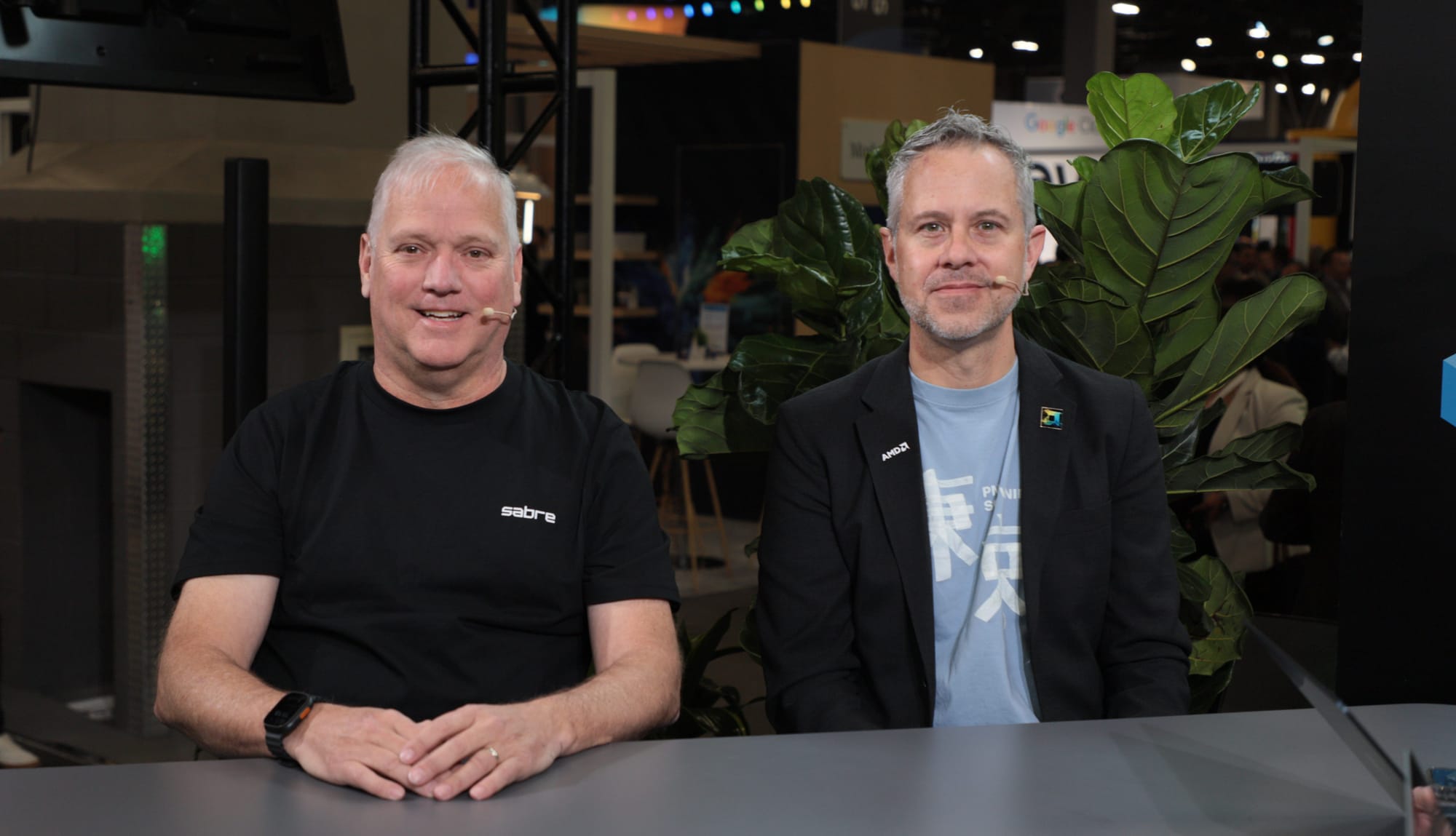
SiliconANGLE's theCUBE analysts spent three days covering Google Cloud Next 2026 and came back with a specific lens on what the hyperscalers are actually building toward: not just better models, but the operational substrate for running thousands of AI agents simultaneously across enterprise environments. The through-line from their coverage is that the control plane — the layer that orchestrates data, context, and agent execution — is where the real competition is happening. "Whoever owns the control plane kind of wins," in the words of theCUBE's John Furrier. That's a strong claim. Let's examine what's actually being built.
Kubernetes Is Now an AI Operating System
Google's core argument at Next was that Kubernetes has become the de facto operating system for AI — not just for training and inference, but for the orchestration of agentic workflows at scale. Drew Bradstock, Google's GKE lead, put it plainly: "Kubernetes has become that operating system for AI — from training to inference to reinforcement learning. This has really been the heart of everything. We're finding ourselves having to adapt Kubernetes quite quickly, even faster than the open-source community can keep up."
This matters for a specific reason that's easy to miss in the infrastructure jargon: if Kubernetes is the OS of the agentic era, then the agents being built today are running on top of an orchestration layer that platform engineers already know how to manage. That lowers the barrier to enterprise adoption significantly. You don't need a new infrastructure team or a new operational model — you extend the Kubernetes cluster you've already got. The agentic workflow is just another workload on the same cluster, managed by the same tooling, observable by the same dashboards.
The specific number Google cited — 300 agent sandboxes per second per cluster with sub-second time to first instruction — is the operational metric that translates this vision into concrete engineering reality. For comparison, the average enterprise deployment in 2025 was fewer than 10 sandboxes per minute. That's a 1,800x improvement in deployment density, and it changes what's economically viable. Per-request agent spawning — spinning up a fresh sandbox for each task, with no persistence between invocations — becomes feasible when you can deploy 300 per second. A compromised sandbox doesn't persist. Each invocation starts clean. That's a meaningfully different security model than a persistent agent session that maintains state across multiple tasks.
The Context Engineering Problem Nobody Is Talking About
The most technically interesting point from Next didn't get the coverage it deserved: the context engineering thesis. Sailesh Krishnamurthy, Google Cloud VP Databases, put it simply: "The models are amazing. They can do a lot of work, but they don't have all the context. The context is in the data. The heart of the data is actually stored in these systems. You need to provide that context in order to answer the questions."
This is the unglamorous part of agentic AI that the benchmark announcements always skip. Giving an agent access to your data is not the same as giving it context. Data is raw; context is data with meaning, relationships, and business logic attached. A model that can query your database doesn't automatically know that the orders table is the source of truth for revenue reporting, or that the user_id field has a specific relationship to your authentication system that affects how you handle deletes under GDPR. That knowledge is in the heads of your senior engineers, in Notion docs, in Slack threads, in institutional memory that has never been structured in a way a model can consume.
Google's bet is that the answer is not a bigger context window but smarter data infrastructure: graph traversal, vector embeddings, full-text search, and relational operations all in one system, with the intelligence to surface the right context without requiring data to move between environments. OpenText and Google Cloud are building toward "context engineering" — the discipline of organizing, governing, and tagging enterprise information with metadata and business context before it reaches the LLM, rather than flooding models with raw data and hoping the right signal surfaces.
This is a fundamentally different approach than the "more tokens" thesis that dominates the consumer AI conversation. For enterprise use cases — where the agent needs to understand your specific data model, your business rules, your compliance requirements — the limiting factor is not context window size. It's the quality and structure of the context you're able to inject. A model that can consume 10 million tokens is only as good as the 10 million tokens you give it.
The Token Economy Is Rewriting Org Structures
Furrier made an observation that sounds like hyperbole until you think about it for five minutes: "You have a new kind of currency going on with tokens, and that's changing the organizational structures. That's changing how people are organizing their teams. That's changing how people work. It's a complete reset in the corporate world."
The framing is about more than cost accounting. When cloud spend was infrastructure — compute, storage — it was a line item in the FinOps budget, managed by a dedicated team, invisible to product and engineering workflows. When cloud spend becomes agentic — every API call, every context window load, every tool invocation metered in tokens — it becomes a variable cost that touches every team and every workflow simultaneously. A product manager's prompt to an agent is a token cost. A developer's code review pass is a token cost. An automated CI check that runs an agent on every pull request is a token cost at scale.
The organizations that figure out token governance first will have a structural advantage — not just a cost advantage, but a workflow design advantage. Teams that treat token consumption as a first-class engineering concern, like performance or reliability, will design workflows that are efficient by default rather than discovering the problem when the quarterly bill arrives. This is the FinOps discipline for the agentic era, and it's still largely unformed.
The Partner Ecosystem as Delivery Mechanism
Google's $750 million partner ecosystem commitment — targeting 120,000+ members across the Google Cloud Partner Network — is the most direct signal of how agentic AI gets delivered to enterprise customers at scale. The specific framing: "agents from our partners are going to talk to agents from the Google Cloud Partner Network." That's not just API integration — that's multi-agent orchestration across organizational boundaries, enabled by the Google Cloud infrastructure layer.
This is the hyperscaler play: own the control plane, let the SI partners handle the customization and deployment work. Accenture, Deloitte, PwC, and Infosys already do this for cloud migration; Google wants them to do it for agentic AI deployment. The partner ecosystem is the delivery mechanism that lets Google scale enterprise agentic deployments without having to hire the consulting capacity themselves.
The practical implication for builders: if you're evaluating agentic AI infrastructure, the partner ecosystem matters as much as the technical capability. An enterprise deployment that requires custom integration work for your specific ERP, CRM, and data warehouse is a 6-month project. An enterprise deployment that plugs into a partner's existing connector library is a 6-week project. The infrastructure capability is necessary but not sufficient; the ecosystem is what determines time-to-value.
What This Means for Developer Tooling
Here's the connection that the infrastructure coverage misses: if Kubernetes is the OS of the agentic era, then the agentic coding tools being built today — Claude Code, Cursor, Copilot, Codex — are running on infrastructure that will increasingly be managed by platform engineers, not just developers. The deployment context for AI coding agents is shifting from developer laptops to orchestrated clusters, with sandbox isolation, resource governance, and enterprise-grade observability built in.
This changes what "enterprise-ready" means for coding agents. It's not just about security and compliance features in the tool itself — it's about the ability to run in a Kubernetes environment where the agent sandbox is one of hundreds per cluster, where resource consumption is governed by cluster policies, and where the agent's actions are observable through standard Kubernetes monitoring tooling. Tools that are designed for this environment from the ground up — not adapted from laptop-era architectures — will have a structural advantage in the enterprise market.
The 300 sandboxes per second figure is the number platform engineers should be thinking about when they evaluate agentic coding tooling. That's not just a capacity metric — it's a model for how agentic workflows will actually operate in production: ephemeral, per-task, horizontally scalable, with no persistent state between invocations. The persistent agent session — the model that maintains context across a full workday — is the laptop-era design pattern. The ephemeral sandbox is the cloud-era pattern. The infrastructure is already built; the tooling is what's catching up.
Sources: SiliconANGLE — Google Cloud Next 2026: The Infrastructure Behind the Agentic Era Takes Shape, Google Cloud Blog — What's new in GKE at Next 26, The New Stack — Context engineering: The missing layer in enterprise AI