Google Is Turning Search Into Transactional Plumbing, Starting With Restaurant Bookings

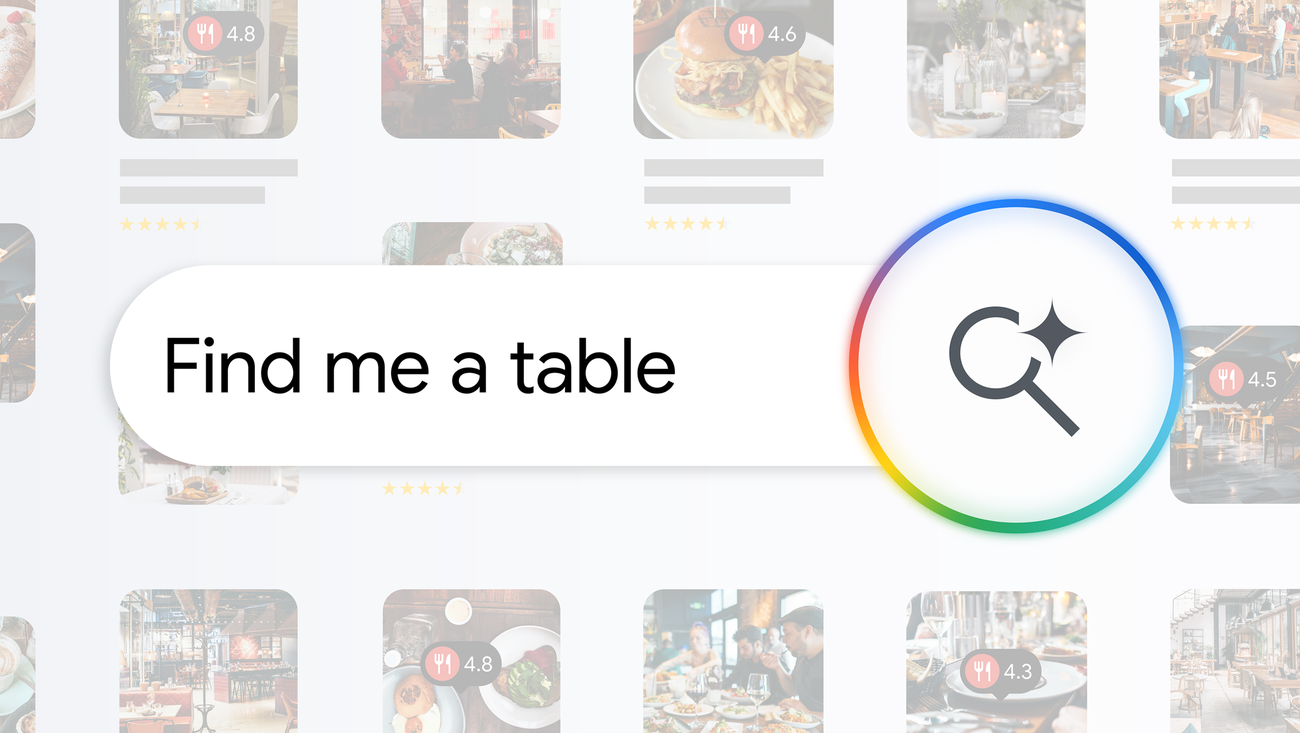
For years, the dream of “agentic search” has mostly meant product demos with suspiciously cooperative tasks. Google’s latest UK rollout for restaurant bookings inside AI Mode is smaller, narrower, and therefore more interesting. This is not an AI assistant planning your life. It is Google taking one of the web’s most common messy-intent problems, finding a category with manageable downside, and trying to compress the path from vague desire to completed transaction. That is how platform shifts usually start: not with magic, but with something boring enough to ship.
The official launch is straightforward. Google says UK users can now describe what they want in AI Mode using natural language, including cuisine, dietary restrictions, neighborhood, date, time, and party size. The company cites a 140% rise this year in searches for “when to book a table,” which is a neat way of saying people are asking search engines to help with increasingly compound planning tasks. AI Mode responds with a curated list and links to finalize reservations through partners including TheFork, SevenRooms, ResDiary, Mozrest, Foodhub, Dojo, DesignMyNight, and OpenTable.
That sounds incremental until you look at what it replaces. Traditional local search is bad at high-context intent. Filters can handle obvious fields like cuisine or price band, but they break down when people think the way humans actually think: somewhere quiet, near this part of town, that works for four people, handles one vegan diner, and preferably allows a dog. Natural language is simply a better interface for multi-constraint discovery than a pile of dropdowns designed ten years ago.
Search is learning to dispatch, not just describe
The strategic point is that Google is pushing Search one layer deeper into the transaction funnel. Search used to send you to pages. Then it tried to answer questions without sending you anywhere. Now it is inching toward doing the triage work that sits between discovery and action. Restaurant reservations are a safe testing ground because the stakes are low, the intent is common, the supply side is already digitized, and the handoff can still run through established partners.
That last point matters. Google is not fully replacing reservation platforms, at least not in this iteration. It is compressing the user journey above them. OpenTable’s own materials are revealing here: the company highlights Reserve with Google as a way to turn search visibility into seated guests, with availability shared automatically across partner channels and a blue “Reserve a table” button embedded in the Google listing. OpenTable also points out that Gemini-powered discovery is already steering diners into bookable options. In other words, the intermediaries are publicly framing this as more distribution. Privately, they have to recognize the risk of becoming interchangeable infrastructure.
City A.M. makes the competitive framing explicit, arguing that Google is moving toward a “digital concierge” model and questioning who owns the customer relationship when the user experience becomes Google-first. That is the right question. When the AI layer captures intent, curates options, and controls the interface where a user decides, downstream providers can still collect the booking while losing brand equity. The pipeline stays open, but the leverage shifts upward.
The real lesson is about machine-readable businesses
There is a broader practitioner insight here that goes well beyond restaurants. If agents become a meaningful discovery and routing layer, then many internet businesses will compete less on homepage polish and more on structured data quality, reliable availability, and clean transaction handoffs. Humans may still love good design, but machines reward consistency. A booking partner with richer metadata, better freshness, and fewer failed transfers is likely to be favored when the user never scrolls through ten blue links.
This is the first original point many operators should sit with: agentic interfaces do not just change UX, they change which back-end competencies compound. The winners may not be the companies with the cleverest consumer brand. They may be the ones whose inventory is easiest for the AI layer to interpret and transact against.
The second point is about trust economics. Google can get away with this sort of task sooner than many startups because restaurant discovery is forgiving. A mediocre answer to a hard technical question can destroy trust. A decent shortlist for dinner, followed by a successful booking, feels magical enough. Expect AI product teams across categories to learn from that. The path to mainstream agent adoption probably runs through low-risk, high-frequency tasks where partial success still feels like progress.
The third point is the one marketplaces should worry about. For years, aggregators benefited from the fact that search sent users into middle-layer properties where the marketplace could own comparison, ranking, upsell, and brand habit. AI Mode threatens to hollow out that middle. Not by removing the marketplace overnight, but by reducing how often the user needs to consciously visit it. Once that happens, the marketplace’s bargaining power starts to look more like a supplier contract than a customer relationship.
What builders should do before this pattern spreads
If you run a platform that depends on discovery traffic, audit your product as if an agent were your most important user. Can an external system understand your inventory without scraping ambiguous marketing copy? Are availability and constraints exposed cleanly? Is the handoff stateful, fast, and resilient? Can the transaction complete without forcing the human to re-enter context the agent already captured? Those boring integration questions are becoming strategic.
If you build consumer AI, notice what Google is not doing. It is not pitching “AI will change everything” abstraction. It is shipping a bounded workflow with obvious user value. That is a healthier product instinct than forcing a chatbot into situations where the marginal benefit is unclear. Good agent design is often less about autonomy and more about choosing tasks where the system can remove friction without inventing new friction of its own.
And if you are in local commerce, expect restaurants to be the rehearsal, not the end state. Travel, events, appointment scheduling, home services, and other inventory-heavy categories all have the same structural vulnerability. Wherever discovery is shallow and booking logic is structured, Google and everyone else will try to turn search from a directory into a dispatcher.
Restaurant reservations are not the whole story. They are the proof of concept. Search is being rewritten to handle the boring part of getting something done, and once users get used to that, they will expect the same pattern everywhere else.
Sources: Google Blog, Booking restaurants in the UK just got easier with AI in Search, 9to5Google, Google AI Mode getting ‘plus’ redesign as agentic booking expands globally, OpenTable, Turn searches into seated guests with Reserve with Google, City A.M., Google comes for OpenTable with AI that books your dinner