NVIDIA’s NemoClaw Push Says the Real Consumer AI PC Demo Is a Sandbox, Not a Copilot Button

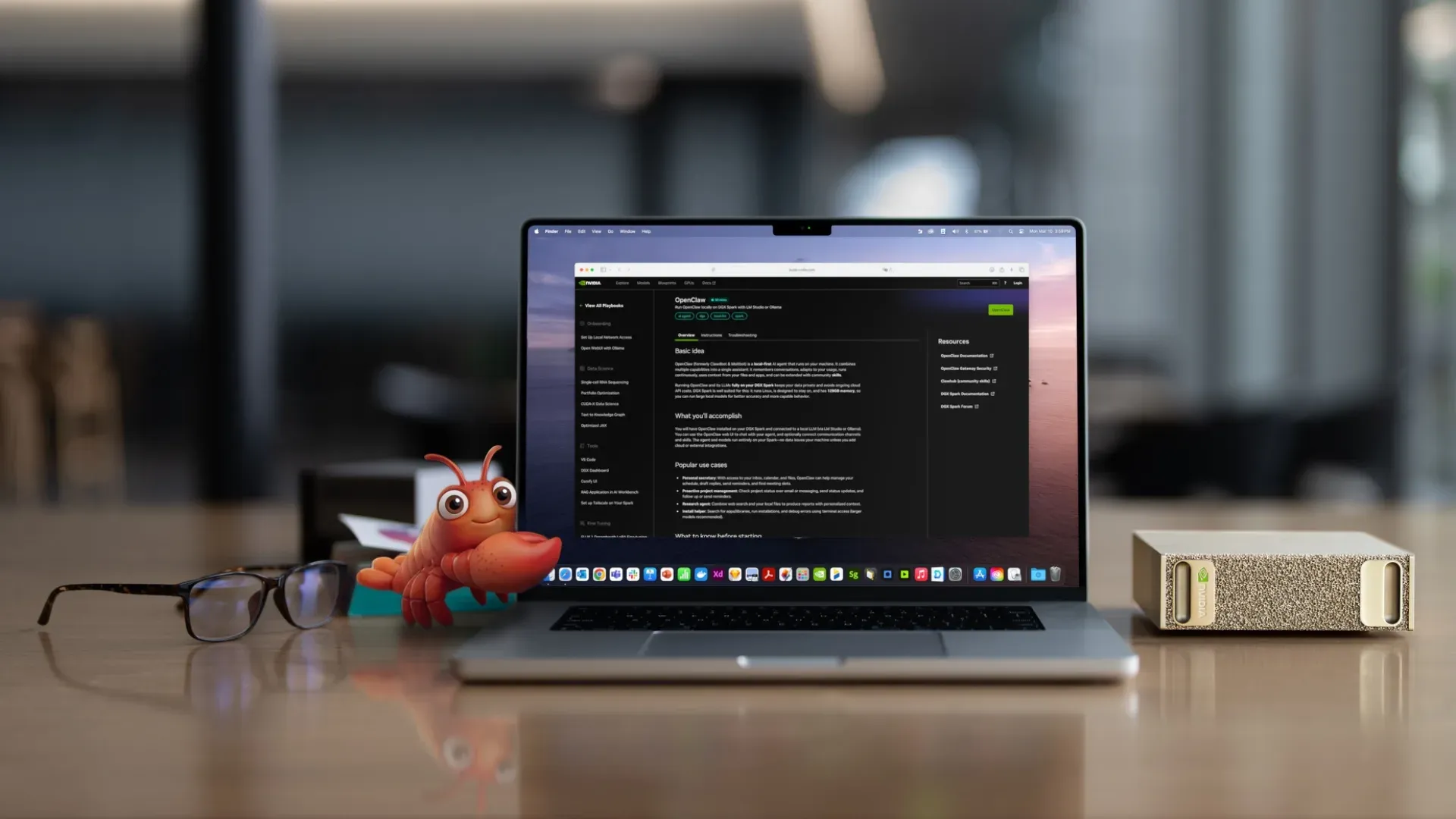
The consumer AI PC pitch has been stuck in demo mode for too long. A copiloted sidebar here, a voice shortcut there, maybe a benchmark slide about tokens per second if the vendor is feeling ambitious. NVIDIA’s new NemoClaw tutorial is more interesting because it accidentally admits what the real local-agent product is going to be: not a chatbot on your desktop, but an always-on assistant with memory, tool access, remote messaging, and enough permissions to become dangerous if the runtime is sloppy.
That is why the most important word in NVIDIA’s new NemoClaw deployment guide is not “local.” It is “secure,” or more precisely “more secure,” which is the phrasing the company wisely uses. The tutorial walks through deploying NemoClaw on a DGX Spark system with local Ollama-hosted Nemotron 3 Super 120B, OpenShell sandboxing, and Telegram integration for remote access. On paper that sounds like a setup guide. In practice it reads like NVIDIA staking out a product position: if local AI assistants are going to persist beyond toy status, the value is in packaging inference, containment, policy, and operations into one coherent stack.
The details matter. NVIDIA says the setup targets Ubuntu 24.04 on DGX Spark, Docker 28.x or newer, and local Ollama as the inference layer. The model pull for Nemotron 3 Super 120B is about 87 GB, and the company notes that local responses typically take 30 to 90 seconds. That last number is important because it punctures a lot of AI PC marketing fog. This is not mainstream instant-gratification UX. This is enthusiast and prosumer infrastructure today, and NVIDIA seems to know it. The point of the tutorial is not “everyone should do this tomorrow.” The point is “here is the reference architecture for people serious enough to try.”
That reference architecture is what makes the post worth paying attention to. NemoClaw is positioned as the orchestration and lifecycle layer. OpenClaw provides the long-running assistant framework, including messaging connections and memory. OpenShell is the actual security runtime, enforcing sandbox boundaries around filesystem access, network calls, credentials, and inference routing. In other words, NVIDIA is no longer pitching a model plus an app. It is pitching a deployment stack for an agent that can keep running after the demo ends.
This is the right abstraction boundary, and it is where much of the local-agent market still looks underbuilt. Plenty of companies can show a model doing a neat thing on-device. Far fewer can explain what happens when that assistant has persistent memory, touches private files, reaches external APIs, or gets accessed remotely from Telegram at 11 p.m. That is where product design turns into systems design. OpenShell’s documented focus on sandboxed environments, declarative policies, restricted network activity, and private inference routing makes more sense than the usual “trust us, it is on your machine” story. Running locally is not the same thing as running safely.
There is also a savvy hardware narrative underneath all this. NVIDIA does not need NemoClaw to become a mass-market brand on its own. It needs a credible stack that makes local agent experiments pull demand toward NVIDIA hardware, NVIDIA-optimized models, and NVIDIA-controlled runtime layers. A workstation-class box looks more defensible when it is not just a fast inference target, but the home for an assistant you can actually fence in. If the future local agent is effectively a personal service running on your machine with a safety envelope around it, then GPU vendors suddenly have a better product story than “we run the same model faster.”
The tutorial also makes an implicit argument about trust. OpenShell’s docs emphasize that agents should run with exactly the permissions they need and nothing more. Unknown hosts are blocked by default. Credentials stay on the host side of the boundary. Network activity is controlled rather than assumed. That is the kind of boring language you want to hear from anyone pitching long-running agents. The industry spent the last year acting as though autonomous software could be made production-ready by layering more prompts and evals on top of basically unrestricted execution. NVIDIA’s stack is more credible because it starts from the opposite assumption: the runtime should constrain the model, not merely advise it.
None of this means the stack is mature. In fact, the tutorial is useful partly because it refuses to hide the frictions. An 87 GB model is not lightweight. Thirty to ninety second responses are not consumer-grade. The software is explicitly labeled alpha in public repos. And the decision to use Telegram as the remote interface is revealing in its own way. It is pragmatic and accessible, but it also shows this is still an operator-first system, not a polished appliance. That is fine. The real mistake would be pretending otherwise.
For practitioners, the takeaway is narrower and more actionable than “go buy a DGX Spark.” If you are building a local agent, you should stop treating security, policy, and remote control as afterthoughts. Ask whether your runtime has clear controls over filesystem reads, network egress, process spawning, secrets handling, and auditability. Ask whether a human can see and approve risky actions without drowning in noise. Ask whether your architecture assumes the model is trustworthy, or whether it remains safe when the model behaves strangely. Those are product questions now, not just infra questions.
There is a second practical lesson here for teams building workstation software or enterprise edge deployments. The local-agent category may split in two. One branch will chase sleek assistant UX and low-latency small models on commodity devices. The other will look more like what NVIDIA is prototyping here: heavier hardware, longer-running tasks, persistent memory, better containment, and a willingness to trade some responsiveness for control and privacy. I would bet the latter becomes the more valuable segment first, especially in technical environments where “slower but fenced in” beats “fast but vaguely terrifying.”
My read is that NVIDIA’s smartest move here is not the model, not the tutorial, and not even the hardware tie-in. It is the quiet insistence that the future of local AI assistants will be won by stacks that combine inference with containment from day one. That is a much more serious product thesis than a copilot button on a laptop. If always-on local agents become real, the companies that survive will be the ones that treated sandboxing as the feature, not the footnote.
Sources: NVIDIA Technical Blog, NVIDIA OpenShell documentation, NVIDIA NemoClaw documentation, NemoClaw GitHub