Google’s Gemini Startup Forum Is Distribution Strategy, Not Founder Philanthropy

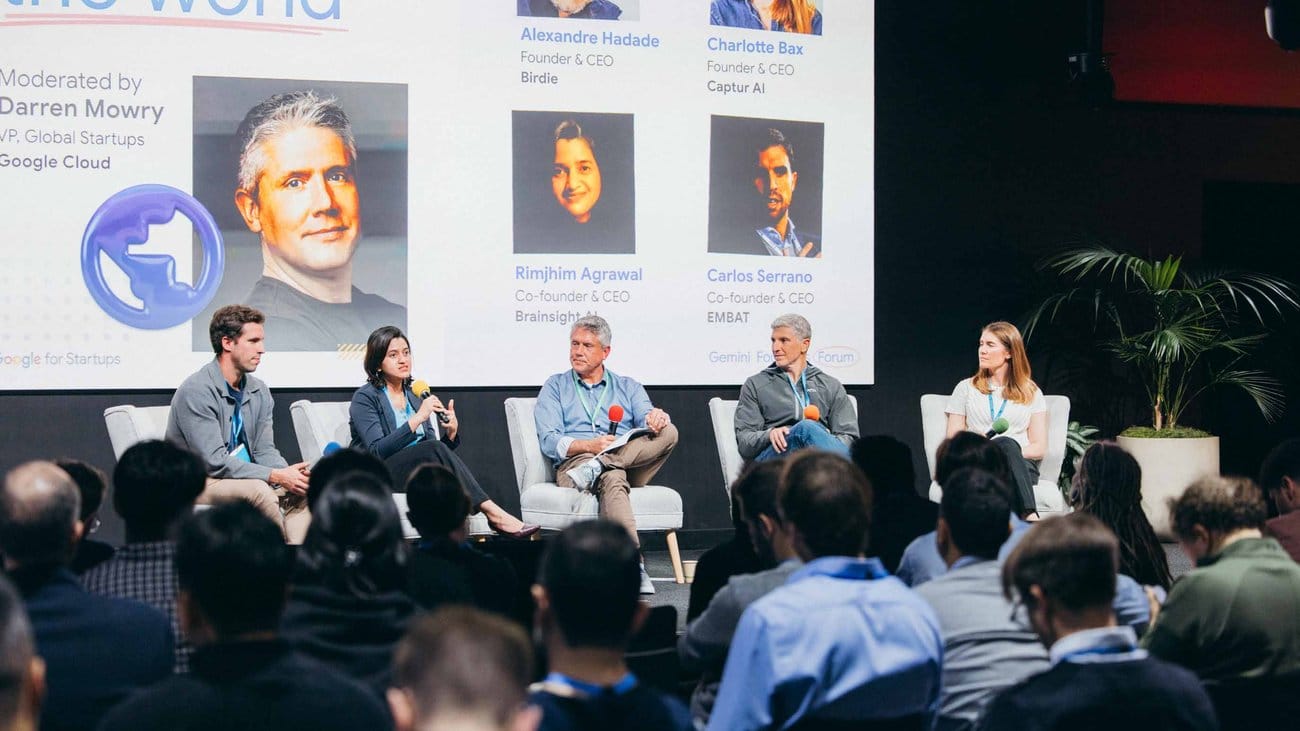
Google’s second Gemini Startup Forum looks like a founder-support announcement. Read it closer and it is something more useful: a map of how Google plans to turn Gemini from a capable model family into default startup infrastructure.
The company says 102 startups will gather at its Sunnyvale headquarters next month for a two-day in-person summit. They were selected from nearly 2,000 applications across 16 countries, including the United States, the United Kingdom, France, India, Singapore, and Brazil. The stated pitch is acceleration: Google AI leaders, engineers behind the newest products, demos, networking, and hands-on technical support. The practical pitch is sharper: if you are building an AI-native company, Google wants your prototypes, evals, deployment path, and early cloud spend pointed at Gemini before your architecture calcifies.
That is not cynical. That is platform strategy doing what platform strategy is supposed to do.
The cohort is the channel
The raw numbers matter because they show scarcity. A cohort of 102 selected from nearly 2,000 applications implies an acceptance rate around 5%, assuming the application pool was complete and eligible. That does not prove the program will create category winners, but it does show founders are treating direct Gemini access as valuable. In 2026, a startup does not apply to a two-day model-platform summit because it needs another lanyard. It applies because model behavior, infra credits, technical unblockers, and distribution credibility can change the next six months of runway.
Google frames the group as spanning manufacturing intelligence, clinical workflows, wearable hardware, and other AI-native product categories. That detail is more interesting than the cohort count. These are not all “chat with your PDF” wrappers. Manufacturing intelligence implies messy operational data, shop-floor constraints, ERP integrations, sensor streams, reliability requirements, and workflows where a hallucinated answer is not a cute demo failure. Clinical workflows mean regulated environments, audit trails, privacy controls, domain-specific evaluation, and user trust earned one boring edge case at a time. Wearable hardware brings battery budgets, latency, sensor fusion, and on-device/cloud tradeoffs that cannot be solved with a bigger prompt.
Those categories are exactly where Google’s full stack has a chance to matter. Gemini alone is not the product. Gemini plus AI Studio, Cloud, multimodal APIs, deployment infrastructure, data tools, model updates, and engineering support is the product surface Google is selling.
Credits are not charity; they are architectural gravity
The broader Gemini Kit offers eligible AI startups up to $350,000 in Google Cloud credits, hands-on API sprints, a multimedia training library, and access to Google AI Studio. That is a meaningful number for an early-stage company. It can buy experimentation time, absorb inference spikes, fund eval runs, and delay painful infrastructure conversations.
But cloud credits are never just coupons. They create architectural gravity. If a startup uses free credits to build its first production pipelines, logs, storage, model gateway, data processing, and deployment path around a single vendor, switching costs begin before revenue does. The danger is not that credits are bad; the danger is treating them as free in the engineering sense. They are discounted decisions.
The smart founder move is to use the program aggressively without surrendering the architecture. Take the credits. Take the API sprints. Take the time with engineers who know the sharp edges of the Gemini API better than any public doc. But keep clean seams: model abstraction where it matters, exportable data, versioned prompts, reproducible evals, cost dashboards, fallback behavior, and a migration story if one model vendor gets too expensive, too slow, or too opinionated for your product.
Teams should also distinguish between prototype velocity and production posture. Google AI Studio is excellent for exploring models quickly, including Gemini, Imagen, and Veo, and the Gemini Kit copy highlights things like 1M-token long context windows, native audio dialog through the Live API, and agentic multimodal experiences across text, image, video, and audio. That is the right sandbox. It is not a substitute for deciding how your production system handles model drift, safety failures, latency budgets, customer-specific data boundaries, retries, observability, and incident response.
Google is competing for builder default, not headline default
The AI platform fight is no longer just “who topped the benchmark this week?” Benchmarks still matter, but builders choose platforms through a messier equation: model quality, API ergonomics, cost predictability, eval tooling, deployment paths, enterprise trust, support access, ecosystem examples, and whether the platform helps them ship before the runway graph gets ugly.
OpenAI has mindshare. Anthropic has strong enterprise and coding-agent credibility. Microsoft has the enterprise channel. Google has a different bundle: Gemini models, Google AI Studio, Google Cloud, DeepMind’s research halo, Android, Chrome, Workspace, YouTube, Maps, and TPU infrastructure. The company’s challenge has been turning ingredients into a coherent builder motion. A startup forum is one answer. It creates relationships, examples, migration paths, and early customer stories that a docs page cannot.
The first Gemini Startup Forum, launched with Google DeepMind last November, brought together more than 50 founders. This second cohort doubles the scale and makes the distribution intent clearer. Google does not need every AI startup to become a permanent Google Cloud account. It needs enough serious builders to treat Gemini as a default option — not a model they test after they have already designed around someone else’s assumptions.
That is why the technical output after the forum matters more than the announcement. The useful artifacts would be reference architectures, postmortems, eval templates, cost breakdowns, multimodal design patterns, and honest case studies showing where Gemini worked, where it failed, and what the teams changed. The less useful outcome would be a gallery of logos and a few demo videos where every product somehow “leverages AI” but nobody can explain the reliability envelope.
What engineers should do with this
If you are building on Gemini, use this announcement as a checklist for the parts of the stack Google wants you to adopt. AI Studio for fast experiments. Gemini API for production integration. Long context where retrieval alone is awkward, but not as an excuse to stop curating inputs. Live API when native audio interaction is core to the product, not because voice demos look good on stage. Multimodal models when image, video, or audio understanding changes the user workflow, not when a text model would have done the job with fewer moving parts.
Then add the boring controls. Version your prompts and model choices. Track per-customer inference cost. Build evals from real failure modes, not just golden demos. Decide which user data can enter model calls and which data should remain isolated. Create human review paths for high-impact actions. Log model inputs and outputs where policy allows, and make sure you can debug a bad answer without spelunking through five vendor dashboards and a Slack thread.
For founders, the business advice is equally direct: do not confuse platform access with product-market fit. Google can give you credits, engineers, and a sharper path through the Gemini stack. It cannot tell you whether users will change behavior, whether your workflow has budget, or whether your model-powered feature is defensible once everyone else gets the same API. Use the platform to compress learning cycles. Keep the customer discovery brutally separate.
The LGTM read: this is a good move from Google because it targets the layer that actually compounds — builders learning the stack early, under pressure, with real products at stake. But it earns approval only if the forum produces technical receipts. Give the ecosystem migration guides, reliability lessons, and shipped products. Otherwise it is founder theater with nicer catering.
Sources: Google Blog, Google for Startups Gemini Kit, Google for Startups Gemini Startup Forum