Kimi’s $20B Valuation Turns Coding Agents Into an Inference-Cost Story

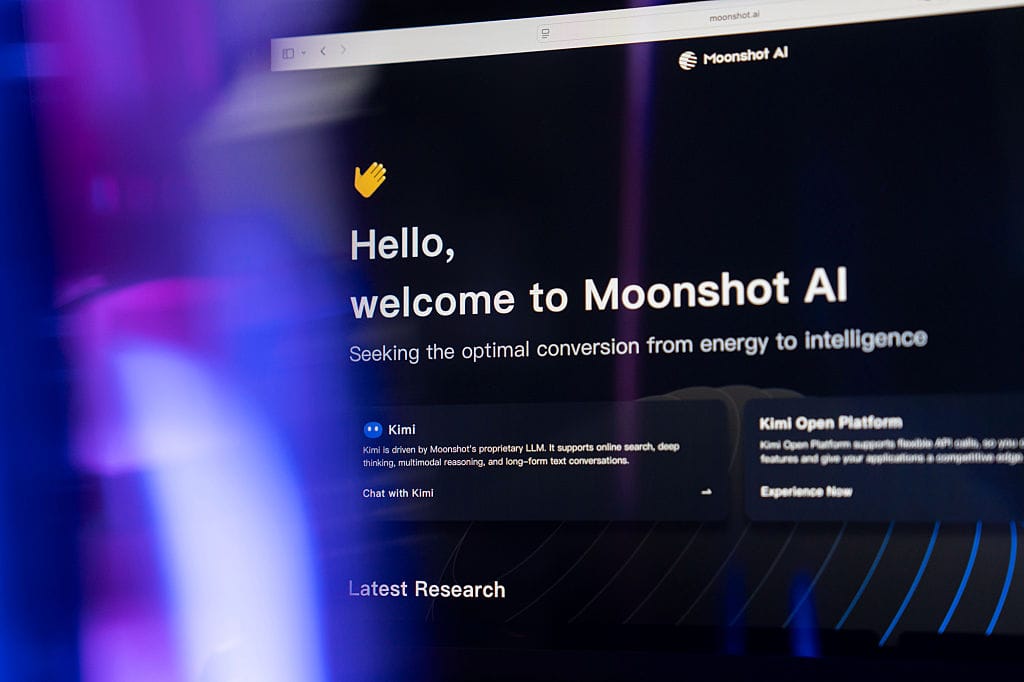
Moonshot AI raising about $2 billion at a reported $20 billion valuation is, on paper, a funding story. For coding-agent teams, it is more interesting as a pricing signal. The market is starting to value the thing every serious agent workflow quietly depends on: cheap enough inference to let the loop run until the work is actually done.
That matters because agentic coding is not a single chat response. A real session scans a repository, builds a plan, edits files, runs tests, reads failures, retries, updates context, asks for review, and sometimes spins up another agent to argue with the first one. Every step burns tokens. Every tool call adds latency and cost. The frontier model that looks unbeatable in a benchmark can become a bad default if it turns routine refactors, test generation, and exploratory work into a metered anxiety exercise.
TechCrunch reports that Moonshot, the Beijing lab behind the Kimi models, raised the new round led by Meituan’s Long-Z Investment, with Tsinghua Capital, China Mobile, and CPE Yuanfeng also participating. Huafeng Capital’s post says the company raised $3.9 billion over the past six months. Moonshot was reportedly valued at $4.3 billion at the end of 2025, reached $10 billion in early 2026 after a $700 million raise, and is now being priced at $20 billion. That is a violent repricing even by AI-startup standards.
The coding market is learning to care about burn rate
The obvious explanation is demand for open-weight and lower-cost models. Moonshot’s annual recurring revenue reportedly topped $200 million in April, driven by paid subscriptions and API usage. TechCrunch also notes that Kimi K2.6 was the second-most-used LLM on OpenRouter for the week at publication time. That does not prove Kimi is the best coding model. It proves developers and product teams are hungry for models that are good enough, available enough, and cheap enough to keep in the loop.
This is the part of the agentic-coding market that benchmark discourse misses. A coding assistant used for one hard architecture question is a premium reasoning product. A coding agent used all day is infrastructure. Infrastructure gets judged by reliability, latency, integration quality, observability, portability, and unit economics. If your team is using agents for migrations, dependency upgrades, test backfills, internal tooling, documentation repair, and support-ticket automation, the question is not “which model won the latest leaderboard?” It is “what is our cost per accepted change?”
That is where Kimi’s story becomes more than China AI funding. Moonshot released Kimi K2.5 in January with Kimi Code, an open-source coding tool positioned against Claude Code and Gemini CLI. The tool can run from the terminal or integrate with VSCode, Cursor, and Zed. It supports multimodal inputs such as images and videos, which matters for UI and product workflows where the “spec” is often a screenshot, a Figma frame, or a screen recording of broken behavior. Moonshot’s platform also advertises workflow primitives such as code running, JavaScript execution through QuickJS, fetch, memory, and web search. Those are agentic surfaces, not chatbot decorations.
The strategic move is clear: make Kimi usable where developers already work, then compete on cost-performance instead of trying to own the entire interface. That is a credible lane. Anthropic has Claude Code. OpenAI has Codex-style workflows and the broader ChatGPT surface. Google has Gemini CLI and cloud-native agent plumbing. Cursor owns a popular editor experience. Moonshot does not need to beat all of those at everything. It needs to be good enough in enough workflows that teams start routing work to it when frontier subscriptions hit limits or invoices get awkward.
Good enough changes the architecture
The most important practitioner shift is model routing. Teams should stop treating “the coding agent” as one vendor subscription and start treating agentic development like a workload portfolio. Some tasks deserve the expensive frontier model: security-sensitive patches, architecture changes, gnarly debugging, production incident analysis, or anything where a subtle mistake costs more than the tokens. Other tasks do not. Generating fixtures, adding straightforward tests, updating docs, translating simple components, summarizing logs, or sweeping deprecations across a repo may be perfect work for a cheaper model with strong tool support.
That sounds obvious until you ask how most organizations currently buy these tools. Many still have developers expensing individual subscriptions, teams piloting three assistants in parallel, and no shared measurement beyond vibes and Slack complaints. That is not an agent strategy. It is procurement confetti. If coding agents are becoming part of the delivery pipeline, engineering leaders need the same basic accounting they would expect from CI or cloud compute: cost per PR, cost per passing test added, cost per vulnerability fixed, cost per support issue resolved, and failure rate by task type.
Kimi also pressures the portability conversation. If your workflow is locked to one assistant’s proprietary project memory, prompt format, or IDE state, switching models becomes painful even when the economics demand it. If your workflow is built around explicit specs, repo-local context files, reproducible commands, standard test gates, and tool protocols that multiple agents can use, routing gets easier. The winning teams will not be the ones who blindly chase the cheapest model. They will be the ones who make their context and verification layers portable enough that model choice becomes an implementation detail.
There is a security dimension here too. Cheaper inference tempts teams to run more agents more often. That is good when the agents are generating tests or exploring low-risk refactors. It is dangerous when they have broad shell access, secrets, production context, or permission to mutate tickets and deployments. Cost controls and access controls need to evolve together. The cheap model should not automatically get the same authority as the expensive model just because it is available.
Benchmarks are weak evidence; economics are not
The Hacker News reaction around recent Kimi benchmark coverage captures the right skepticism. There is no single “best model,” and one-off coding challenges are fragile evidence. Coding agents fail in boring ways that leaderboards rarely measure: misunderstanding repo conventions, ignoring tests, producing plausible abstractions that do not fit the system, mishandling tool errors, or creating patches that pass locally and rot in review. A model that nearly tops a benchmark can still be annoying in your actual codebase.
But the economic signal is harder to dismiss. Developers are already comparing usage caps, token prices, context limits, and the practical difference between a $20 plan that disappears after heavy use and lower-cost providers that let side projects keep moving. Moonshot does not need Kimi to dominate every category to matter. It needs Kimi to be credible enough that “use Claude/OpenAI for everything” stops being the default architecture.
The next phase of agentic coding will look less like a model horse race and more like infrastructure scheduling. High-risk tasks go to the strongest model with the best review path. Bulk tasks go to cheaper models with tight tests. Long-context analysis may route differently from fast edit loops. Sensitive code may stay on approved vendors or self-hosted open-weight deployments. The teams that measure this will get leverage. The teams that do not will discover, sometime after finance asks a pointed question, that their AI productivity plan was mostly an inference subsidy.
Moonshot’s $20 billion valuation is not proof that Kimi is the future of coding agents. It is proof that enough people believe the future will not be one premium model doing every task at premium prices. That is the right bet. Frontier capability is becoming table stakes. Sustainable agentic coding will depend on routing, cost visibility, portable context, and knowing when “good enough and cheap” is not a compromise but the correct engineering decision.
Sources: TechCrunch, Moonshot AI Platform, TechCrunch on Kimi K2.5 and Kimi Code