NVIDIA's 90% Asian Supply Chain Exposure Is Now a First-Order Risk Factor, Not a Footnote

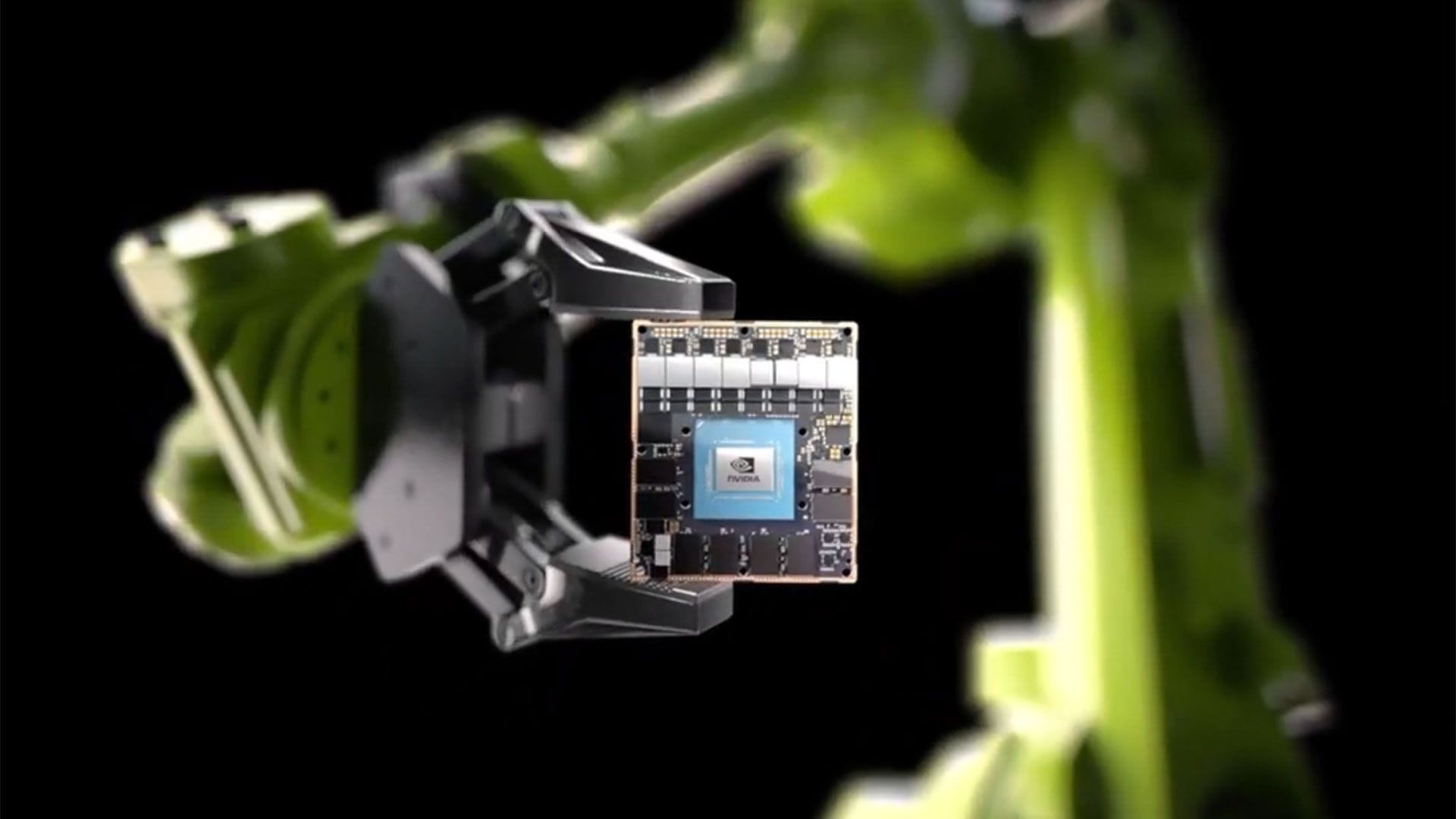
When your cost structure looks more like a geopolitical risk map than a standard procurement spreadsheet, you've moved past the point where "supplier diversification" is a box to check. That's where NVIDIA finds itself today, with approximately 90% of its production costs flowing to Asian suppliers — up sharply from roughly 65% last year — according to Bloomberg data compiled by Tom's Hardware. The number isn't new; it's been true in practice for years. What's changed is that NVIDIA is now large enough, and its supply chain concentrated enough, that the footnote became the headline.
The arithmetic is straightforward. TSMC manufactures NVIDIA's leading-edge silicon. SK Hynix and Samsung supply the HBM memory that sits next to every GPU core. ASE and Amkor handle the advanced packaging that connects them. Every one of those nodes lives within a narrow geographic corridor, and every one of them is a potential failure point that a 90% concentration figure doesn't capture in isolation but that experienced ops teams have been tracking since the first H100 shipped to a hyperscaler. The difference now is that the production targets being discussed — 1.5 million Rubin GPUs, 5.5 million Blackwell GPUs, and a CoWoS packaging capacity of 650,000 units — are large enough that any meaningful disruption at a single supplier node creates visible product roadmap slippage. The Rubin HBM4 situation is the case study: SK Hynix's base die respin delayed the ramp from June to September, forcing NVIDIA to cut its 2026 production target from 2 million to 1.5 million units and lean on Samsung to pick up the memory supply slack faster than planned.
The physical AI angle is where the concentration story gets more uncomfortable as a forward-looking projection. NVIDIA has been explicit that its next growth vector is robots, autonomous vehicles, and industrial edge AI — all of which require different and more specialized supply chains than a GPU that fits in a server rack. A humanoid robot platform needs motors, sensors, actuators, and dense packaging that desktop and server GPU supply chains don't have in common. If that segment grows as NVIDIA's internal projections suggest, the 90% figure could become 95% or higher in specific component categories before it stabilizes. The risk isn't hypothetical. It's a supply chain architecture decision that compounds over time.
For procurement teams and infrastructure architects, the practical implication cuts two ways. On the Blackwell side, the 71% share of 2026 GPU shipments means the current generation is carrying more load than originally planned, which affects supply availability and pricing dynamics through at least Q1 2027. If you were counting on a Rubin-ramp to handle the next wave of trillion-parameter inference capacity, your Blackwell extension just got longer and more expensive than your internal roadmap assumed. On the supply chain side, the CoWoS capacity allocation — 650,000 units split across Blackwell, Rubin, and Hopper — means that every slot is contested, and the memory qualification delays at SK Hynix are a reminder that "qualified" and "in volume" are different states that can take months to reconcile.
The real observation here isn't that NVIDIA has a supply chain problem. It's that the supply chain structure that made the AI boom possible is the same structure that now constrains NVIDIA's next phase. The TSMC-SKHynix-ASE-Amkor chain is not a bug. It's the reason Blackwell shipped at scale when it did. The question is what happens when the product roadmap requires different components, different packaging, or different geographies than the chain currently provides. Samsung stepping in as lead Rubin memory supplier is an example of NVIDIA rerouting around a bottleneck — but rerouting is slower and more expensive than having a single qualified source performing predictably.
The 90% number is also a useful reframe for how the industry talks about AI infrastructure risk. "Single supplier dependency" is a standard risk disclosure. "90% of your production costs flow through a single geography's ecosystem" is a first-order risk factor that changes how you think about inventory planning, multi-sourcing strategy, and the true cost of resilience. For hyperscalers and sovereign AI projects negotiating long-term supply agreements, this is the number that should be in the contract discussion, not the footnote. The footnote became the headline. The question now is whether the rerouting can keep pace with the roadmap.
Sources: Tom's Hardware, Taipei Times