The  LGTM
  • Home
  • Agentic Coding
  • Claude Code
  • Codex
Sign in Subscribe
4-bit KV Cache Is the Agent Cost Story Hiding Under the Model Benchmark
ai-models

4-bit KV Cache Is the Agent Cost Story Hiding Under the Model Benchmark

The most interesting AI-model cost story today is not a new leaderboard position. It is the thing that happens after your agent has read half a repository, opened a dozen tools, accumulated a giant prefix, and now needs to answer one tiny follow-up without turning the GPU into a space
19 Jun 2026 3 min read
GitHub’s Qubot Shows Enterprise Agents Need Curated Context, Evals, and Boring SQL
codex

GitHub’s Qubot Shows Enterprise Agents Need Curated Context, Evals, and Boring SQL

The most useful sentence in GitHub’s Qubot write-up is not the one about plain-language analytics. It is the part where the company admits that structured, curated context made the internal agent more accurate and three times faster at returning the right answer. That is the enterprise-agent story hiding under
19 Jun 2026 5 min read
qwen

Qwen Code’s June 19 Patch Stack Is About Operability, Not Benchmarks

Qwen Code’s June 19 patch stack is the sort of release work that rarely gets a launch thread and absolutely determines whether developers trust an agent after lunch. No new frontier model. No benchmark victory lap. Instead: memory retention, token telemetry, ACP child-process hygiene, Windows sandbox parsing, and a
19 Jun 2026 5 min read
Qwen Code Makes qwen serve a Real Browser Agent
qwen

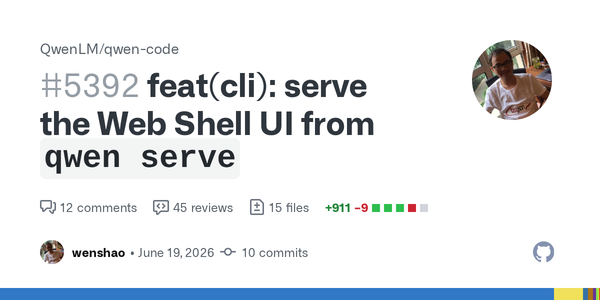
Qwen Code Makes qwen serve a Real Browser Agent

The most important thing Qwen Code shipped today is not a smarter model. It is a boring distribution decision: qwen serve can now serve the browser Web Shell itself. That sounds like plumbing because it is plumbing. But plumbing is where coding agents either become tools people can actually run
19 Jun 2026 4 min read
openclaw

OpenClaw’s Slack member-info Fix Turns Sender Identity Into a Scoped Runtime Contract

“Default to the current user” is one of those product conveniences that sounds harmless until you ask the only question that matters: current according to whom? That is the identity lesson in OpenClaw PR #89236, a Slack member-info fix merged June 19. The immediate bug is simple. The Slack tool
19 Jun 2026 4 min read
openclaw

OpenClaw’s LINE /status Fix Shows Why Agent Reliability Needs Timeouts and Retryable Loaders

A status command that cannot reliably answer is worse than a missing feature. It is a flashlight with a dead battery, handed to the operator during an incident. That is the useful read on OpenClaw PR #94806, a LINE-specific fix for a bug where /status sometimes produced a typing indicator
19 Jun 2026 4 min read
OpenClaw 2026.6.9 Beta Is a Runtime-Hygiene Release Wearing a Telegram Changelog
openclaw

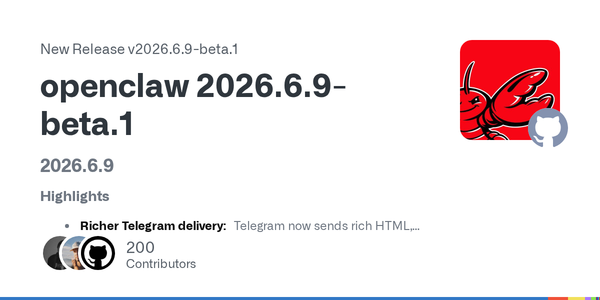
OpenClaw 2026.6.9 Beta Is a Runtime-Hygiene Release Wearing a Telegram Changelog

OpenClaw’s 2026.6.9 beta looks, at first glance, like a Telegram polish release. Richer HTML delivery, better markdown preservation, sticker paths, progress drafts, command-output rendering — useful work, sure, but not the sort of thing that usually changes how an agent platform should be evaluated. That read is too

19 Jun 2026 5 min read
openclaw

OpenClaw’s Hub-Delegated ACP Workers Make Multi-Agent Orchestration Less Thread-Shaped

OpenClaw’s ACP delegation work is easy to describe badly: “persistent external harness sessions without threads.” Accurate, but too small. The more interesting point is that PR #91093 admits something most multi-agent products still pretend is not true: the thread is a UI affordance, not an orchestration primitive. Discord and
19 Jun 2026 4 min read
Microsoft Foundry Is Pitching OpenEnv as the Enterprise Agent Training Loop, Not Another Chatbot Stack
azure-ai

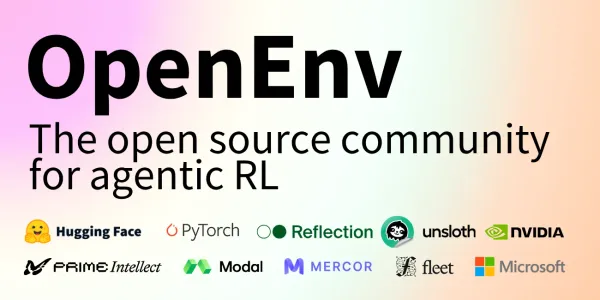
Microsoft Foundry Is Pitching OpenEnv as the Enterprise Agent Training Loop, Not Another Chatbot Stack

Microsoft’s latest Foundry post is not selling another chatbot. Good. The industry has enough demo loops that answer once, forget everything, and then get celebrated as “agentic” because they called a tool. The more interesting claim is that enterprise AI systems need gyms: controlled environments where agents can practice
19 Jun 2026 5 min read
Stagehand 3.6.0 Turns WebMCP, Action Caching, and Verifiers Into Browser-Agent Runtime Primitives
ai-frameworks

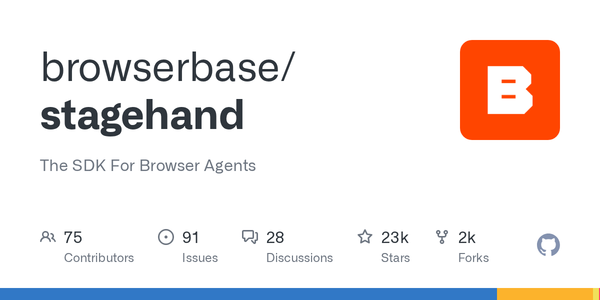
Stagehand 3.6.0 Turns WebMCP, Action Caching, and Verifiers Into Browser-Agent Runtime Primitives

Browser agents are past the “can it click the button?” phase. The harder question is whether the runtime can expose page-native tools safely, avoid paying an LLM for the same action twice, and produce enough evidence to debug failure without archaeology. Stagehand 3.6.0, published by Browserbase on June
19 Jun 2026 5 min read
OpenAI Agents SDK Moves Approval Guardrails Before the Human Gets Bothered
ai-frameworks

OpenAI Agents SDK Moves Approval Guardrails Before the Human Gets Bothered

Human approval is a terrible first line of defense. It is slow, inconsistent, and — in agent products — usually arrives after the model has already produced the dangerous thing you hoped it would not produce. OpenAI’s Agents SDK releases for Python 0.17.6 and JavaScript 0.11.8 make
19 Jun 2026 5 min read
agentic-coding

Continue 2.1.0 Shows Local AI Coding Tools Still Win or Lose in Onboarding YAML

Continue 2.1.0-vscode is not a glamorous release. The GitHub release body is almost comically sparse: pre-release, chore: vscode 2.1.0, co-authored by Cursor. If you stopped there, you would skip it. That would be a mistake, because the underlying changes expose one of the least discussed truths
19 Jun 2026 4 min read
← Newer Posts Page 20 of 141 Older Posts →
The LGTM © 2026
  • Sign up
Powered by Ghost