Sparky the Jetson Suitcase Is a Better Local-AI Benchmark Than Another Leaderboard Table

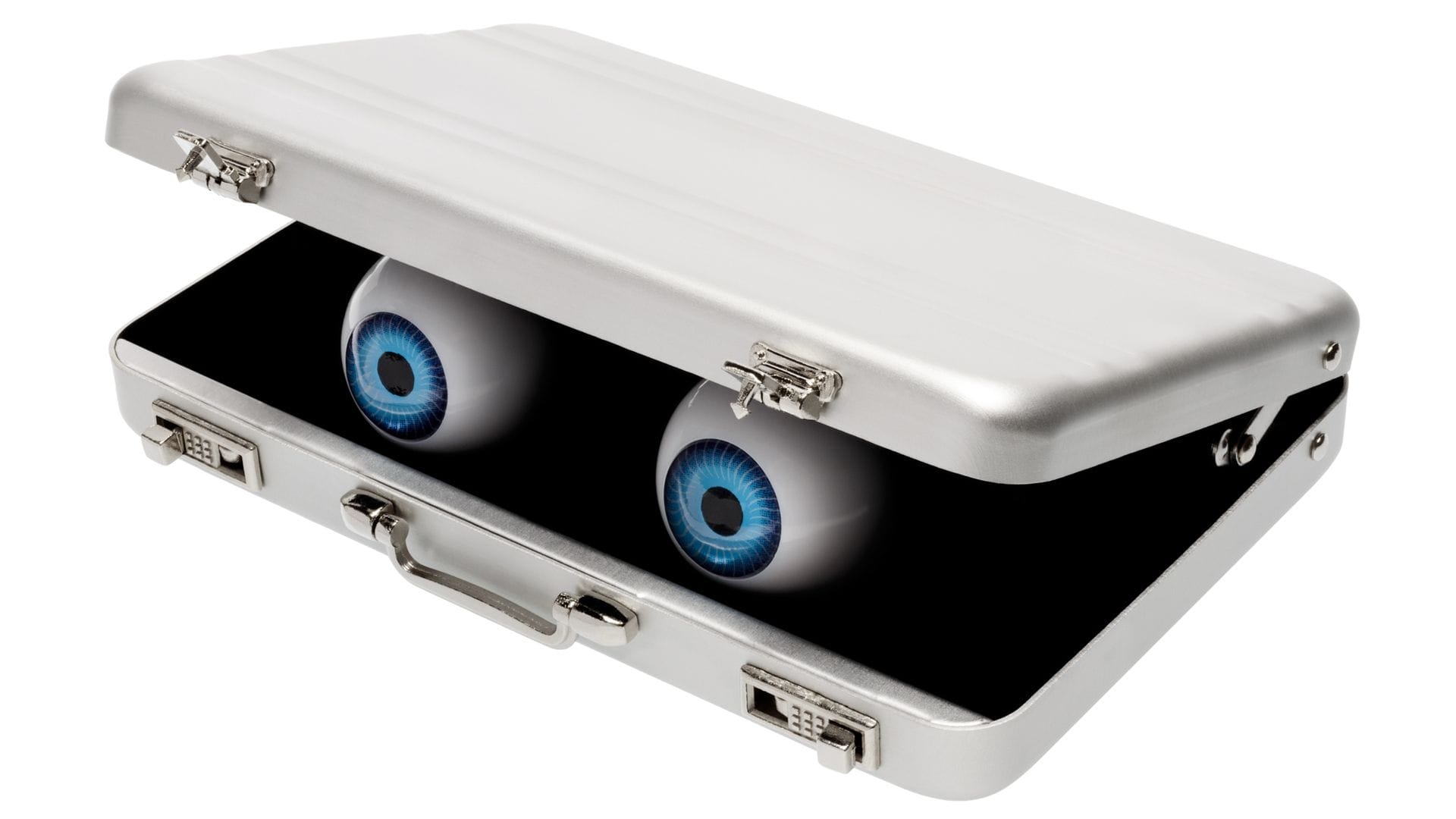
The most useful local-AI benchmark this weekend has googly eyes and lives in a suitcase. That sounds like a joke, which is partly the point: Sparky, a mobile offline chatbot built around an NVIDIA Jetson-class module, is more informative than another table showing that Model X beats Model Y by 1.7 points on a benchmark nobody’s product actually resembles.
Tom’s Hardware covered the maker project after it surfaced in the local-model community: a fully local “machine entity” running Google’s Gemma 4 E4B through llama.cpp, with speech input, text-to-speech output, facial animation, sensors, physical controls, and a claimed roughly 200 ms time-to-first-token. The shell is whimsical. The systems problem is not. If local AI is going to matter outside terminal demos and GPU hobbyist screenshots, this is the shape it eventually has to take: a model embedded inside a full interaction loop where latency, memory, audio, sensors, thermal limits, and failure recovery all compete for the same budget.
That is why Sparky is interesting. Not because it proves a suitcase is the next platform war. Because it refuses to let the model hide behind a clean benchmark harness.
A leaderboard cannot measure awkward silence
The reported stack is the kind of thing local-AI builders will recognize immediately: an NVIDIA Jetson Orin NX Super-class 16GB device, Gemma 4 E4B quantized at Q4_K_M, llama.cpp as the inference backend, q8_0 KV cache, flash attention, native system-role support, and a 12K-token conversation memory. On top of that sits SenseVoiceSmall for speech-to-text, Piper for text-to-speech, PixiJS face and mouth animation updating at 43 Hz, more than 30 sensors, and physical inputs including buttons, a joystick, and an analog encoder knob.
That stack matters more than the novelty enclosure. A conventional LLM benchmark is mostly interested in model quality under controlled evaluation. A product-like agent has a harsher judge: the human standing in front of it. If the microphone pipeline adds jitter, the interaction feels broken. If the model takes too long to start answering, the personality collapses. If TTS lags or the face animation drifts out of sync, the illusion of responsiveness disappears. And if the assistant needs a cloud fallback to feel smart, the “offline companion” premise gets quietly revoked.
The builder-reported numbers are therefore the right numbers to inspect: about 200 ms time-to-first-token and roughly 14-15 tokens per second. That is not workstation-agent throughput. It is not going to replace a frontier coding model for deep repo refactors. But for short conversational turns, local control, sensor-aware reactions, and embodied UX, it crosses a meaningful threshold: the system can begin reacting before the user decides it is dead.
That threshold is where local AI starts to become a product category instead of a hobbyist achievement. Users do not experience “TOPS.” They experience pause, interruption, missed context, clipped audio, hallucinated confidence, and whether the device feels awake.
Gemma 4 E4B is the right kind of small
Google’s Gemma 4 launch positions the family around practical on-device utility, not just parameter-count theater. The lineup includes Effective 2B, Effective 4B, 26B MoE, and 31B dense models under Apache 2.0, with Google claiming native support for function calling, structured JSON output, system instructions, code generation, vision and audio, 140+ languages, and long context — 128K tokens for the edge models and up to 256K for larger ones.
Those claims should be tested, not worshipped. But the strategic direction is right. For local agents, “small enough to stay responsive” is often more valuable than “large enough to win a benchmark but too slow to use.” A 4B-class model with decent tool behavior, structured output, and native instruction handling can be the right component for bounded tasks: device control, local summarization, conversational state, command routing, narration, and privacy-sensitive interaction. It does not need to be a universal reasoner. In fact, pretending it is one is how these projects become brittle.
The practitioner lesson is to stop asking only “what is the best local model?” and start asking “what part of the loop should this model own?” Sparky’s answer is sensible: the local box owns perception-adjacent interaction, conversational feel, local memory, and immediate responses. Heavier synthesis can still move to a workstation, LAN server, or cloud model when the task justifies the latency and privacy tradeoff. That hybrid architecture is much more believable than trying to make every edge device behave like a frontier API in a lunchbox.
The hardware tax is mostly memory and bandwidth
NVIDIA’s Jetson Orin specs explain why this class of project is now plausible and still constrained. The Jetson Orin NX 16GB is listed at up to 157 TOPS with 16GB of 128-bit LPDDR5 and 102.4 GB/s of memory bandwidth; the Jetson Orin Nano Super Developer Kit is listed at 67 TOPS with 8GB LPDDR5 and 102 GB/s of bandwidth. The marketing number gets the headline. The memory system gets the pager.
A local embodied agent is not just running one model. It is running the LLM, KV cache, speech recognition, TTS, animation, sensor processing, system services, and whatever orchestration glue keeps the whole thing from becoming a Python bonfire. The moment the conversation grows, the context window stops being an abstract feature and becomes memory pressure. The moment the user interrupts, latency becomes a scheduling problem. The moment the device warms up, peak throughput becomes less relevant than sustained behavior.
This is where llama.cpp keeps showing up for good reason. Its README describes it plainly as LLM inference in C/C++ with minimal setup and strong local performance across hardware, plus an OpenAI-compatible llama-server path. That boring portability is exactly why maker projects and local-agent prototypes converge on it. Before teams graduate into heavier serving stacks, they need something that gets weights running, exposes enough knobs to tune quantization and cache behavior, and does not require a platform team to say hello.
Piper’s role is also not incidental. The PyPI package has fresh 2026 provenance, with piper_tts-1.4.2 uploaded in April via trusted publishing. Voice is now part of the local-agent supply chain. If the TTS component is stale, flaky, or unmaintained, the whole “private offline assistant” story inherits that risk. Local does not remove dependencies; it moves them closer to the device and makes their operational quality your problem.
What engineers should actually measure
If you are building something in this category, do not copy the suitcase. Copy the measurement discipline the suitcase forces on you.
Measure end-to-end latency, not just tokens per second. Track wake-word or microphone activation time, speech-to-text latency, model TTFT, generation speed, TTS start time, audio playback delay, UI animation sync, and total turn time. A model can look fine in isolation and still produce a bad interaction because every adjacent component adds 100 ms of tax.
Measure memory headroom under long conversations. A 12K-token memory sounds modest next to vendor claims of 128K context, but embedded systems fail in the gap between spec-sheet context and usable context while everything else is running. Test repeated sessions, not just a cold start. Watch whether latency degrades as context accumulates. Pay attention to KV-cache format, quantization choices, and whether speech components starve the model path.
Test sensor hallucinations explicitly. A robot or local assistant with environmental inputs will eventually infer the wrong thing from noisy context and say it with confidence. The fix is not a larger prompt begging the model to be careful. The fix is system design: typed sensor state, confidence thresholds, explicit unknown states, deterministic fallbacks, and controls that let the user override or disable behavior quickly.
Finally, design for graceful stupidity. A Gemma 4 E4B-class model can be delightful inside a bounded loop. It should not be trusted as the sole authority for safety, permissions, navigation, purchases, device control, or anything with irreversible consequences. Put the model behind policy, not in charge of policy.
Sparky is not proof that edge agents are solved. It is proof that edge agents are finally concrete enough to be judged as systems rather than demos. That is the useful milestone. NVIDIA wants Jetson, RTX PCs, and DGX Spark to look like a continuum for local inference, and projects like this show the bottom edge of that continuum: not enterprise automation, not cloud-replacement reasoning, but embodied local AI that is fast enough to feel present.
The LGTM take: the next good local-AI benchmark will not be another leaderboard row. It will be a latency budget with a face. Sparky just happens to have googly eyes.
Sources: Tom’s Hardware, Google Gemma 4 launch, NVIDIA Jetson Orin specs, llama.cpp, Piper TTS