The Car Is Now the AI Factory: NVIDIA's In-Vehicle Agent Stack Is Real and Running

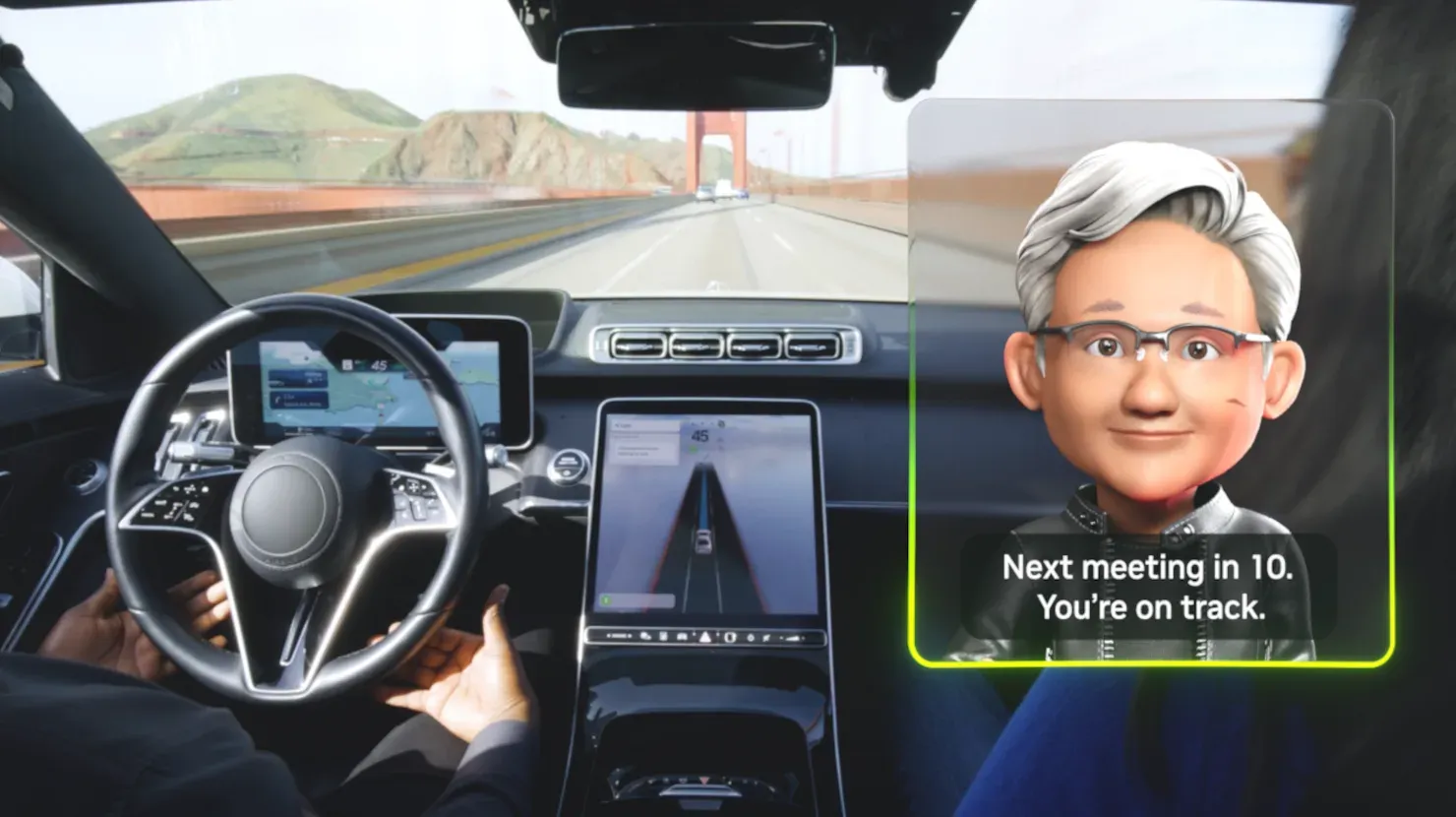
Here's a sentence that would have sounded absurd five years ago but now describes a real product: you can buy a car this year that runs a full Nemotron-based agentic AI stack locally, routes complex queries to cloud inference when it makes sense, speaks to you through Magpie TTS, and does it all inside a hardened, safety-certifiable runtime that automotive OEMs are actually deploying.
That's the story NVIDIA told across two posts on May 5, and it's more substantive than the usual "AI comes to cars" headline suggests. The automotive cockpit is graduating from voice command gimmicks to genuine edge AI deployment — and the infrastructure to support it is here today.
Why the Cockpit Is the Next Edge AI Target
The numbers from ABI Research frame the opportunity: roughly 5 million vehicles shipped with agentic AI capabilities in 2025, ballooning to an estimated 70 million by 2035. That is a 14x jump in a decade, and it tracks with what every automotive OEM is quietly building. The logic is straightforward — cars have constrained connectivity (tunnels, rural coverage, parking garages), high expectations for responsiveness (you don't want your voice assistant to timeout at 70 mph), and increasingly powerful on-vehicle compute that is sitting idle much of the time.
NVIDIA's answer comes in two architectural flavors. The first is the DRIVE AGX Orin-based AI box — a modular ECU that pairs with existing infotainment systems over PCIe and NvStreams. This is the pragmatic entry point because it decouples the AI assistant upgrade cycle from the infotainment requalification cycle. An OEM can ship an AI box on a current model line without touching the IVI stack, iterate the agentic software independently, and offerOTA updates on a faster cadence than the hardware platform allows. For a production vehicle with a typical 4-6 year lifecycle, that decoupling is genuinely valuable.
The second flavor is DRIVE AGX Thor — Blackwell architecture, hardware-level QNX and Linux VM isolation for mixed-criticality workloads, and a unified DriveOS toolchain shared with the autonomous driving stack. This is the architectural bet for 2028 and beyond: one compute platform handling both AV and in-vehicle AI, with deterministic latency guarantees for safety functions and flexible throughput for everything else.
The Hybrid Stack Is the Actual Architecture
What makes the NVIDIA stack worth examining closely is the hybrid cloud-edge routing that ties it together. The agentic pipeline is not purely local and not purely cloud — it is explicitly designed to route based on task characteristics.
Local inference handles what NVIDIA calls real-time tasks: ADAS behavioral explanations ("why am I changing lanes right now"), real-time cabin sensing for driver monitoring, predictive diagnostics that need sub-second response, and comfort mode adjustments that cannot tolerate a network round-trip. Cloud inference handles what benefits from larger models or external data: trip planning that involves web research, complex multi-step scheduling that requires access to calendar or email, and generative conversations that benefit from a bigger context window than fits in HBM.
The routing layer is NeMo Agent Toolkit — NVIDIA's orchestration framework that decides which requests stay local and which escalate. That is a meaningful position to own. Whoever controls the routing logic controls the user experience, and potentially, the data about what users actually ask their cars. For a company that makes money on both the silicon and the software stack, being the routing layer is a way to capture value regardless of which inference path a request takes.
The speech pipeline deserves separate mention because it is often where automotive AI stacks fall apart in practice. NVIDIA's Nemotron ASR feeds into Magpie TTS, with the full loop running on the DRIVE AGX hardware. The isolation from the infotainment SoC — guaranteed QoS, dedicated memory bandwidth — exists specifically because automotive audio systems are shared resources and an AI assistant that fights with navigation audio for compute is an AI assistant users will turn off.
The $1.2 Trillion Question Nobody Is Asking
The 70 million vehicle projection gets cited widely, but what it implies about silicon demand is less discussed. ABI Research's 14x growth in agentic-capable vehicles does not mean 14x more automotive SoC revenue — it means the compute profile per vehicle is changing dramatically. A traditional automotive cockpit SoC handles infotainment, instrument cluster, and connectivity. An agentic cockpit adds a separate accelerator for local LLM inference, real-time sensor processing, and a safety-certifiable compute domain that runs the ADAS stack concurrently.
NVIDIA's DRIVE AGX Thor positions the company to capture multiple dollars per vehicle at scale — not just the premium tier. The Orin-based AI box captures the mid-market today, Thor captures the premium segment in 2026-2028, and the software stack (NeMo, TensorRT-LLM, TensorRT Edge-LLM) is the common layer that makes switching between them a software migration rather than a platform redesign. If that tooling story holds, NVIDIA doesn't need every OEM to commit to DRIVE AGX Thor at launch. It needs the development teams to standardize on the software stack, and the silicon will follow.
The competitive picture is where this gets harder to call. Qualcomm has the Snapdragon Ride platform and a strong position in digital cockpit. Mobileye has the EyeQ family and deep OEM relationships in ADAS. Both are working toward in-vehicle AI inference stories of their own. The difference is that NVIDIA's pitch — unified toolchain from cloud training to edge deployment, CUDA compatibility at both ends, a reference stack that OEM teams can adopt without rebuilding from scratch — is the most complete offering in the market right now. Whether that translates to design wins depends on whether Tier 1 suppliers and OEMs trust NVIDIA's automotive roadmap enough to build to reference architectures rather than rolling their own.
What Builders Should Take From This
If you work on automotive software, embedded ML, or edge AI systems, the NVIDIA posts from May 5 contain a few practical signals worth tracking.
First, the AI box architecture is the right model for adding agentic capabilities to existing platforms without multi-year requalification cycles. If you are building automotive AI features today, decoupling the upgrade cadence of your ML stack from your IVI platform is not just a technical convenience — it is a product velocity advantage.
Second, the hybrid edge-cloud routing problem is real and underspecified in most automotive AI discussions. The NVIDIA stack is explicit about the split — real-time local, complex cloud — but the decision logic for where to draw that line depends on connectivity models, task latency tolerances, and cost budgets that vary by use case. NeMo Agent Toolkit as the routing layer is worth evaluating against whatever orchestration approach your team is using today.
Third, the Magpie TTS integration is part of a broader signal that voice quality matters more than vendors admit in demos. In a car, where the audio environment is noisy and the listener is actively driving, synthesis quality and latency directly affect whether users trust the system. NVIDIA's inclusion of a dedicated TTS model in the stack, rather than treating it as an afterthought, reflects what automotive UX teams have known for years.
The car is no longer just a deployment target for NVIDIA's datacenter products. It is becoming a first-class edge AI environment — with all the supply chain, safety certification, and product velocity challenges that shift implies. The 70 million vehicle projection is a horizon marker, not a promise. But the infrastructure to build toward it is here now.
Sources: NVIDIA Developer Blog, NVIDIA Developer Blog (agentic systems post), ABI Research